Tag: Salt Lake City

  • ‘Star’ Children

    This blog is dedicated to two of the brightest stars I had the pleasure to know on Earth:

    My Don Draper grandfather, Jeffrey Cloward McBeth — Every time I watch Benjamin Button, I’m reminded of the treasured time we spent together.

    And Adlai Padma Owen, the smartest Godzilla director to ever walk the planet, if only for six short years.

    Requiescat in pace, “’Till we meet again.


    wes anderson

    One of the more exciting events of my sheltered Mormon childhood was entering public elementary school in fourth grade. I had previously been enrolled in Montessori and homeschool programs, and my mom was torn between family members with strong opinions about how to educate a “highly gifted” little girl.

    By fourth grade, I was something of an autodidact, a word I learned later, reading The Elegance of the Hedgehog by Muriel Barbery. I have a soft spot for its two protagonists: Paloma, a thirteen-year-old quietly planning her own death, and Renée, a concierge who hides her expansive knowledge of literature and philosophy behind a grizzled exterior. Both are largely alone, absorbed in their own inner lives, until a chance meeting sparks a quiet recognition between them. An instant bond forms, the kind often seen among unusual — or, as people say with derision or enthusiasm, ‘star children.’

    wes anderson

    My parents had been divorced since I was three, and my extremely religious father was vocally anti–public school. Meanwhile, my rich Democrat grandparents were firmly pro–state education, worried I wasn’t being socialized properly, and were hand-wringing I’d end up as “Little House on the Prairie” as my new stepmother Gloria. Gloria had dropped out of school in seventh grade and was baptized as a teenager by my dad while he was on his Mormon mission in Florida.

    After my parents divorced, Gloria somehow discovered via the infamous Mormon grapevine — a kind of soft Communist Party network — that my dad was single. They married, moved into a wooden shack in Hyrum, Utah with two bedrooms and no central heating, and vowed to homeschool my step- and half-siblings forever. When Seth and I went to visit, we all huddled in one attic bedroom.

    freemason girl

    My grandpa Jeff, the liberal ex-Mormon architect — occasionally joked, with a wink and gap-toothed smile — that the Hyrum-Logan area was the “shallow end of the Mormon gene pool.” The Hyrum House, as we called it, was the first of many places my step- and half-siblings lived in during elementary school. My dad set a pattern of out-of-state moves that steadily limited how much we saw each other. He’s been mostly employed Mormon Church in a vaguely defined marketing-adjacent role for decades.

    The family came back to Salt Lake when I was fifteen, after a migraine/divine vision told my dad to move to an apartment complex next to Temple Square to “make sure I was on the right path.” When was all said and done, there were seven of us kids. I was technically the second-oldest, after my stepbrother, but he was always about ten inches shorter than me.


    Gloria and God’s gifts

    What many people don’t get about the special bonds unusual, gifted or “autistic” kids share is just how singled out many of us have been by “normies” — how often that singling out is meant to sting, or how often it’s done by other kids’ moms. It seems to be more pointed when these women’s whole identities ride on being “successful” stay-at-home mothers.

    When your one role is mom, you want your child to turn out spectacular. How else do you derive a sense of specialness yourself? As psychoanalysts and psychologists have noted, conservative, highly absorbed mothers — especially within low-income households or those who’ve been abused themselves — can exhibit symptoms of Munchausen’s Syndrome, closely related to Stage Parent Syndrome. I think of it as a darkening spectrum.

    When money is tight or a person’s self-esteem is on the brink of collapse, a sick child, rather than a star child, can provide the attention and social validation they need. If a parent is prone to jealousy — and jealousy toward young girls is common in post-polygamous cultures where youth is lock-step tied to beauty — stress can push even well-meaning behavior into adult-child bullying. In some cases, it turns into abuse all at once; more often, it metastasizes slowly over time.

    1990s Utah still had spankings, smackings with slippers or wooden spoons, or, in rare situations, my dad removing his belt to give a “whipping.” The girls in the family were usually not the recipients. I was, however, singled out as an “arrogant little girl” who needed reminding about the importance of being meek. Once, when I was maybe four or five, I had the audacity to say I thought my drawings were better than those featured in the Mormon Friend Magazine. My stepmom reacted hotly: “If you brag or hold your gifts over other children, God will take them away from you.” For years, I was genuinely afraid I’d be struck down by the Lord if I was too proud of myself.

    The rebuke really hurt, but it’s one of the mild examples of jabs or outright propaganda campaigns waged on me by jealous older women, when I was still a child. This created an odd feedback chamber, where praise that sounded positive might actually be teasing or criticism. From talking to other “gifted” children: Our fear of being mocked and ridiculed for good performance makes trusting difficult.

    To be honest, the female bullying I experienced growing up makes it hard not to notice how many abusive women there are — and how rarely they’re corrected.


    Indigo children, or “There is no spoon.

    Despite misgivings, I started public school in fourth grade like the normal child I definitely wasn’t. The not-normal presented immediately. My teacher complained that I spent most of the day staring out the window, finished assignments almost instantly and didn’t play with the other children. My mom explained to the frustrated teacher that I read encyclopedias for fun, preferred conversations with adults and had done various “magical” things since I was a baby, which made me something of a celebrity at family gatherings.

    Once, before I could roll over, my grandmother left me on a blanket with a box of magnetic ABCs. When she came back, I had arranged the letters into a perfect alphabet. She screamed in shock and retold the story — over and over.

    When feats of raw baby intelligence became passé, grandma progressed to telling spooky stories about me “levitating during a nap” to increasingly exasperated and jealous aunts and uncles. My grandpa once told her to “stop telling lies to make Hannah seem… weird.” My grandma’s eyes filled with tears: “Oh Jeff! How could you talk to me like that!?” To this day, thinking about my grandpa putting my insane grandma in her place still brings a smile to my face.

    rooney mara

    Indigo child vs. Star child vs. Special child vs. Autistic child

    This was around that late-1990s moment that produced so many satisfying punk artifacts in the American West. The spirit of counterculture — skateboard lore, anti-authoritarian media, SLC Punk! (1998) — spread widely enough to reach even the aggressively suburban Mormon bubble I lived in. The homeschool moms trying to educate little misfits started whispering that their Timmys or Ammons might be indigo children with special abilities.

    The homeschool co-op where I spent most of my elementary school years was run by an ex–public school teacher, a Maryland Democrat who had dragon and yin-yang sculptures in the entryway of what she’d named Granite Hills Private School.

    Between storytime, geography lessons, and breaks playing Super Mario Brothers on an N64, we learned about the encroachments of the Patriot Act, not long after The Matrix was released. The culture reflected a growing distrust of the surveillance architecture emerging alongside the internet.

    matrix spoon

    Conspiracy was mainstream. It passed from nerd child to nerd child, somewhere between geography lessons, competitions to recite the most digits of pi and races to see who could rollerblade fastest at “Homeschool Skate Night” in the neon-carpeted rinks across Utah.


    Why I still read Freud
    sailing Bob

    The escalating conflict between the fourth-grade teacher and my mom led to a professional evaluation. Like many educators before and after her, she seemed to resent the “special” child whose mother insisted there was nothing wrong — only gifts that needed to be accomodated.

    The three-day IQ test remains one of the most engaging stretches of time I remember spending with a non-relative adult. Her genuine interest in my mind and intriguing questions sparked a lasting interest in memory, learning and even psychoanalysis. As I write this, The Freud Reader sits on my desk, the second of his collected works I’ve attempted.

    She started by asking me to recall every object in the room without looking, and after a series of general knowledge questions that grew steadily more difficult, she asked about my earliest memory. I told her about crawling over to a potted plant and digging, deeper and deeper; my dog was my hero and I wanted to be exactly like him, I said. “Well, you must’ve been a toddler. What an impressive memory for such a young person.” Here was another instant bond: How could I grow up to be like her?

    Nightmare Alley

    During the course of my education in art history in college, I became familiar with Freud’s concept of a “screen memory.” Childhood memories are notoriously unreliable and often feature ideas and symbols that may not be literal facts, but may reveal deeper and more important truths. The field of childhood memory has been contested by psychoanalysts, psychologists, social workers and members of three-letter agencies ever since Freud sparked a global obsession with dreams and what he called the sub- or unconscious.

    what about bob

    Like everything surrounding Freud’s legacy, the debate about how often or to what degree childhood memories are altered as we retrieve them is fraught. Some factions elevate dreams and symbolic memories from childhood, while others say they’re evidence that children fabricate stories of trauma for attention.

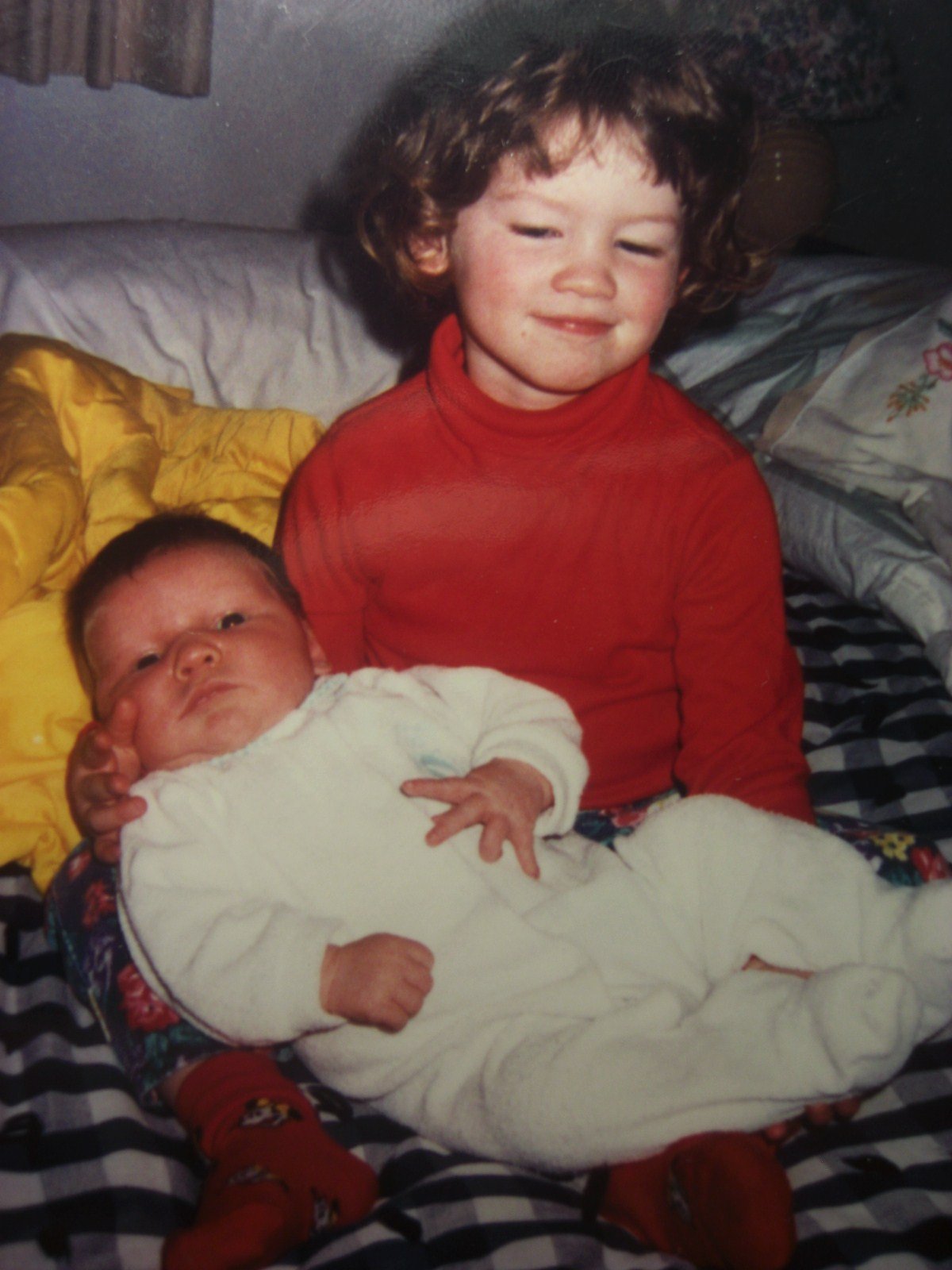
    The polaroid of me as a baby at the beginning of this blog shows that same plant featured in my earliest memory. Could I have fabricated the memory after seeing the picture, making my first memory later and less impressive? The full context shows this is not the case: I really have clear, narrative recall from before I could talk.

    What was missing for decades were any photos of or clues about the dog I loved so much that my earliest memory revolves around him. Like so many parts of our childhoods, symbols, memories and affinities become important later on for different reasons. Much later, this one image surfaced. (I’ll return to the German shepherd puppy’s significance in a later blog.)


    Congratulations, you’re in the Matrix

    After the IQ tests came back, I tested into sixth grade, so it was reasoned that I was too mature to find class assignments or interactions with my classmates very stimulating. The school was at a loss about what to do, and at that point my dad found out what my mom had done. It was true that she’d refused to let them photograph me for the yearbook, but as I heard him yelling, “NOW THE FEDERAL GOVERNMENT HAS HER IN A FILE!!!” My mom soon put me back in the homeschool co-op.

    If you’ve been following anything about Epstein and the narratives surrounding it, including the 2026 yearbook controversy, this is all pretty interesting. In February and March 2026, a social media-fueled controversy emerged around Lifetouch, the largest school photography company in the U.S., due to its connection to Leon Black, a billionaire named in the Epstein files. At the time, my dad’s meltdown began to convince my mom (and me) that he was crazy. Like so many things related to my Mormon upbringing and its echoes, more than three decades later I can’t make heads nor tails of it.


    The tallest man in the room

    My grandfather, Jeffry Cloward McBeth, was born in 1945 on a homestead farm in Payson, Utah. He was one of the few in his high school graduating class to go on to college, and once he got there, he excelled. As an architect, he liked working with wood and paid attention to the smallest design details. He designed homes for developments in Hawaii and Carefree, Arizona. He had impeccable taste, and it showed in everything, including his silk Hawaiian shirts.

    He had a wry sense of humor that surfaced rarely, but when it did, it sparkled. He didn’t speak much. I remember him best in fragments: his 6’4″ silhouette in the window, smoking “in secret,” far from his family. He liked being alone, liked espresso and chocolate donuts, and carried himself with a graceful dignity.

    His stories about the late-1960s — working as a draftsman in the Financial District, living near Haight-Ashbury — forever animated San Francisco in my imagination and heart.

    Every time we saw each other, I’d babble on about my travels. He would sit there, listening, radiating a quiet pride that warmed me for months. He was one of the few people who made me feel fully seen, every time. I’m sure we will, as the song goes, “meet again someday.”

  • The Day After My Birthday

    “As a solid rock is not shaken by the wind, so the wise are not moved by praise or blame.”
    Dhammapada, Chapter 6 (The Wise), Verse 81
    Composite image

    The day after my birthday always feels like a boundary post — an invisible marker I step over each year, taking stock of who I’ve become and who I’m still trying to be. This year, what keeps surfacing is how much of my adulthood has felt like stepping into a role meant for an oldest son or parent rather than a daughter. Responsibility has its own sense of direction; it settles where it wants, not where tradition says it should.

    I think about my mom, unexpectedly pregnant with my youngest brother, Ethan — a one-night-stand baby conceived after she’d already been divorced for several years and was raising two kids as a single mom. It was a “red letter” episode in a devout religious community like ours; every family member had an opinion.

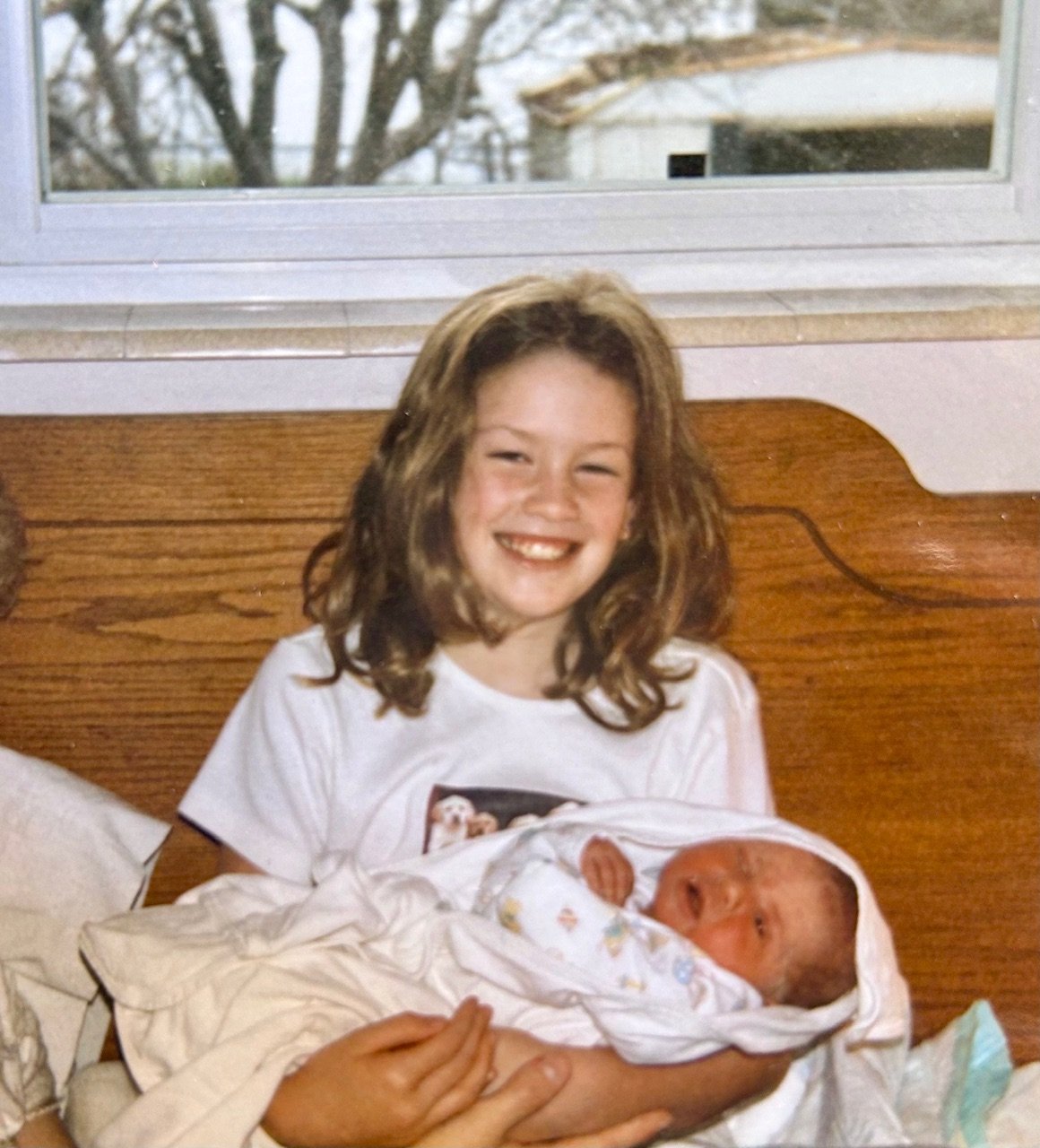
    Ethan was due on my birthday, November 22, 1998, but stayed put for two extra weeks so he could be born on my mom’s. On my eighth birthday, while everyone was waiting for his arrival, I went with friends to the Anastasia movie premiere. I remember being excited for the new baby brother who was supposed to show up any day, imagining he’d make our little family feel even more complete. He finally arrived late, but perfect in the way babies feel when you’re young enough to believe they can fix things just by existing. After that, my mom, Seth, Ethan and I were “the four amigos.”


    Salt Lake City in the 1990s

    Composite image

    Before my parents were divorced, our family had been a very devout Mormon household. But as the early ’90s went on, my dad became more ideological and rigid and what had once been ordinary Mormon family life tightened into something narrower and more punishing. My mom left him in 1994, when I was three and Seth was still a baby.

    She later told me how my father controlled all the money, didn’t want to celebrate holidays or birthdays and insisted his tithing be calculated before taxes — a huge financial strain for a family that already had next to nothing. The closest I ever got to a Halloween costume in those years was a shirt with a leaf pattern; I was, as my mom said, “a personification of the harvest season.”

    The breaking point came when he tried to neuter our German Shepherd in the house. (What a bizarre thing to type.) My mom walked in —holding me and my infant brother — to a home covered in dog blood. That was it. She left.

    After the divorce, my mom, Seth and I moved into a red-brick house in Millcreek near St. Mark’s Hospital, where police sometimes chased “suspected gang members” through our backyard and cars idled outside what people then called “crack houses.” It wasn’t dramatic; it was simply the texture of life in the late ’90s in a city working very hard to appear cleaner than it was.

    My dad went on to work exclusively for the LDS Church for the next thirty years. There was limited contact after the divorce, mostly fighting between my parents and once I reached my teens and stopped participating in the religion, he chose the simpler route: pretending we didn’t exist.


    Tearing myself away from Europe

    In 2017, when I was living in France and in a long-term relationship with the French boyfriend I’d met in graduate school, Ethan became addicted to benzos and attempted suicide. I listened to my mom cry on the phone every weekend and I began studying psychoanalysis and therapeutic methods, trying to help from afar. I flew back and forth between Europe and Utah — ten- to twelve-hour trips, multiple times a year — struggling to build the life I wanted while feeling guilty for leaving my family behind.

    Ethan descended into heroin addiction during the years I was working for a Cambridge tech startup, a real turning point in my career, and the stress of it all began hollowing me out. I became thin in the way actresses and models are thin, which felt like the lamest possible exchange for the inner anguish I was living with. On the surface, I looked polished and enviable; inside, I was collapsing under the pressure of financially supporting my PhD-student boyfriend and arranging any and every vacation around long-haul flights home, hoping my youngest brother wouldn’t overdose before I could get back to Utah to say goodbye.
    By 2019, my relationship had begun to collapse too. The gender reversal — me as the breadwinner, him unable to take even a single trip back to Utah to meet my family, unable to ask me to marry him after years together — destroyed me in more ways than I can ever fully explain. My deteriorating health forced me to leave Cambridge and return to Salt Lake in the summer of 2019.

    As I was trying to cope with the culture shock and just after my thirtieth birthday, the pandemic hit. As 2020 kicked off, I took a Marketing and IT Manager job at a bookstore/warehouse and hired Ethan so he would have structure, a paycheck and someone who cared watching out for him. I also wanted to build a relationship with him before he died — a real possibility for years, which became a more immediate threat as fentanyl started pouring across the Southern border and into Utah. I automated the bookstore’s e-commerce operation so the store could survive the pandemic and so could my family.


    Just another episode of Breaking Bad

    While I worked at the bookstore, I went to my mom’s house every day at lunch to check the property. One afternoon I pulled up to see the back window of Ethan’s car smashed out — his crack dealer teaching him a lesson over money owed. My mom and I just stared for a moment and laughed: another day, another episode of Breaking Bad. Each night, she slept with her two standard poodles barricaded in her bedroom. I seriously considered buying a gun.
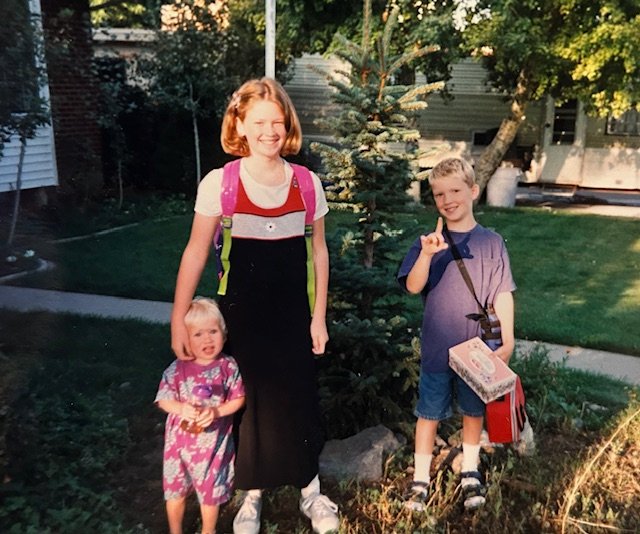
    I watched my baby brother, six-foot-two, waste away to 130 lbs. It was one of the worst kinds of grief: the slow kind, the kind that sits beside you at work. My boss, usually hands-off, told me I had to fire him, which I did, after crying and begging him to get clean yet again.

    Then everything snapped at once. Ethan went on a crime spree, robbing several 7-11s and ending up on the evening news across the West. Since 2021, he’s been in and out of jail. He’s totaled more cars — his own and my mom’s — than I want to tally. Recently, after getting almost clean, he was picked up on a minor traffic charge and, amid conflicting police accounts, was sentenced to five years in prison.

    I feel like I helped raise him. I feel like I’ve been both sibling and parent in the same exhausted frame. And I’m not sure I ever had the emotional infrastructure for the job. My other brother, Seth, mirrors our father: a near-religious refusal to mention us. He’s built a life that pretends his mother, sister and younger brother simply evaporated. And still, I go on. Because that’s what I was taught to do and because stopping has never felt like an option.

    “If it is endurable, then endure it.” — Marcus Aurelius

    Some days I feel like the rock; other days I feel like the storm. But adulthood, I’m learning, isn’t the clean, upward trajectory I imagined. It’s a series of roles we never asked for but carry anyway. Another year older. Another year still standing.
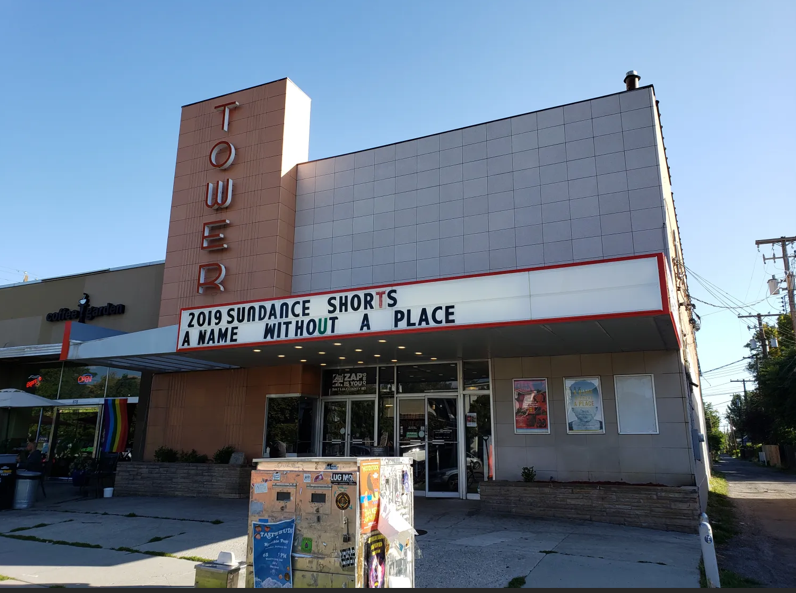
  • Coming to You from Wizard Tower 9th x 9th

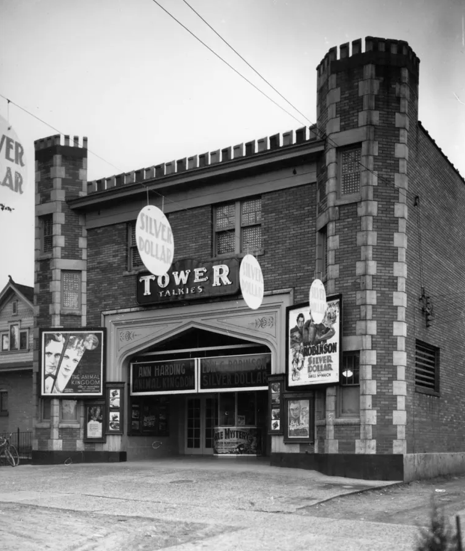
    When I lived in the 9th & 9th neighborhood during the pandemic, behind the Dolcetti I mentioned yesterday, I walked past the Tower Theatre nearly every day. The marquee stayed dark, the brickwork grew more weathered and the whole building held that peculiar stillness the city carried in 2020. Even so, the corner near Liberty Park still felt like a point where Salt Lake history pooled.

    Composite image

    Revolution 9th & 9th

    900 South and 900 East — known locally as “9th & 9th” — grew out of early streetcar suburbs and farmland into one of Salt Lake’s most walkable residential districts. Much of the surrounding housing stock dates from before 1940, with a mix of Victorian, Tudor, Prairie and Craftsman homes.

    The business district along 900 South developed into a cluster of independent shops, restaurants and cafés — what some writers once described as an “anti-mall.” The roundabout at 900 S and 1100 E is home to Out of the Blue, a 23-foot humpback whale sculpture that became a neighborhood landmark almost overnight.


    The Tower Theatre

    The Tower Theatre opened around January 1928 at 876 E 900 S, one of the earliest purpose-built neighborhood cinemas in the valley. It originally featured two small masonry towers on either side of the entrance — a facade modeled loosely on fortress architecture, possibly even the Tower of London according to early promotional descriptions.

    Composite image

    By the 1950s, the towers and much of that ornate facade were removed or covered during mid-century “modernization” efforts; Carter Williams at KSL says: “Its current facade dates back to the 1950s, when the building underwent a major renovation to keep up with the industry.” Over its long life the Tower has been a single-screen movie house, an art-house venue and eventually a key site for the Salt Lake Film Society, which took over operations in the early 2000s. It is one of the oldest cinema spaces in Salt Lake City still intended for film exhibition, even as renovation plans continue to move through approvals.


    999 magic

    When I lived in that apartment during the pandemic, one of the few social things that never really stopped was the 999 bike ride — this loose, late-night Thursday swarm of cyclists that always managed to gather at 9th & 9th no matter how strange the world felt.

    Composite image

    It was this oddly steady pulse of life in a year when almost everything else had shut down. We’d drift downtown, sliding through empty parking garages and echoing stairwells, the whole group lit by bike lights and someone’s portable speaker bouncing around the concrete. It was loose and a little chaotic, but it was one of the few things that made the city feel alive.


    The tower as a symbol

    In tarot, The Tower card (XVI) represents rupture — structures breaking apart, assumptions falling away and the moment when something old can no longer support what has been built on top of it. The actual Tower Theatre carries a milder, architectural version of that symbolism: built with confidence and ornament, stripped of its towers mid-century and now in the process of another reinvention.

    The neighborhood around it has shifted too, from a quiet streetcar corridor to a lively strip of shops, galleries, filmgoers, festivals and public art. The Tower’s name, once literal, now feels symbolic in a different way: a reminder that Salt Lake City’s cultural spaces don’t stay static — sometimes they erode, sometimes they’re restored, sometimes they return as something new.

  • Fairytales We Tell Ourselves: The Utah Pantages Theater and Ingmar Bergman’s Persona

    Dolcetti Gelato interior

    The intricate designs of my lethal lines, criminal rhymes
    From the mind of a thug shaking state time
    Take it to the next phase you had your time to talk sh*t
    Now b*tches bustas getting checkmated
    …To all the players on the Westside
    We’ll still be ballin’ on these b*tches when the rest die
    Players on the Westside

    2Pac

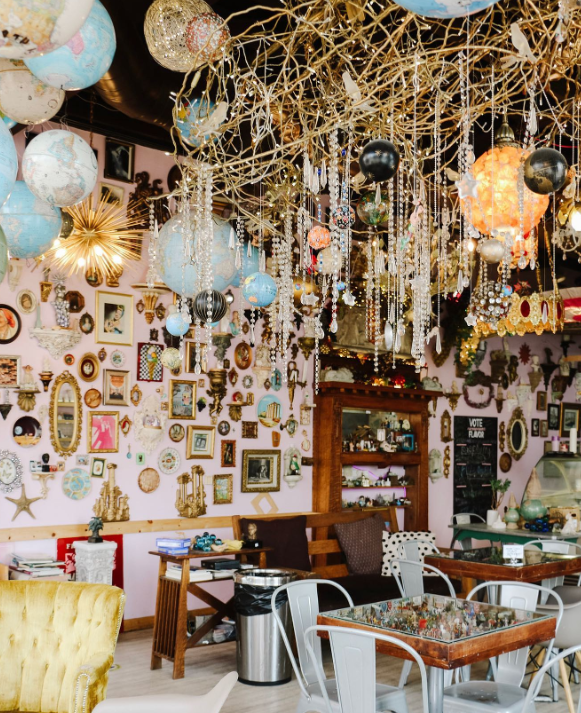
    2020–21 was an oddly energetic, almost enchanted time to live in downtown Salt Lake City. After moving back from England to my hometown in June 2019, I rented a small apartment behind Dolcetti — the gelato shop founded by Mark and Kari England in 2004, known for its 150 rotating, small-batch flavors (Dolcetti). Inside, the place looks like the I Spy books and Wes Anderson had a baby and then coated everything in thrift-shop gold: curiosities on every shelf, saturated colors, odd treasures arranged with the confidence of someone who knows exactly where beauty hides. I loved sitting next to the window to write and observe passersby.

    My apartment was a tight 900 square feet for me, my cat and a plant collection increasingly convinced it could overthrow the living room. But it sat at the center of a downtown that felt, even in the quietest moments of the pandemic, strangely evolving. I watched George Floyd marches move past my corner, mourned the independent shops that couldn’t survive the shutdowns and nurtured a growing affection for the Criterion Collection as if it were an underground library I’d smuggled back from another life.

    Composite image

    It was in the middle of all this that I met Michael Patton, who works under the artistic name Michael Valentine. Patton is a direct descendant of General George S. Patton — a lineage he acknowledges even as he rejects its militaristic implications. He chose Valentine as a kind of ongoing protest against war culture, a refusal to be defined by the mythology of battle. And yet, his ancestor’s grit runs straight through him, whether the peace-loving activist in him likes it or not. Once, when I was interviewing him for an article for SLUG and we were driving around looking for a place to get lunch, he said, almost resigned and almost proud, “Yeah, I know where the grit comes from. I can’t pretend I didn’t inherit it.”

    Michael Valentine

    Valentine hosted a weekly vintage-film gathering outside the shuttered Pantages Theater on Main Street and I hadn’t even noticed the building until I wandered across a cluster of folding chairs, a projector and a rotating cast of people keeping cinematic vigil. He and Casey O’Brien McDonough — the Irish preservation activist who later ran for governor — were partners in the fight to save the building, a kind of two-person engine powered by research, outrage and sheer stamina. Their efforts were widely documented, including in a 2023 Utah Stories report (saving the Pantages) and by archival groups like Preservation Utah (Pantages archive). Together, they welcomed every rag-tag citizen of downtown Salt Lake — film geeks, artists, unhoused neighbors, accidental passersby and the rest of us drifting through pandemic-era loneliness — into the Pantages film club.


    Two bloody characters

    It occurs to me now that both Valentine and I grew up in the shadows of men known for bloodshed: his, the general who charged across Europe; mine, the mythic king who dies in every retelling. Patton and Macbeth — tactician and traitor, hero and villain, depending on who’s telling the story. Maybe that’s why we both gravitated toward fairytales and toward the Pantages, which offered its own kind of mythic refuge.

    As I wrote in my last blog, the Pantages didn’t survive. The campaign to save it ended in a brutal civic heartbreak in April 2022: Valentine’s hunger strike, a lawsuit filed against him by the mayor and eventually his decision to run for mayor himself in an attempt to protect his ability to protest. None of it was enough. The building was demolished and with it went a strange but vital axis of the downtown arts ecosystem — the kind of space where eccentricity, history and stubborn idealism could still sit side by side.

    Salt Lake City Mayor Erin Mendenhall

    The demolition unfolded under the administration of Salt Lake City’s mayor, Erin Mendenhall, a Democrat who branded herself as a progressive environmentalist while advancing some of the most aggressive pro-development and anti-preservation policies the city had seen in decades. Mendenhall’s office not only dismissed community objections to the demolition but actively escalated conflict with activists; at one point her administration filed a lawsuit against Valentine, alleging he was “stalking Erin” while the Mayor’s office was also obsessively following everything Michael did. The gap between her public rhetoric and her actual governance was so wide it felt like its own kind of theater — a performance of civic virtue masking a pattern of decisions that consistently favored developers over communities.

    She even contacted SLUG to ask who had anonymously published the story about the Pantages, a moment that made the whole situation feel less like civic governance and more like an administration unusually preoccupied with controlling the narrative. When my article on the Pantages came out, it was hit by the publication’s most intense troll attack in recent memory — an onslaught that many in the local arts and activist community speculated was coordinated, possibly even by people aligned with her PR team. Whether that rumor was true or not, the effect was clear: the piece struck a nerve inside the machinery of power.

    But the back-and-forth between Valentine and Salt Lake City didn’t not stop there. In June 2025, through his cider company Six Sailor Cider LLC, he filed a lawsuit in 3rd District Court against the tyrannical Utah Department of Alcoholic Beverage Services (DABS) and the commission that oversees it. The complaint argues the commission violated Utah’s Open and Public Meetings Act when it voted on May 29 to deny a liquor license to his bar, Apparition. The suit asks a judge to void the vote, overturn the decision, or send it back to the commission with instructions to grant the license. It’s another chapter in the same long narrative: one man insisting that institutions should follow the rules they claim to uphold. But Michael’s not a saint: He also garnered controvery for saying Zionists weren’t welcome at Apparition (which I publically condemned).


    Telling ourselves what’s really real

    And maybe that’s where the fairytale really begins — not the sweet, storybook kind, but the darker kind we use to warn ourselves, to name what’s broken and to survive contradictions we can’t fully articulate. That’s actually what Zionism is: a fairytale told to keep people from losing hope after they lost everything else. Valentine has his fairytale of the Pantages. The city has its fairytale of progress. We all carry narratives like that: simplified, hopeful, a little irrational, just coherent enough to hold back the chaos. The truest fairytales are the ones that don’t quite make sense, because they tell the truth slant — they let the light and the darkness sit in the same room without resolving anything.

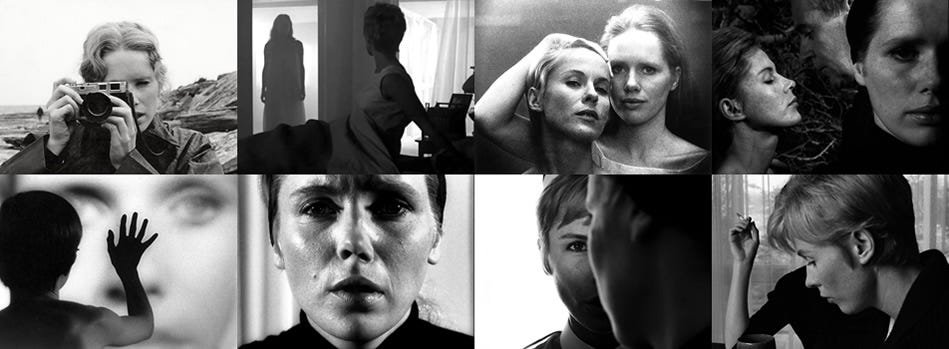
    Which is maybe why Persona hit me the way it did. I think it’s the best film ever made, Citizen Kane be damned, and in 2021 I watched every Bergman film in chronological order. Nothing prepared me for Persona. It’s the rare work of art that doesn’t just tell a story but exposes the narratives we use to protect ourselves: the ones that collapse under scrutiny, the ones too sugary to be real, the ones that turn toxic when we mistake them for truth. It’s a film that diagnoses the human condition by peeling back the performances we cling to and showing what happens when they finally split.


    The plot of Persona (briefly)

    A famous stage actress, Elisabet Vogler (Liv Ullmann), abruptly stops speaking during a performance. Nothing is physically wrong with her — she simply refuses to talk. A young nurse, Alma (Bibi Andersson), is assigned to care for her and the two retreat to a remote seaside cottage. There, with Elisabet silent and watchful, Alma begins to fill the quiet, confessing her insecurities, affairs, fears and buried shame. Slowly the boundary between them dissolves. Elisabet studies Alma; Alma imitates Elisabet; their identities merge, fracture and reassemble. By the end, it’s unclear whether two women exist — or one consciousness split across two bodies.


    The psychological terrain

    Bergman uses this plot as a kind of Freudian X-ray. The entire film is built around the terrifying simplicity of a question: Who are you when you stop performing? Alma is the “good girl” who has spent her life being pleasant, compliant, socially acceptable — a mask so airtight she doesn’t realize she’s wearing it. Elisabet, the actress, stops speaking because she can no longer tolerate the falseness of her own public self. Her muteness is a rebellion against the “theater” she was born into, professionally and socially. She opts out.

    Put them together and the film becomes a study in identity erosion: the psychological cost of pretending, the masks we inherit and the masks we craft, the social demand to always perform the self people expect, the way silence can be a weapon and the way speaking can expose more than it protects.

    Alma’s breakdown is essentially the collapse of a persona she can no longer hold upright. Elisabet’s silence is the collapse of a persona she refuses to uphold any longer. They meet in the wreckage. And Bergman’s point, delivered through a surreal, self-reflexive film that literally breaks apart on screen, is that when the performance becomes unbearable, the self starts to disintegrate.


    Pretty on the outside

    In Salt Lake City, this idea of crafting a perfectly managed self takes on its own regional flavor. There are plenty of people who look beautiful, polished, virtuous — people from the right families, with the right social networks, projecting the right kind of civic goodness. And yet, time and again, you discover just how many of them are “two-face,” switching between public benevolence and private ambition with unsettling ease.

    The politicians and employees inside the city and state government — some truly are good people. But many mistake their own checklist of credentials, connections and cultivated traits as proof of who they are on the inside. They forget that outward virtue is not the same thing as inner integrity. And some of them, make no mistake, are rotten to the core.

    We should all remember where we came from.

    Tupac image paired with Pantages fairytale theme

  • From Cambridge Chapels to Salt Lake’s B’nai Israel Temple

    Composite image

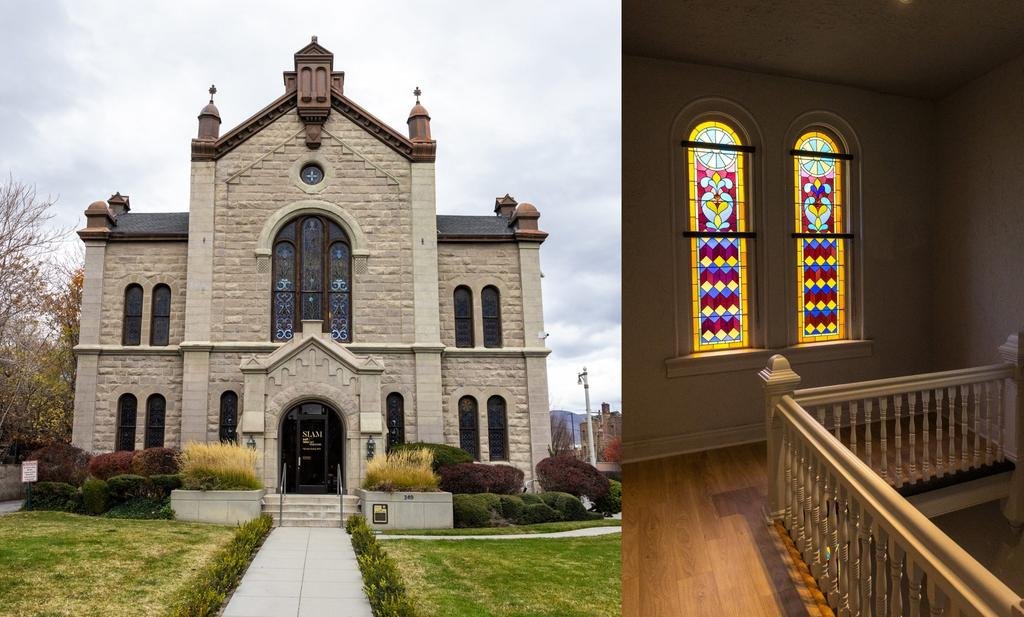
    Yesterday I was reminicing about the churches I knew and loved in Cambridge — stone chapels tucked into side streets or towering over intersections, the kind of places that hold memory simply by continuing to stand. Today I’m thinking about another piece of historic architecture much closer to home: the B’nai Israel Temple in Salt Lake City, where the Salt Lake Art Museum (SLAM) is beginning to take shape. I recently published an article about the building’s long history and its new institutional future. The thread between the two posts is preservation — how inherited spaces carry memory and what it means when a community chooses to keep or discard the places that define it.


    The tragedy of the Pantages Theater

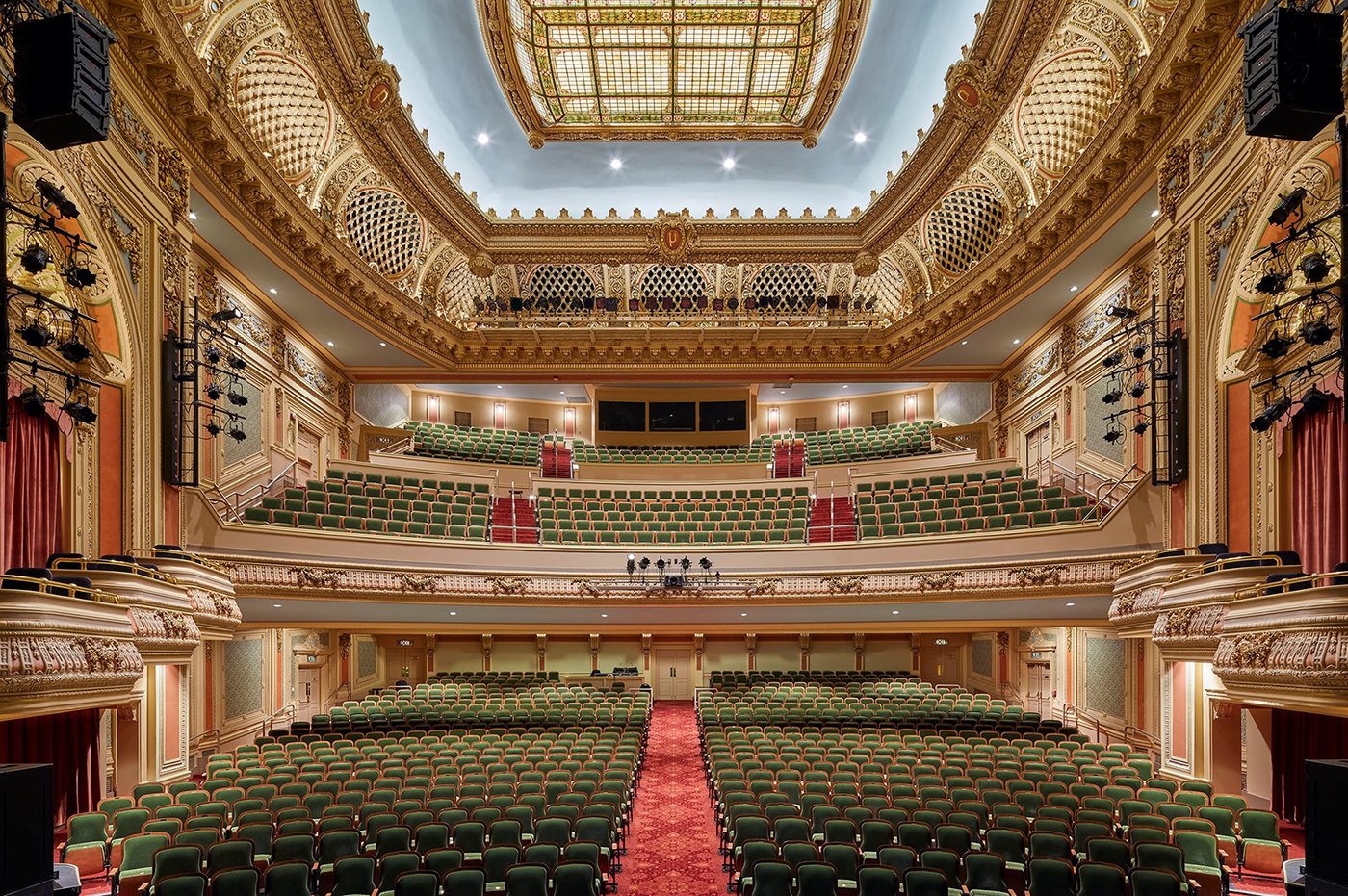
    My interest in preservation became personal during the Utah Pantages Theatre debacle in 2021, when I researched, wrote and anonymously published an article about the zero-dollar deal that handed a nationally significant 1918 theatre to developers for demolition (read it in SLUG).

    The story had been in the news for a while and continue to gain traction, written up by multiple reporters at The Salt Lake Tribune and elsewhere. Months later, I learned that the Mayor’s office had contacted SLUG asking about the author behind the piece — an unexpected development that sharpened the sense of risk many preservation advocates already felt. When the city ultimately went through with the demolition during the pandemic, I remember standing on Main Street and looking at the cleared site where the theatre had stood.

    Composite image

    What followed has only underscored the loss. The redevelopment tower promised in exchange for tearing down the theatre has yet to materialize. According to recent reporting, the property has been cleared and is being used as a temporary surface parking lot while the high-rise project remains stalled. The developer has requested paving and interim-use approvals and the site continues to sit empty — an absence rather than a new beginning.

    In the words of the Salt Lake Tribune, the theatre was “torn down in 2022 … to make way for a parking lot,” a bitter outcome when the city gave up a historic landmark and a (rumored to be) priceless Tiffany skylight, taken from the site before the demolition. The RDA has been rebranded the CRA, with no mention of the name change on the city’s websites.

    Composite image
    Composite image

    One success story

    Against that backdrop, the work happening at the B’nai Israel Temple feels like a rare counterexample. Instead of another teardown or another “too expensive to save” narrative, the building is being restored in a way that reconnects it to the community that built it. SLAM’s founder, art historian Micah Christensen — whose family operates Anthony’s Fine Art & Antiques just a few blocks away—has rooted the museum’s vision in the building’s layered cultural history and in the relationships his family has maintained within the area for generations (more in the 15 Bytes article). The museum’s presence inside the old sanctuary weaves together family history, art and the cultural life of the neighborhood. It’s a reminder that preservation can be generative — not just resistance to loss, but a way of making room for future stories inside an inherited space.

    Preservation always sits somewhere between memory and power. Cambridge taught me that some places endure because whole communities quietly steward them. Salt Lake taught me that some buildings require a public fight and that those fights sometimes come with unexpected personal costs. The B’nai Israel Temple — and the work SLAM is beginning inside it — offers a different model: a moment where the city, the institution and the community align long enough to let history remain visible. After watching the Pantages reduced to a cleared lot awaiting a project that still hasn’t begun, that alignment feels worth noting.


  • Paint like sound (when it’s thin)

    Color shifts by degrees —
    heat, distance, saturation.
    Peach into rose, rose into air.
    A thin white line cuts through —
    it hums but doesn’t waver.

    Edges blur then settle orange against shadow,
    geometry built from hesitation.
    Pattern like breath, repeated but never exact.

    Leaves or shapes —
    stamped like wallpaper,
    or under a child’s boot;
    rhythm steady either way,
    a pulse made visible.

    In another frame —
    pink and lilac flirt with yellow,
    a tone held long enough to remember.

    Paint behaves like sound when it’s thin —
    frequency without noise,
    the same horizon
    at different times.

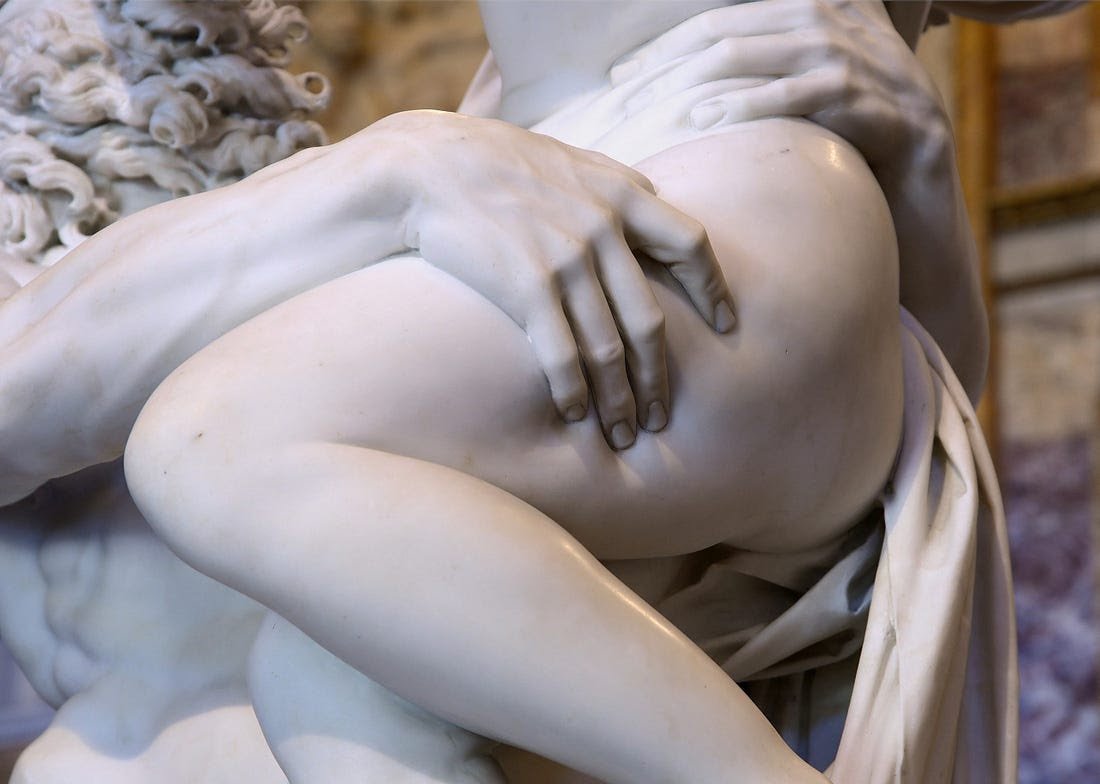
    Bernini PlutoBernini Quote