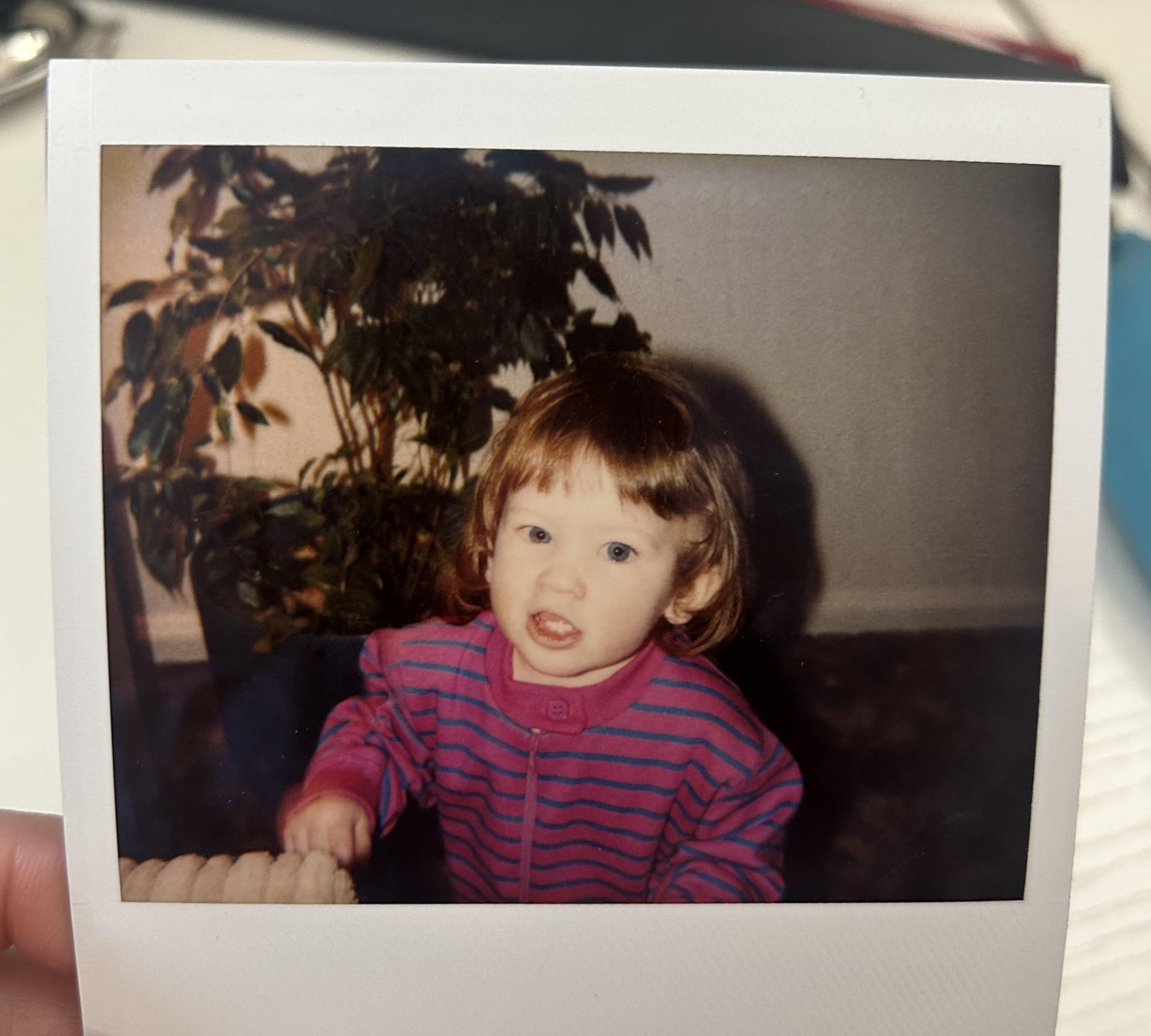
This blog is dedicated to two of the brightest stars I had the pleasure to know on Earth:
My Don Draper grandfather, Jeffrey Cloward McBeth — Every time I watch Benjamin Button, I’m reminded of the treasured time we spent together.
And Adlai Padma Owen, the smartest Godzilla director to ever walk the planet, if only for six short years.
Requiescat in pace, “’Till we meet again.”

One of the more exciting events of my sheltered Mormon childhood was entering public elementary school in fourth grade. I had previously been enrolled in Montessori and homeschool programs, and my mom was torn between family members with strong opinions about how to educate a “highly gifted” little girl.
By fourth grade, I was something of an autodidact, a word I learned later, reading The Elegance of the Hedgehog by Muriel Barbery. I have a soft spot for its two protagonists: Paloma, a thirteen-year-old quietly planning her own death, and Renée, a concierge who hides her expansive knowledge of literature and philosophy behind a grizzled exterior. Both are largely alone, absorbed in their own inner lives, until a chance meeting sparks a quiet recognition between them. An instant bond forms, the kind often seen among unusual — or, as people say with derision or enthusiasm, ‘star children.’

My parents had been divorced since I was three, and my extremely religious father was vocally anti–public school. Meanwhile, my rich Democrat grandparents were firmly pro–state education, worried I wasn’t being socialized properly, and were hand-wringing I’d end up as “Little House on the Prairie” as my new stepmother Gloria. Gloria had dropped out of school in seventh grade and was baptized as a teenager by my dad while he was on his Mormon mission in Florida.
After my parents divorced, Gloria somehow discovered via the infamous Mormon grapevine — a kind of soft Communist Party network — that my dad was single. They married, moved into a wooden shack in Hyrum, Utah with two bedrooms and no central heating, and vowed to homeschool my step- and half-siblings forever. When Seth and I went to visit, we all huddled in one attic bedroom.
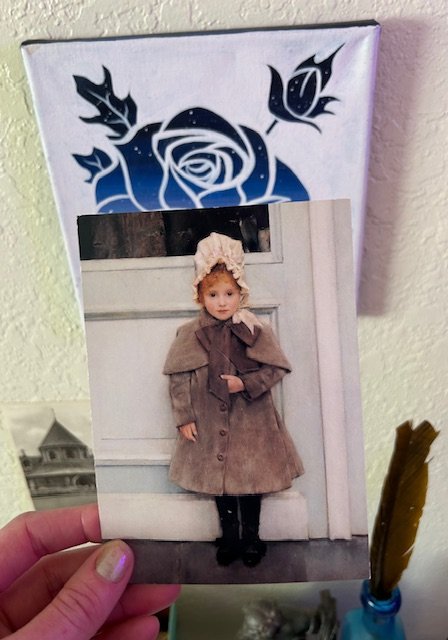
My grandpa Jeff, the liberal ex-Mormon architect — occasionally joked, with a wink and gap-toothed smile — that the Hyrum-Logan area was the “shallow end of the Mormon gene pool.” The Hyrum House, as we called it, was the first of many places my step- and half-siblings lived in during elementary school. My dad set a pattern of out-of-state moves that steadily limited how much we saw each other. He’s been mostly employed Mormon Church in a vaguely defined marketing-adjacent role for decades.
The family came back to Salt Lake when I was fifteen, after a migraine/divine vision told my dad to move to an apartment complex next to Temple Square to “make sure I was on the right path.” When was all said and done, there were seven of us kids. I was technically the second-oldest, after my stepbrother, but he was always about ten inches shorter than me.
Gloria and God’s gifts
What many people don’t get about the special bonds unusual, gifted or “autistic” kids share is just how singled out many of us have been by “normies” — how often that singling out is meant to sting, or how often it’s done by other kids’ moms. It seems to be more pointed when these women’s whole identities ride on being “successful” stay-at-home mothers.
When your one role is mom, you want your child to turn out spectacular. How else do you derive a sense of specialness yourself? As psychoanalysts and psychologists have noted, conservative, highly absorbed mothers — especially within low-income households or those who’ve been abused themselves — can exhibit symptoms of Munchausen’s Syndrome, closely related to Stage Parent Syndrome. I think of it as a darkening spectrum.
When money is tight or a person’s self-esteem is on the brink of collapse, a sick child, rather than a star child, can provide the attention and social validation they need. If a parent is prone to jealousy — and jealousy toward young girls is common in post-polygamous cultures where youth is lock-step tied to beauty — stress can push even well-meaning behavior into adult-child bullying. In some cases, it turns into abuse all at once; more often, it metastasizes slowly over time.
1990s Utah still had spankings, smackings with slippers or wooden spoons, or, in rare situations, my dad removing his belt to give a “whipping.” The girls in the family were usually not the recipients. I was, however, singled out as an “arrogant little girl” who needed reminding about the importance of being meek. Once, when I was maybe four or five, I had the audacity to say I thought my drawings were better than those featured in the Mormon Friend Magazine. My stepmom reacted hotly: “If you brag or hold your gifts over other children, God will take them away from you.” For years, I was genuinely afraid I’d be struck down by the Lord if I was too proud of myself.
The rebuke really hurt, but it’s one of the mild examples of jabs or outright propaganda campaigns waged on me by jealous older women, when I was still a child. This created an odd feedback chamber, where praise that sounded positive might actually be teasing or criticism. From talking to other “gifted” children: Our fear of being mocked and ridiculed for good performance makes trusting difficult.
To be honest, the female bullying I experienced growing up makes it hard not to notice how many abusive women there are — and how rarely they’re corrected.
Indigo children, or “There is no spoon.”
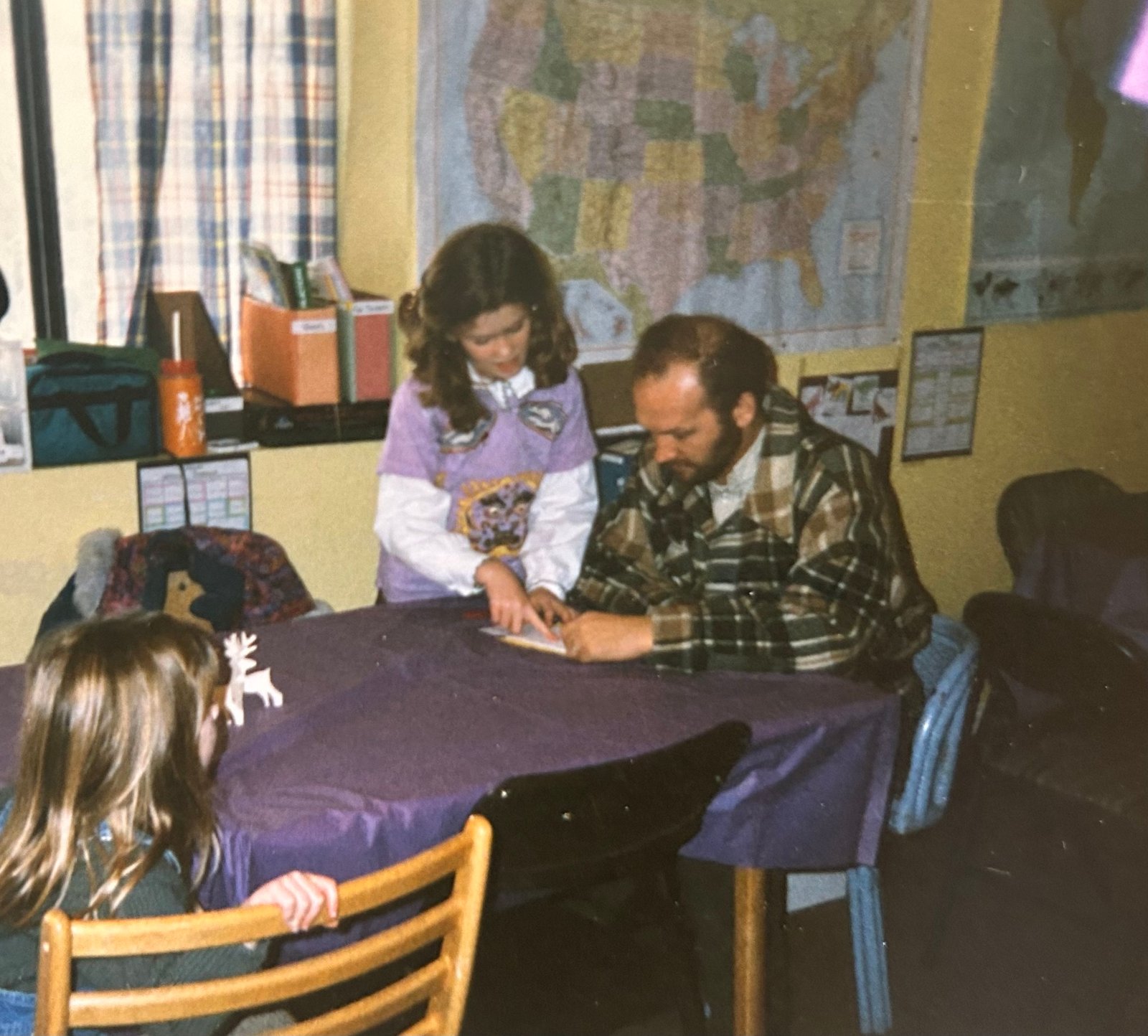
Despite misgivings, I started public school in fourth grade like the normal child I definitely wasn’t. The not-normal presented immediately. My teacher complained that I spent most of the day staring out the window, finished assignments almost instantly and didn’t play with the other children. My mom explained to the frustrated teacher that I read encyclopedias for fun, preferred conversations with adults and had done various “magical” things since I was a baby, which made me something of a celebrity at family gatherings.
Once, before I could roll over, my grandmother left me on a blanket with a box of magnetic ABCs. When she came back, I had arranged the letters into a perfect alphabet. She screamed in shock and retold the story — over and over.
When feats of raw baby intelligence became passé, grandma progressed to telling spooky stories about me “levitating during a nap” to increasingly exasperated and jealous aunts and uncles. My grandpa once told her to “stop telling lies to make Hannah seem… weird.” My grandma’s eyes filled with tears: “Oh Jeff! How could you talk to me like that!?” To this day, thinking about my grandpa putting my insane grandma in her place still brings a smile to my face.

Indigo child vs. Star child vs. Special child vs. Autistic child
This was around that late-1990s moment that produced so many satisfying punk artifacts in the American West. The spirit of counterculture — skateboard lore, anti-authoritarian media, SLC Punk! (1998) — spread widely enough to reach even the aggressively suburban Mormon bubble I lived in. The homeschool moms trying to educate little misfits started whispering that their Timmys or Ammons might be indigo children with special abilities.
The homeschool co-op where I spent most of my elementary school years was run by an ex–public school teacher, a Maryland Democrat who had dragon and yin-yang sculptures in the entryway of what she’d named Granite Hills Private School.
Between storytime, geography lessons, and breaks playing Super Mario Brothers on an N64, we learned about the encroachments of the Patriot Act, not long after The Matrix was released. The culture reflected a growing distrust of the surveillance architecture emerging alongside the internet.

Conspiracy was mainstream. It passed from nerd child to nerd child, somewhere between geography lessons, competitions to recite the most digits of pi and races to see who could rollerblade fastest at “Homeschool Skate Night” in the neon-carpeted rinks across Utah.
Why I still read Freud

The escalating conflict between the fourth-grade teacher and my mom led to a professional evaluation. Like many educators before and after her, she seemed to resent the “special” child whose mother insisted there was nothing wrong — only gifts that needed to be accomodated.
The three-day IQ test remains one of the most engaging stretches of time I remember spending with a non-relative adult. Her genuine interest in my mind and intriguing questions sparked a lasting interest in memory, learning and even psychoanalysis. As I write this, The Freud Reader sits on my desk, the second of his collected works I’ve attempted.
She started by asking me to recall every object in the room without looking, and after a series of general knowledge questions that grew steadily more difficult, she asked about my earliest memory. I told her about crawling over to a potted plant and digging, deeper and deeper; my dog was my hero and I wanted to be exactly like him, I said. “Well, you must’ve been a toddler. What an impressive memory for such a young person.” Here was another instant bond: How could I grow up to be like her?
During the course of my education in art history in college, I became familiar with Freud’s concept of a “screen memory.” Childhood memories are notoriously unreliable and often feature ideas and symbols that may not be literal facts, but may reveal deeper and more important truths. The field of childhood memory has been contested by psychoanalysts, psychologists, social workers and members of three-letter agencies ever since Freud sparked a global obsession with dreams and what he called the sub- or unconscious.

Like everything surrounding Freud’s legacy, the debate about how often or to what degree childhood memories are altered as we retrieve them is fraught. Some factions elevate dreams and symbolic memories from childhood, while others say they’re evidence that children fabricate stories of trauma for attention.
The polaroid of me as a baby at the beginning of this blog shows that same plant featured in my earliest memory. Could I have fabricated the memory after seeing the picture, making my first memory later and less impressive? The full context shows this is not the case: I really have clear, narrative recall from before I could talk.
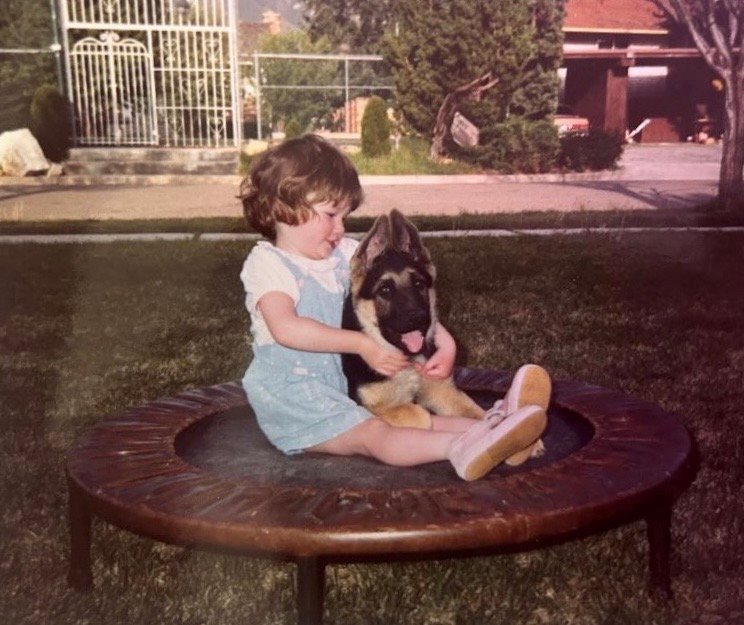
What was missing for decades were any photos of or clues about the dog I loved so much that my earliest memory revolves around him. Like so many parts of our childhoods, symbols, memories and affinities become important later on for different reasons. Much later, this one image surfaced. (I’ll return to the German shepherd puppy’s significance in a later blog.)
Congratulations, you’re in the Matrix
After the IQ tests came back, I tested into sixth grade, so it was reasoned that I was too mature to find class assignments or interactions with my classmates very stimulating. The school was at a loss about what to do, and at that point my dad found out what my mom had done. It was true that she’d refused to let them photograph me for the yearbook, but as I heard him yelling, “NOW THE FEDERAL GOVERNMENT HAS HER IN A FILE!!!” My mom soon put me back in the homeschool co-op.
If you’ve been following anything about Epstein and the narratives surrounding it, including the 2026 yearbook controversy, this is all pretty interesting. In February and March 2026, a social media-fueled controversy emerged around Lifetouch, the largest school photography company in the U.S., due to its connection to Leon Black, a billionaire named in the Epstein files. At the time, my dad’s meltdown began to convince my mom (and me) that he was crazy. Like so many things related to my Mormon upbringing and its echoes, more than three decades later I can’t make heads nor tails of it.
The tallest man in the room
My grandfather, Jeffry Cloward McBeth, was born in 1945 on a homestead farm in Payson, Utah. He was one of the few in his high school graduating class to go on to college, and once he got there, he excelled. As an architect, he liked working with wood and paid attention to the smallest design details. He designed homes for developments in Hawaii and Carefree, Arizona. He had impeccable taste, and it showed in everything, including his silk Hawaiian shirts.
He had a wry sense of humor that surfaced rarely, but when it did, it sparkled. He didn’t speak much. I remember him best in fragments: his 6’4″ silhouette in the window, smoking “in secret,” far from his family. He liked being alone, liked espresso and chocolate donuts, and carried himself with a graceful dignity.
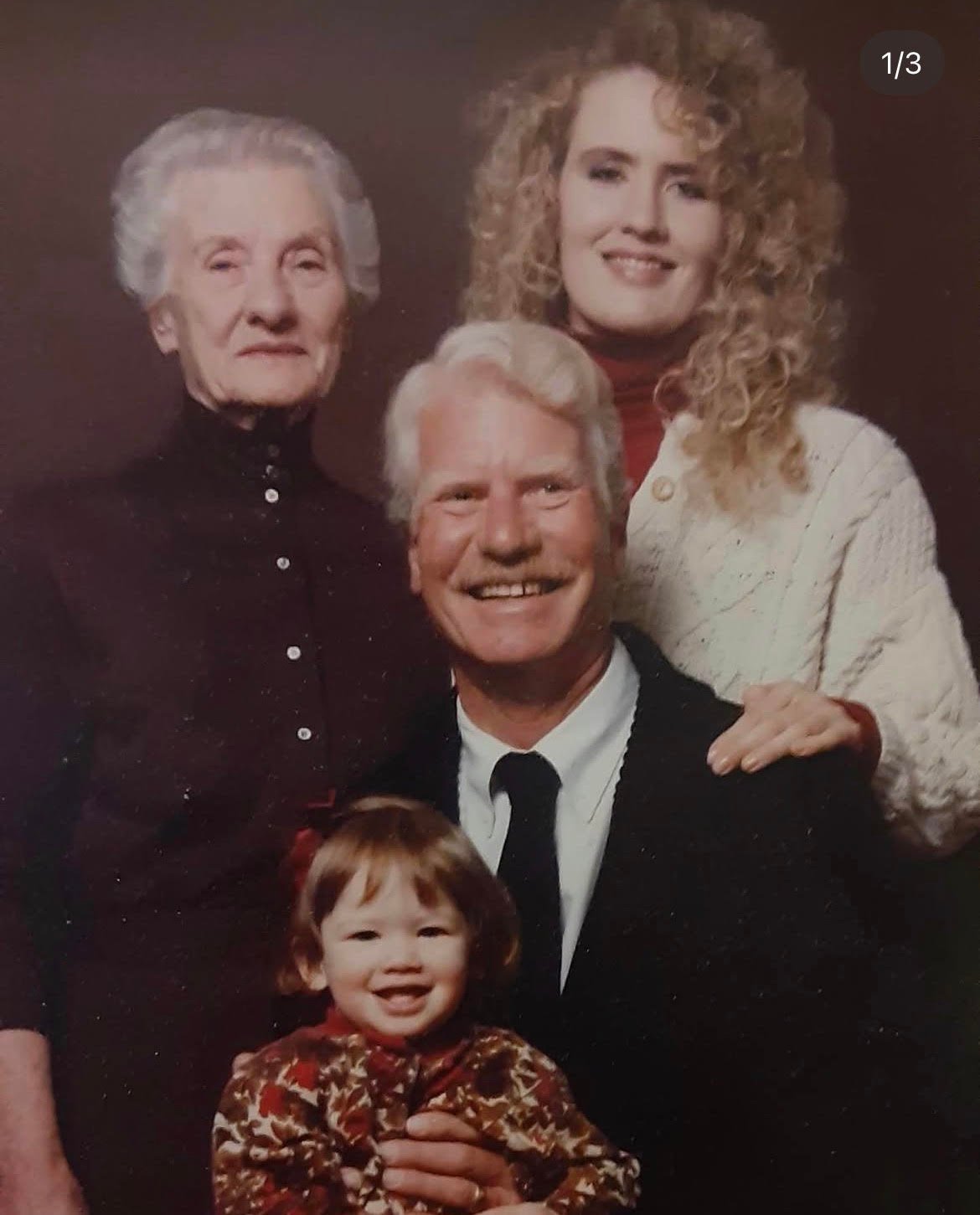
His stories about the late-1960s — working as a draftsman in the Financial District, living near Haight-Ashbury — forever animated San Francisco in my imagination and heart.
Every time we saw each other, I’d babble on about my travels. He would sit there, listening, radiating a quiet pride that warmed me for months. He was one of the few people who made me feel fully seen, every time. I’m sure we will, as the song goes, “meet again someday.”