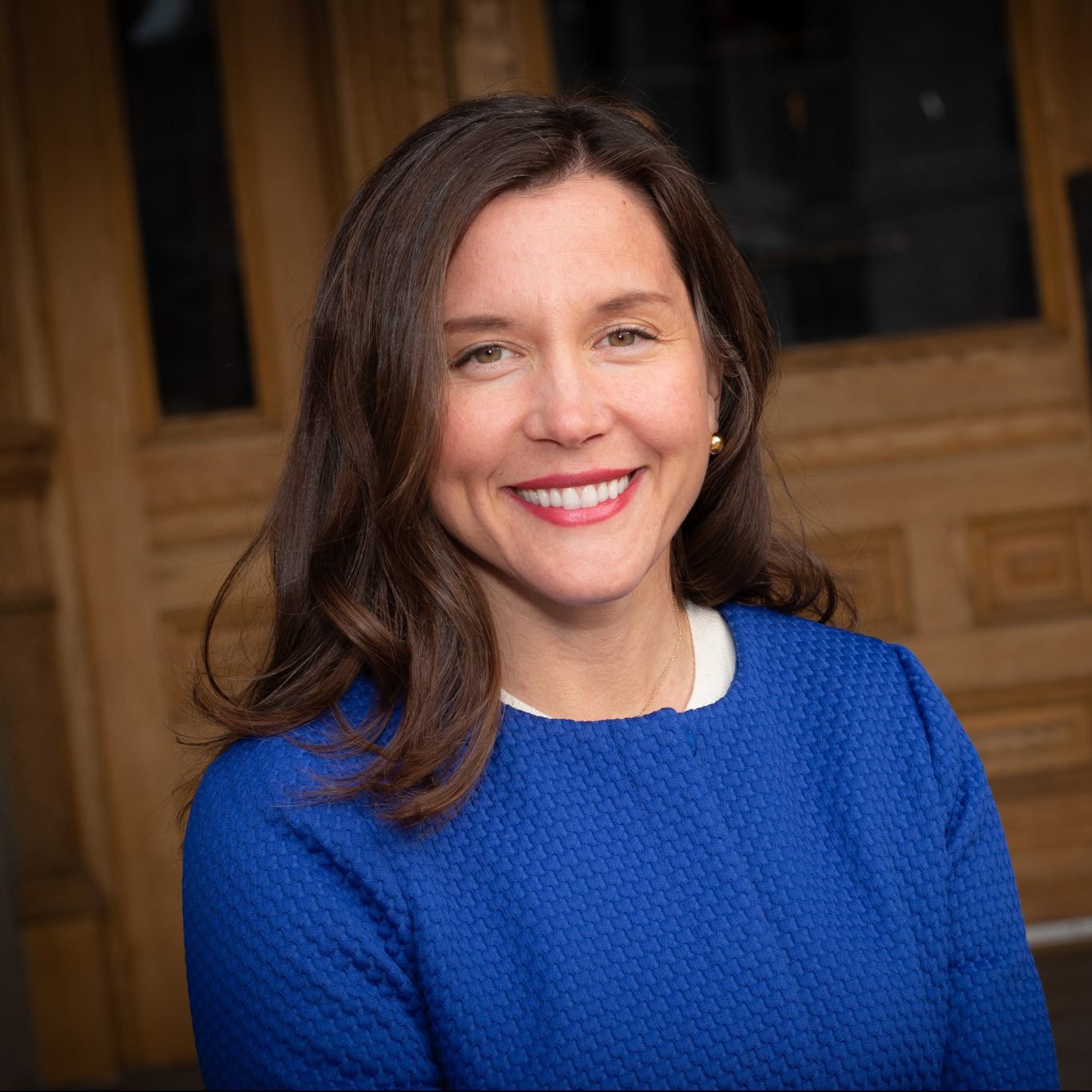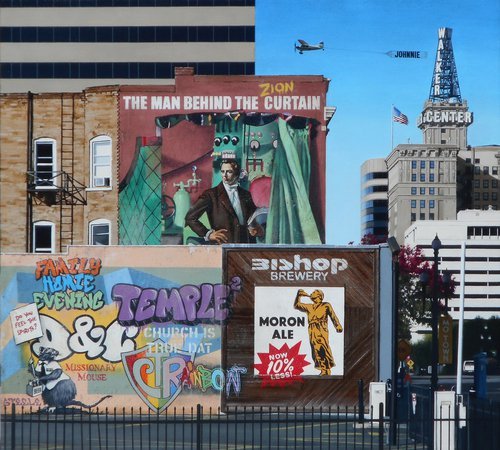
Tag: Hannah McBeth

  • Ten Years of Arts and Cultural Criticism in the American Southwest (2015-25)

    Field Notes: Ten-year anniversary image

    I get older; the art stays new.

    This year marks ten years of writing arts and cultural criticism in (and around) Utah. It’s been a long, slightly chaotic labor of love, and it’s given me more than a publication list. Writing became a way into rooms I didn’t yet know how to enter—openings, rehearsals, studios, back corners of galleries, community meetings—and, over time, it gave me people too: friends, collaborators, and others who cared enough to keep showing up. In a place where arts infrastructure is often held together by duct tape and determination, the work mostly looked like paying attention, writing things down, and trying to help hold space where the official record thins out.

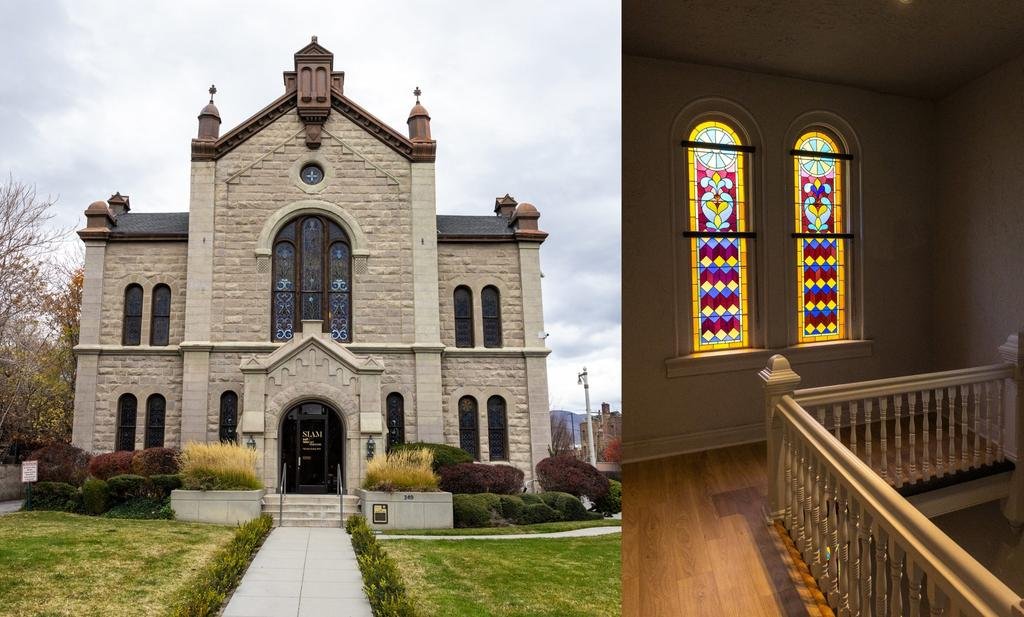
    One stat that sticks with me: Utah has fewer museums per capita than any state except West Virginia, an unglamorous fact that explains a lot about why cultural memory here can feel so easily misplaced. I thought about that again while reporting on the B’nai Israel Temple’s next life as the Salt Lake Art Museum (SLAM), a project led by Micah Christensen and slated to open in 2026. The building’s survival is, in many ways, a case study in how rare cultural preservation can be in practice. (Read more here: “The Salt Lake Art Museum (SLAM) Finds Sanctuary in the Temple”.)
    Field Notes: Ten-year anniversary image

    What follows is a year-by-year chronicle pulling a few representative pieces per year and the themes that kept returning: meaning-making and collective rupture; heritage and community memory; abstraction and early modernism’s long shadow; and the ongoing work of paying attention to people and places that get minimized, misread, or politely ignored.

    2015 — War, Memory, and the Theater of Trauma
    2015 image

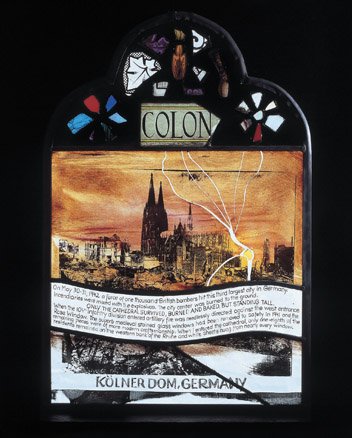
    My earliest arts writing was already circling questions that would stay with me: how societies remember violence, how trauma echoes across generations, and how performance becomes a space for processing what cannot be easily narrated. In 2015, I found myself repeatedly drawn to work shaped by war—sometimes historical, sometimes contemporary, often refracted through humor, ritual, or psychological displacement. Even then, criticism felt less like judgment than like translation: an attempt to make visible the emotional labor embedded in cultural production.

    What interested me most, even then, was not spectacle but aftermath: how violence lingers in bodies, language, and staging long after the event itself has passed. I was beginning to understand writing as a form of witness—one that sits with discomfort rather than resolving it—and that orientation quietly shaped everything that followed.

    Together, these pieces trace an early interest in how art metabolizes collective violence—whether through solemn memorial, absurdist comedy, or intimate portrayals of PTSD—an interest that would later expand beyond war into broader questions of community trauma and historical inheritance.

    2016 — Objects, Pilgrimage, and the Weight of Time
    2016 image

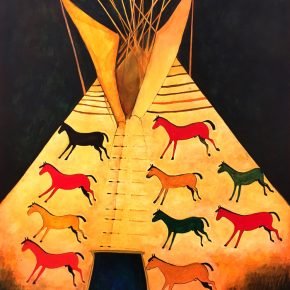
    By 2016, my writing shifted decisively toward material culture and deep time. Across exhibitions of painting, sculpture, photography, and mixed media, I became increasingly attentive to objects as carriers of memory—whether geological, cultural, or spiritual. This was also the year I began writing more explicitly about heritage without nostalgia: how artists engage with tradition, ritual, and landscape without romanticizing them. I became less interested in artists’ stated intentions and more attentive to what objects themselves seemed to remember—how time presses into form, and how place leaves a residue that can’t be fully aestheticized away.

    These essays mark a growing preoccupation with duration: fossils, pilgrimage routes, Indigenous histories, and sculptural forms shaped by both Eastern and Western traditions. Rather than treating art as isolated expression, I increasingly approached it as evidence—of time passing, of belief systems persisting, and of place exerting quiet pressure on form.

    2017 — Abjection, Abstraction, and Cultural Hierarchies
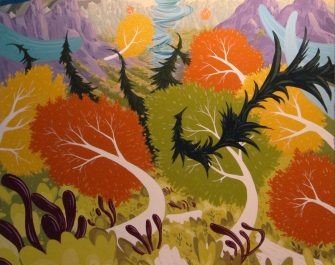
    2017 image

    By 2017, my writing had turned more directly toward questions of cultural value: what is permitted to count as “serious” art, what is dismissed as decorative or domestic, and how those judgments intersect with gender, labor, and popular culture. Alongside a growing interest in abstraction and contemplative withdrawal, I began interrogating hierarchies that shape both artistic production and reception—particularly where animation, illustration, and domestic narratives are concerned. I was also becoming more conscious of how criticism participates in gatekeeping—how language can reinforce or challenge the invisible borders between “high” and “low,” public and private, serious and sentimental.

    Across these pieces, decay and accumulation sit beside care, repetition, and craft. Whether addressing refugee loss through mass-produced objects, challenging the exclusion of animation from “high” art discourse, or examining domestic life as a site of artistic rigor, this year marks a clear shift toward analyzing how cultural systems assign meaning—and whose work is allowed to carry it.

    2018 — Abstraction and the Edges of the Built World
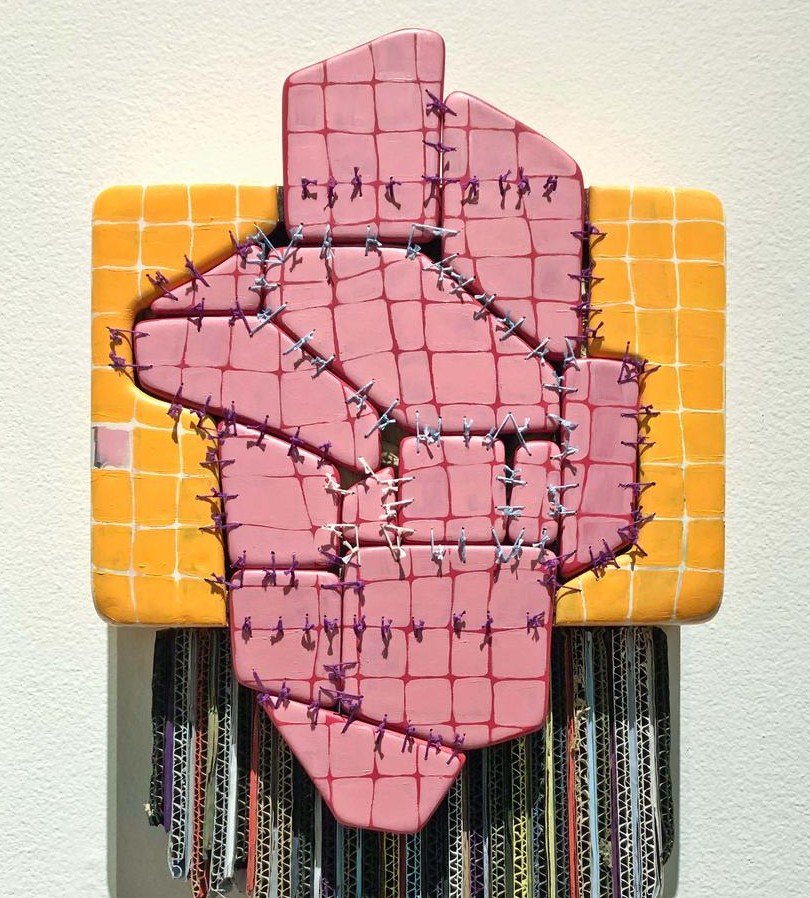
    2018 image

    In 2018, my writing narrowed its focus rather than expanding it. Instead of surveying many threads, I spent more time with abstraction and with environments that sit just outside formal boundaries—urban margins, hybrid spaces, and visual languages that resist narrative explanation. This was a year of thinking about structure: how meaning emerges when stories recede and attention shifts to form, material, and spatial tension. Abstraction became a way to think spatially rather than narratively: to read environments, surfaces, and systems without forcing them into story.

    Both exhibitions investigate what happens when order breaks down or gives way. In Ditchbank, the overlooked wilderness at the edge of the city becomes a site of negotiation between human control and organic persistence. UMOCA’s survey situates abstraction as a deliberate refusal of inherited narratives, emphasizing instead the artist’s creation of personal systems and visual codes.

    2019 — Systems of Meaning: Vision, Myth, and Inherited Structure
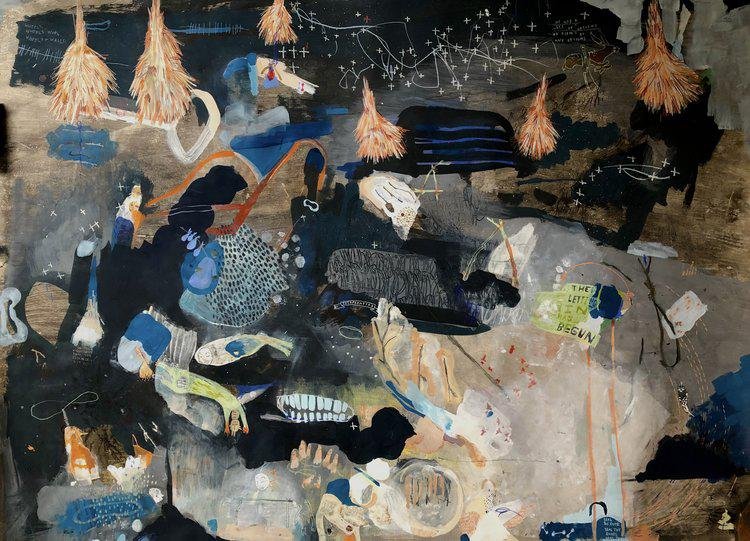
    2019 image

    By 2019, my writing had moved decisively toward systems—how meaning is produced, transmitted, and disrupted across families, myths, technologies, and landscapes. Rather than focusing on isolated works, I became increasingly interested in how artists construct visual languages: photographic processes revived and altered, myths reassembled, family narratives fractured and reconnected. This was a year defined less by subject matter than by structure—how stories are built, and how they fail. I was increasingly drawn to artists who treated myth and family not as origins to be honored, but as structures to be tested.

    Across these pieces, vision is never neutral. Alternative photographic processes foreground the mechanics of seeing itself; family relationships become the syntax through which reality is interpreted; myth operates as both inheritance and provocation; and landscapes are rendered not as scenery but as lived systems shaped by labor, memory, and movement.

    2020 — Collective Rupture and Marginalized Realities
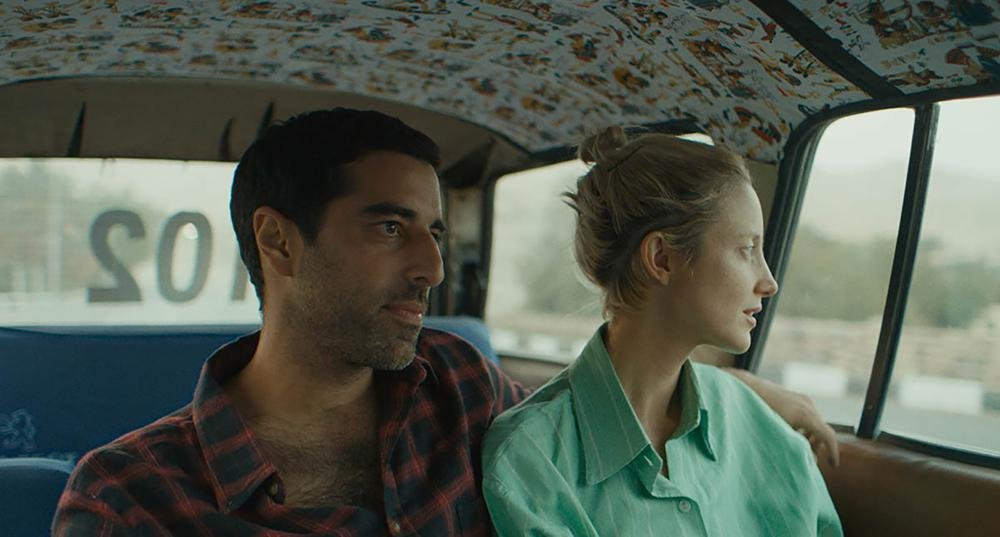
    2020 image

    In 2020, my writing became inseparable from collective rupture. The pandemic did not affect communities evenly, and much of the cultural work I was drawn to that year confronted this imbalance directly—foregrounding voices, experiences, and realities that had long been present but were now impossible to ignore. Criticism shifted from interpretation to accountability: paying attention to who bears risk, who is seen, and how art registers unequal pressure. The urgency of 2020 stripped criticism of any pretense of neutrality; to document art honestly required acknowledging the unequal conditions under which it was made, shown, and received.

    Across these pieces, art functions as a record of strain rather than escape. Screendance reframed movement through mediated formats at a moment when access and visibility were uneven. Luxor traced the emotional residue of humanitarian labor and prolonged conflict. Virtual public art initiatives revealed how civic meaning could be sustained while public space itself became contested.

    2021 — Care, Heritage, and Cultural Survival After the Pandemic
    2021 image

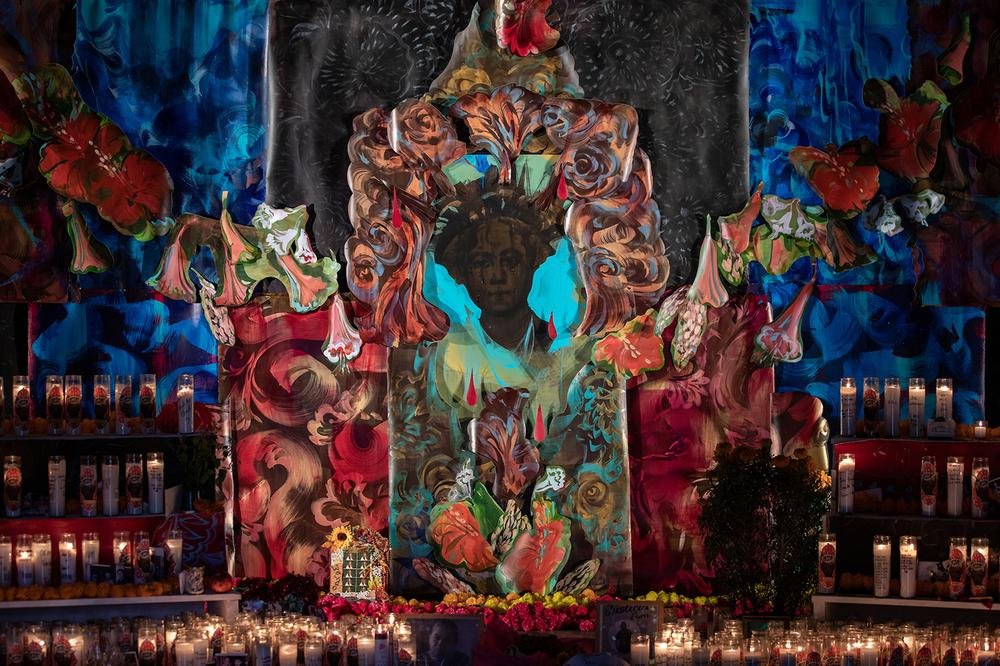
    In 2021, my writing remained shaped by the aftershocks of the pandemic, particularly its uneven impact on marginalized communities. Rather than moving on from crisis, much of the cultural work I engaged with that year confronted its residue: who had been asked to absorb loss, who stepped into care roles, and how art and community organizing became tools for survival, memory, and resistance. What emerged most clearly was care as cultural infrastructure—often improvised, frequently under-resourced, and rarely celebrated.

    Together, this writing reflects a year focused less on recovery narratives than on cultural endurance—how communities protect meaning, memory, and space when institutional support proves unreliable.

    2022 — Violence, Land, and the Limits of Inheritance
    2022 image

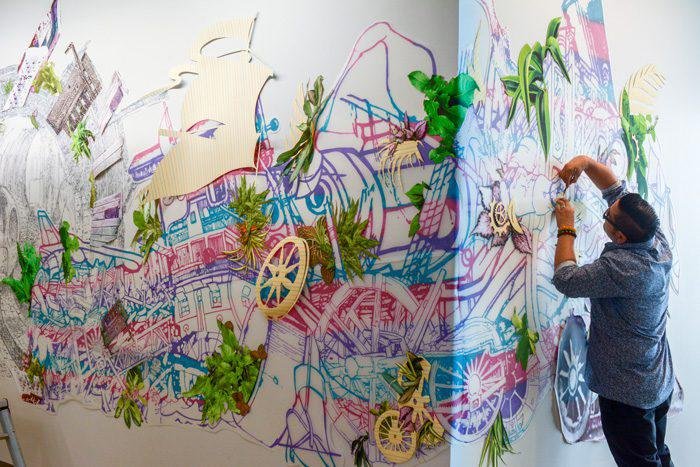
    By 2022, my writing confronted the accumulated pressures that had been building across the previous years: violence embedded in land use, gendered vulnerability, nationalist mythmaking, and the ongoing consequences of colonial and migratory disruption. Rather than focusing on recovery, this work stayed with what remained unresolved—asking how history, ideology, and environment continue to shape whose lives are protected and whose are exposed. This year solidified my understanding of land as an active force rather than a backdrop—history continuing to structure belonging, vulnerability, and risk.

    Across these pieces, land and identity are inseparable. This writing stays with structural violence—how it is inherited, normalized, and resisted—without forcing closure where none exists.

    Interlude — Stepping Away from the Page (2023–2024)

    After 2022, my public-facing arts criticism paused. This was not a retreat from cultural analysis, but a redirection of labor into professional writing, institutional work, and foreign exchange–focused research that sharpened my understanding of systems, power, and narrative framing in different registers. The questions driving my criticism—how meaning is produced, who bears risk, and how communities survive long pressure—did not disappear. They moved into other forms.

    When I returned to long-form cultural writing in 2025, it was with a clearer sense of synthesis: how a decade of arts criticism in the American Southwest had quietly become a foundation for broader historical, cultural, and interdisciplinary work.

    2025 — Return, Synthesis, and the Quiet Work of Community
    2025 return image placeholder

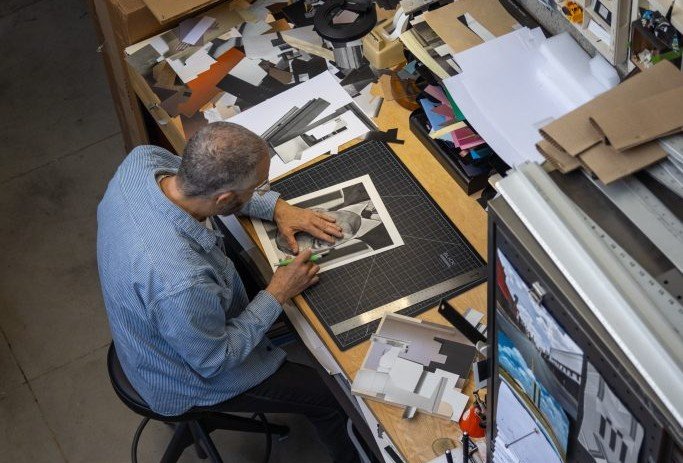
    When I returned to publishing arts criticism in 2025, it wasn’t a restart so much as a re-entry—with sharper tools and a clearer sense of what I’d been tracking all along. After years of professional writing centered on systems, risk, and institutional language, I came back to art with an increased sensitivity to structure: how communities preserve memory, how spaces accrue cultural meaning, and how abstraction and design can carry ethical weight without announcing themselves. Returning with distance made visible what had been there all along: the most durable cultural work often happens without fanfare—through stewardship, sanctuary, and consistency rather than spectacle.

    Together, these pieces mark a mature phase of my criticism: attentive to marginalized histories and cultural preservation, alert to the ways identity and expectation shape perception, and drawn to practices where clarity and reduction become forms of seriousness. If earlier years were about locating the stakes—rupture, myth, power, inheritance—2025 is about mapping what endures: the institutions that create refuge, the artists who make perception strange enough to see it, and the quiet organizers who turn community into something tangible.
  • The Day After My Birthday

    “As a solid rock is not shaken by the wind, so the wise are not moved by praise or blame.”
    Dhammapada, Chapter 6 (The Wise), Verse 81

    Composite image

    The day after my birthday always feels like a boundary post—an invisible marker I step over each year, taking stock of who I’ve become and who I’m still trying to be. This year, what keeps surfacing is how much of my adulthood has felt like stepping into a role meant for an oldest son or parent rather than a daughter. Responsibility has its own sense of direction; it settles where it wants, not where tradition says it should.

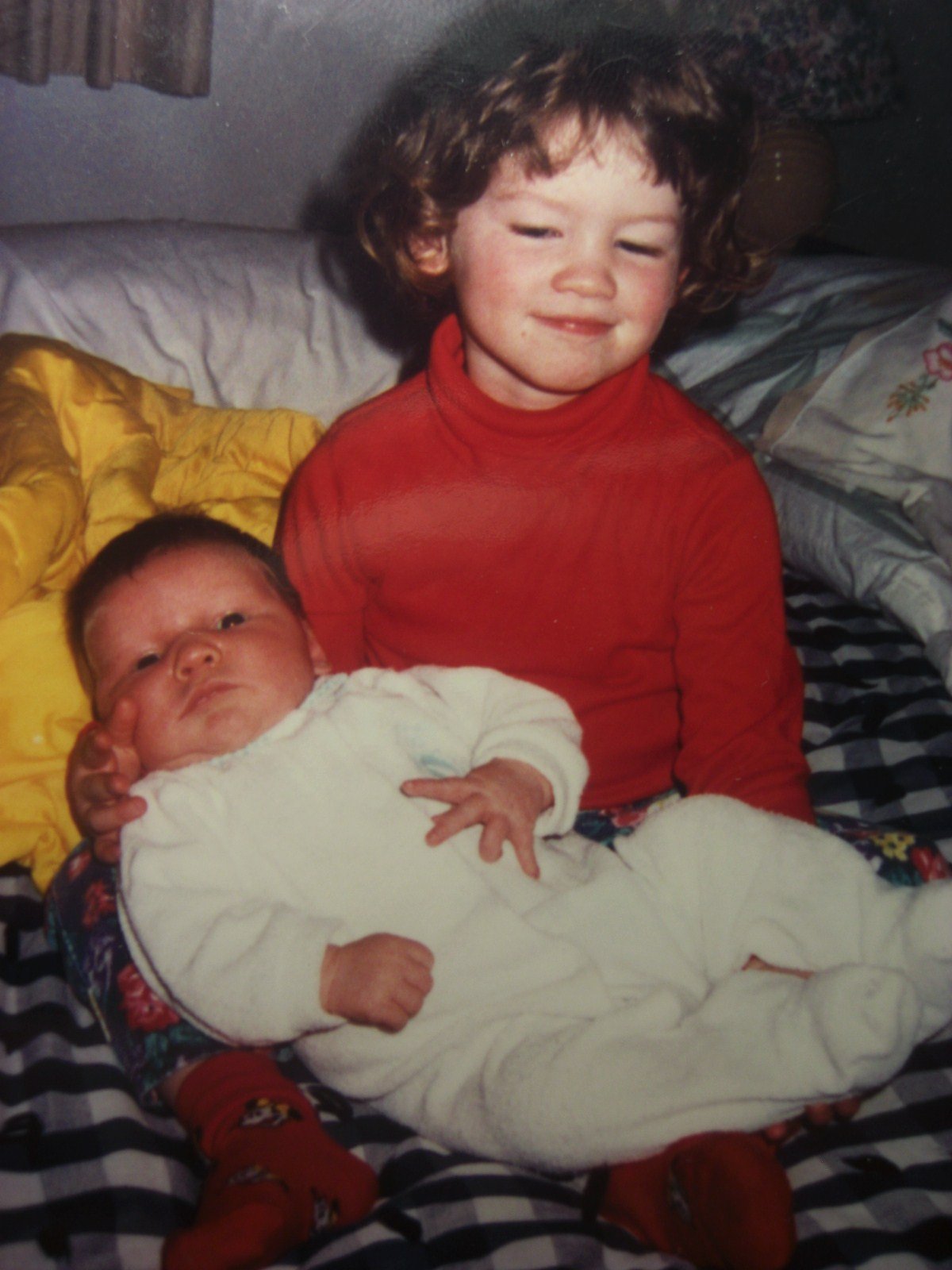
    I think about my mom, unexpectedly pregnant with my youngest brother, Ethan—a one-night-stand baby conceived after she’d already been divorced for several years and was raising two kids as a single mom. It was a “red letter” episode in a devout religious community like ours; every family member had an opinion.

    Ethan was due on my birthday, November 22, 1998, but stayed put for two extra weeks so he could be born on my mom’s. On my eighth birthday, while everyone was waiting for his arrival, I went with friends to the Anastasia movie premiere. I remember being excited for the new baby brother who was supposed to show up any day—imagining he’d make our little family feel even more complete. He finally arrived late, but perfect in the way babies feel when you’re young enough to believe they can fix things just by existing. After that, my mom, Seth, Ethan, and I were “the four amigos.”

    Salt Lake City in the 1990s

    Composite image

    Before my parents were divorced, our family had been a very devout Mormon household. But as the early ’90s went on, my dad became more ideological and rigid, and what had once been ordinary Mormon family life tightened into something narrower and more punishing. My mom left him in 1994, when I was three and Seth was still a baby.

    She later told me how my father controlled all the money, didn’t want to celebrate holidays or birthdays, and insisted his tithing be calculated before taxes—a huge financial strain for a family that already had next to nothing. The closest I ever got to a Halloween costume in those years was a shirt with a leaf pattern; I was, as my mom said, “a personification of the harvest season.”

    The breaking point came when he tried to neuter our German Shepherd in the house. (What a bizarre thing to type.) My mom walked in—holding me and my infant brother—to a home covered in dog blood. That was it. She left.

    After the divorce, my mom, Seth, and I moved into a red-brick house in Millcreek near St. Mark’s Hospital, where police sometimes chased “suspected gang members” through our backyard and cars idled outside what people then called “crack houses.” It wasn’t dramatic; it was simply the texture of life in the late ’90s in a city working very hard to appear cleaner than it was.

    My dad went on to work exclusively for the LDS Church for the next thirty years. There was limited contact after the divorce, mostly fighting between my parents, and once I reached my teens and stopped participating in the religion, he chose the simpler route: pretending we didn’t exist.

    Tearing Myself Away from Europe

    In 2017, when I was living in France and in a long-term relationship with the French boyfriend I’d met in graduate school, Ethan became addicted to benzos and attempted suicide. I listened to my mom cry on the phone every weekend, and I began studying psychoanalysis and therapeutic methods, trying to help from afar. I flew back and forth between Europe and Utah—ten- to twelve-hour trips, multiple times a year—struggling to build the life I wanted while feeling guilty for leaving my family behind.

    Ethan descended into heroin addiction during the years I was working for a Cambridge tech startup—a real turning point in my career—and the stress of it all began hollowing me out. I became thin in the way actresses and models are thin, which felt like the lamest possible exchange for the inner anguish I was living with. On the surface, I looked polished and enviable; inside, I was collapsing under the pressure of financially supporting my PhD-student boyfriend and arranging any and every vacation around long-haul flights home, hoping my youngest brother wouldn’t overdose before I could get back to Utah to say goodbye.

    By 2019, my relationship had begun to collapse too. The gender reversal—me as the breadwinner, him unable to take even a single trip back to Utah to meet my family, unable to ask me to marry him after years together—destroyed me in more ways than I can ever fully explain. My deteriorating health forced me to leave Cambridge and return to Salt Lake in the summer of 2019.

    As I was trying to cope with the culture shock and just after my thirtieth birthday, the pandemic hit. As 2020 kicked off, I took a Marketing and IT Manager job at a bookstore/warehouse and hired Ethan so he would have structure, a paycheck, and someone who cared watching out for him. I also wanted to build a relationship with him before he died—a real possibility for years, which became a more immediate threat as fentanyl started pouring across the Southern border and into Utah. I automated the bookstore’s e-commerce operation so the store could survive the pandemic and so could my family.

    Just Another Episode of Breaking Bad

    While I worked at the bookstore, I went to my mom’s house every day at lunch to check the property. One afternoon I pulled up to see the back window of Ethan’s car smashed out—his crack dealer teaching him a lesson over money owed. My mom and I just stared for a moment and laughed: another day, another episode of Breaking Bad. Each night, she slept with her two standard poodles barricaded in her bedroom. I seriously considered buying a gun.

    I watched my baby brother, six-foot-two, waste away to 130 lbs. It was one of the worst kinds of grief: the slow kind, the kind that sits beside you at work. My boss, usually hands-off, told me I had to fire him, which I did, after crying and begging him to get clean yet again.

    Then everything snapped at once. Ethan went on a crime spree, robbing several 7-11s and ending up on the evening news across the West. Since 2021, he’s been in and out of jail. He’s totaled more cars—his own and my mom’s—than I want to tally. Recently, after getting almost clean, he was picked up on a minor traffic charge and, amid conflicting police accounts, was sentenced to five years in prison.

    I feel like I helped raise him. I feel like I’ve been both sibling and parent in the same exhausted body. And I’m not sure I ever had the emotional infrastructure for the job.

    My other brother, Seth, mirrors our father: a near-religious refusal to mention us. He’s built a life that pretends his mother, sister, and younger brother simply evaporated. And still—I go on. Because that’s what I was taught to do, and because stopping has never felt like an option.

    “If it is endurable, then endure it.” — Marcus Aurelius

    Some days I feel like the rock; other days I feel like the storm. But adulthood, I’m learning, isn’t the clean, upward trajectory I imagined. It’s a series of roles we never asked for but carry anyway. Another year older. Another year still standing.

  • Coming to You from Wizard Tower 9th x 9th

    When I lived in the 9th & 9th neighborhood during the pandemic, behind
    the Dolcetti
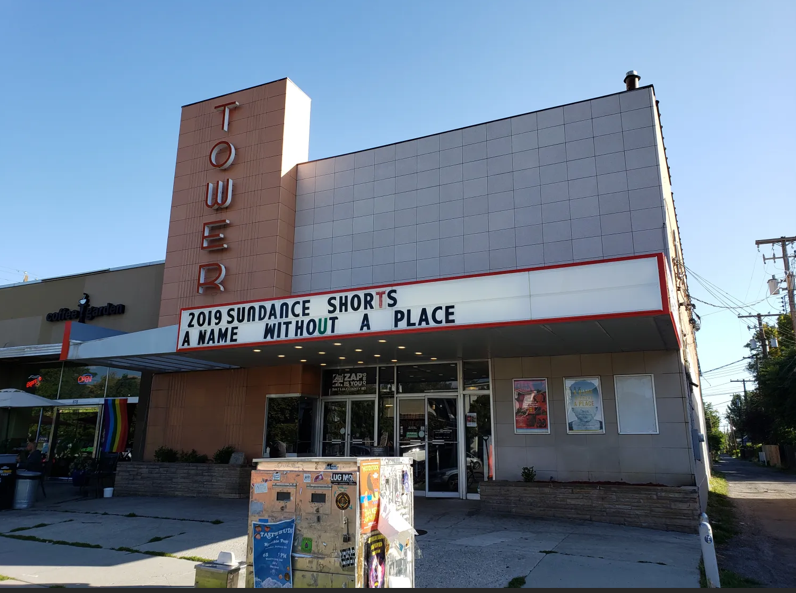
    I mentioned yesterday, I walked past the Tower Theatre nearly every day. The marquee stayed dark, the brickwork grew more weathered, and the whole building held that peculiar stillness the city carried in 2020. Even so, the corner near Liberty Park still felt like a point where Salt Lake history pooled.

    Composite image

    Revolution 9th & 9th

    900 South and 900 East — known locally as “9th & 9th” — grew out of early streetcar suburbs and farmland into one of Salt Lake’s most walkable residential districts. Much of the surrounding housing stock dates from before 1940, with a mix of Victorian, Tudor, Prairie, and Craftsman homes.

    The business district along 900 South developed into a cluster of independent shops, restaurants, and cafés — what some writers once described as an “anti-mall.” The roundabout at 900 S and 1100 E is home to Out of the Blue, a 23-foot humpback whale sculpture that became a neighborhood landmark almost overnight.

    The Tower Theatre

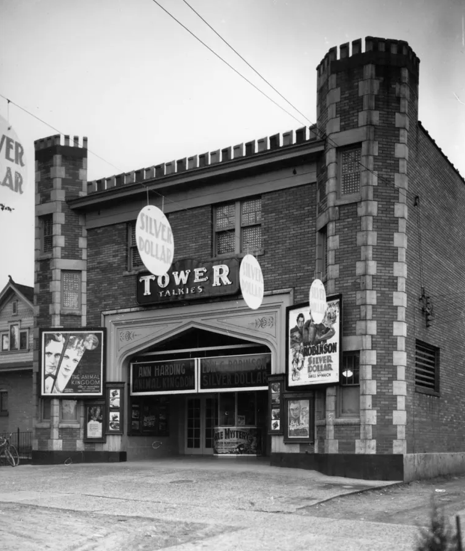
    The Tower Theatre opened around January 1928 at 876 E 900 S, one of the earliest purpose-built neighborhood cinemas in the valley. It originally featured two small masonry towers on either side of the entrance — a facade modeled loosely on fortress architecture, possibly even the Tower of London according to early promotional descriptions.

    Composite image

    By the 1950s, the towers and much of that ornate facade were removed or covered during mid-century “modernization” efforts; Carter Williams at
    KSL
    says: “Its current facade dates back to the 1950s, when the building underwent a major renovation to keep up with the industry.” Over its long life the Tower has been a single-screen movie house, an art-house venue, and eventually a key site for the Salt Lake Film Society, which took over operations in the early 2000s. It is one of the oldest cinema spaces in Salt Lake City still intended for film exhibition, even as renovation plans continue to move through approvals.

    999 Magic

    When I lived in that apartment during the pandemic, one of the few social things that never really stopped was the 999 bike ride — this loose, late-night Thursday swarm of cyclists that always managed to gather at 9th & 9th no matter how strange the world felt.

    Composite image

    It was this oddly steady pulse of life in a year when almost everything else had shut down. We’d drift downtown, sliding through empty parking garages and echoing stairwells, the whole group lit by bike lights and someone’s portable speaker bouncing around the concrete. It was loose and a little chaotic, but it was one of the few things that made the city feel alive.

    The Tower as a Symbol

    In tarot, The Tower card (XVI) represents rupture — structures breaking apart, assumptions falling away, and the moment when something old can no longer support what has been built on top of it. The actual Tower Theatre carries a milder, architectural version of that symbolism: built with confidence and ornament, stripped of its towers mid-century, and now in the process of another reinvention.

    The neighborhood around it has shifted too, from a quiet streetcar corridor to a lively strip of shops, galleries, filmgoers, festivals, and public art. The Tower’s name, once literal, now feels symbolic in a different way: a reminder that Salt Lake City’s cultural spaces don’t stay static — sometimes they erode, sometimes they’re restored, sometimes they return as something new.

  • Fairytales We Tell Ourselves: The Utah Pantages Theater and Ingmar Bergman’s Persona

    Dolcetti Gelato interior


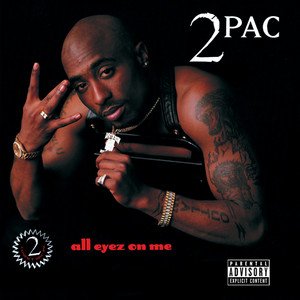
    The intricate designs of my lethal lines, criminal rhymes
    From the mind of a thug shaking state time
    Take it to the next phase you had your time to talk sh*t
    Now b*tches bustas getting checkmated

    To all the players on the Westside
    We’ll still be ballin’ on these b*tches when the rest die
    Players on the Westside

    2Pac

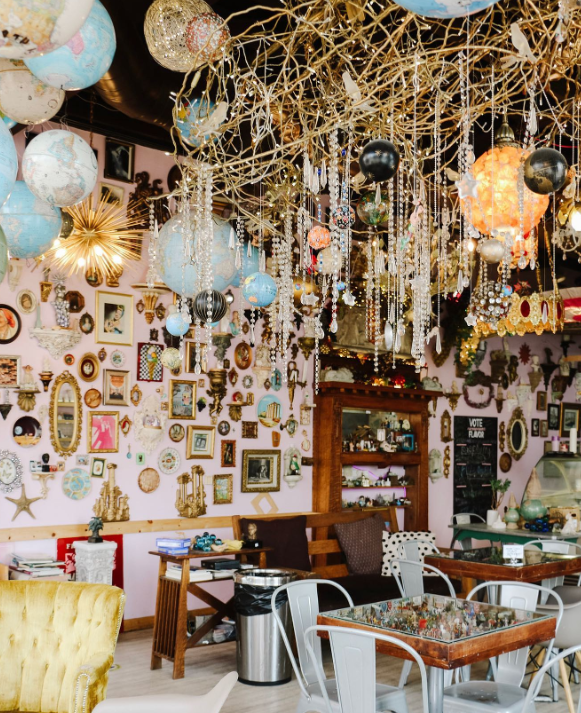
    2020–21 was an oddly energetic, almost enchanted time to live in downtown Salt Lake City. After moving back from England to my hometown in June 2019, I rented a small apartment behind Dolcetti — the gelato shop founded by Mark and Kari England in 2004, known for its 150 rotating, small-batch flavors (Dolcetti). Inside, the place looks like the I Spy books and Wes Anderson had a baby and then coated everything in thrift-shop gold: curiosities on every shelf, saturated colors, odd treasures arranged with the confidence of someone who knows exactly where beauty hides. I loved sitting next to the window to write and observe passersby.

    My apartment was a tight 900 square feet for me, my cat, and a plant collection increasingly convinced it could overthrow the living room. But it sat at the center of a downtown that felt, even in the quietest moments of the pandemic, strangely evolving. I watched George Floyd marches move past my corner, mourned the independent shops that couldn’t survive the shutdowns, and nurtured a growing affection for the Criterion Collection as if it were an underground library I’d smuggled back from another life.

    Composite image

    It was in the middle of all this that I met Michael Patton, who works under the artistic name Michael Valentine. Patton is a direct descendant of General George S. Patton — a lineage he acknowledges even as he rejects its militaristic implications. He chose Valentine as a kind of ongoing protest against war culture, a refusal to be defined by the mythology of battle. And yet, his ancestor’s grit runs straight through him, whether the peace-loving activist in him likes it or not. Once, when I was interviewing him for an article for SLUG and we were driving around looking for a place to get lunch, he said, almost resigned and almost proud, “Yeah, I know where the grit comes from. I can’t pretend I didn’t inherit it.”

    Michael Valentine

    Valentine hosted a weekly vintage-film gathering outside the shuttered Pantages Theater on Main Street, and I hadn’t even noticed the building until I wandered across a cluster of folding chairs, a projector, and a rotating cast of people keeping cinematic vigil. He and Casey O’Brien McDonough — the Irish preservation activist who later ran for governor — were partners in the fight to save the building, a kind of two-person engine powered by research, outrage, and sheer stamina. Their efforts were widely documented, including in a 2023 Utah Stories report (saving the Pantages) and by archival groups like Preservation Utah (Pantages archive). Together, they welcomed every rag-tag citizen of downtown Salt Lake — film geeks, artists, unhoused neighbors, accidental passersby, and the rest of us drifting through pandemic-era loneliness — into the Pantages film club.

    Two Bloody Characters

    It occurs to me now that both Valentine and I grew up in the shadows of men known for bloodshed: his, the general who charged across Europe; mine, the mythic king who dies in every retelling. Patton and Macbeth — tactician and traitor, hero and villain, depending on who’s telling the story. Maybe that’s why we both gravitated toward fairytales, and toward the Pantages, which offered its own kind of mythic refuge.

    As I wrote in my last blog, the Pantages didn’t survive. The campaign to save it ended in a brutal civic heartbreak in April 2022: Valentine’s hunger strike, a lawsuit filed against him by the mayor, and eventually his decision to run for mayor himself in an attempt to protect his ability to protest. None of it was enough. The building was demolished, and with it went a strange but vital axis of the downtown arts ecosystem — the kind of space where eccentricity, history, and stubborn idealism could still sit side by side.

    Salt Lake City Mayor Erin Mendenhall

    The demolition unfolded under the administration of Salt Lake City’s mayor, Erin Mendenhall — a Democrat who branded herself as a progressive environmentalist while advancing some of the most aggressive pro-development and anti-preservation policies the city had seen in decades. Mendenhall’s office not only dismissed community objections to the demolition but actively escalated conflict with activists; at one point her administration filed a lawsuit against Valentine, alleging he was “stalking Erin” while the Mayor’s office was also obsessively following everything Michael did. The gap between her public rhetoric and her actual governance was so wide it felt like its own kind of theater — a performance of civic virtue masking a pattern of decisions that consistently favored developers over communities.

    She even contacted SLUG to ask who had anonymously published the story about the Pantages — a moment that made the whole situation feel less like civic governance and more like an administration unusually preoccupied with controlling the narrative. When my article on the Pantages came out, it was hit by the publication’s most intense troll attack in recent memory — an onslaught that many in the local arts and activist community speculated was coordinated, possibly even by people aligned with her PR team. Whether that rumor was true or not, the effect was clear: the piece struck a nerve inside the machinery of power.

    But the back-and-forth between Valentine and Salt Lake City didn’t not stop there. In June 2025, through his cider company Six Sailor Cider LLC, he filed a lawsuit in 3rd District Court against the tyrannical Utah Department of Alcoholic Beverage Services (DABS) and the commission that oversees it. The complaint argues the commission violated Utah’s Open and Public Meetings Act when it voted on May 29 to deny a liquor license to his bar, Apparition. The suit asks a judge to void the vote, overturn the decision, or send it back to the commission with instructions to grant the license. It’s another chapter in the same long narrative: one man insisting that institutions should follow the rules they claim to uphold. But Michael’s not a saint: He also garnered controvery for saying Zionists weren’t welcome at Apparition (which I publically condemned).

    Telling Ourselves What’s Really Real

    And maybe that’s where the fairytale really begins — not the sweet, storybook kind, but the darker kind we use to warn ourselves, to name what’s broken, and to survive contradictions we can’t fully articulate. That’s actually what Zionism is: a fairytale told to keep people from losing hope after they lost everything else. Valentine has his fairytale of the Pantages. The city has its fairytale of progress. We all carry narratives like that: simplified, hopeful, a little irrational, just coherent enough to hold back the chaos. The truest fairytales are the ones that don’t quite make sense, because they tell the truth slant — they let the light and the darkness sit in the same room without resolving anything.

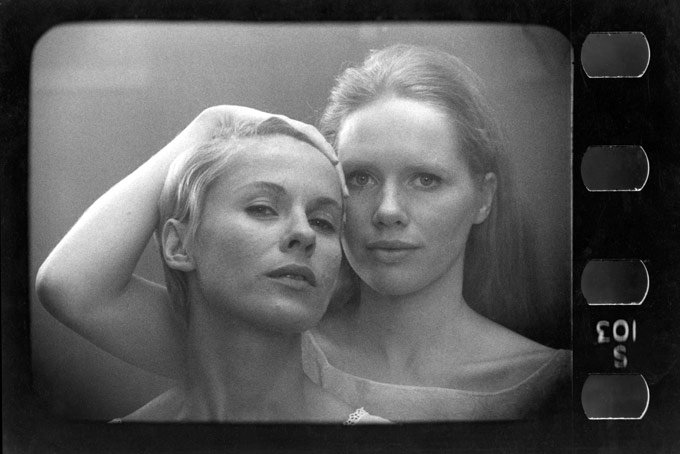
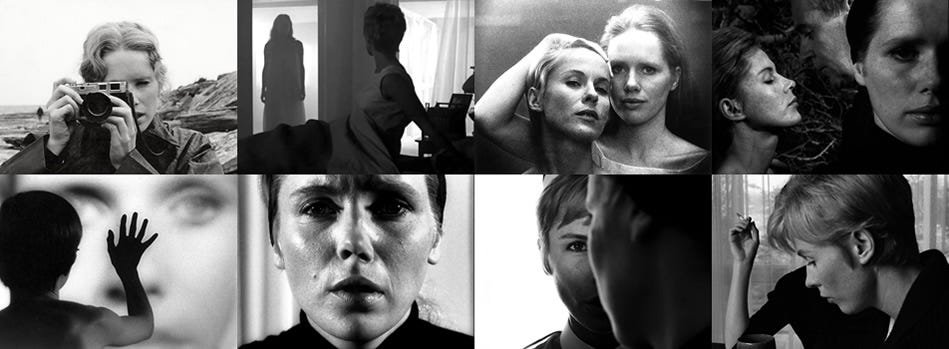
    Which is maybe why Persona hit me the way it did. I think it’s the best film ever made — Citizen Kane be damned — and in 2021 I watched every Bergman film in chronological order. Nothing prepared me for Persona. It’s the rare work of art that doesn’t just tell a story but exposes the narratives we use to protect ourselves: the ones that collapse under scrutiny, the ones too sugary to be real, the ones that turn toxic when we mistake them for truth. It’s a film that diagnoses the human condition by peeling back the performances we cling to and showing what happens when they finally split.


    The Plot of Persona (Briefly)

    A famous stage actress, Elisabet Vogler (Liv Ullmann), abruptly stops speaking during a performance. Nothing is physically wrong with her — she simply refuses to talk. A young nurse, Alma (Bibi Andersson), is assigned to care for her, and the two retreat to a remote seaside cottage. There, with Elisabet silent and watchful, Alma begins to fill the quiet, confessing her insecurities, affairs, fears, and buried shame. Slowly the boundary between them dissolves. Elisabet studies Alma; Alma imitates Elisabet; their identities merge, fracture, and reassemble. By the end, it’s unclear whether two women exist — or one consciousness split across two bodies.

    The Psychological Terrain

    Bergman uses this plot as a kind of Freudian X-ray. The entire film is built around the terrifying simplicity of a question: Who are you when you stop performing? Alma is the “good girl” who has spent her life being pleasant, compliant, socially acceptable — a mask so airtight she doesn’t realize she’s wearing it. Elisabet, the actress, stops speaking because she can no longer tolerate the falseness of her own public self. Her muteness is a rebellion against the “theater” she was born into, professionally and socially. She opts out.

    Put them together and the film becomes a study in identity erosion: the psychological cost of pretending, the masks we inherit and the masks we craft, the social demand to always perform the self people expect, the way silence can be a weapon, and the way speaking can expose more than it protects.


    Alma’s breakdown is essentially the collapse of a persona she can no longer hold upright. Elisabet’s silence is the collapse of a persona she refuses to uphold any longer. They meet in the wreckage. And Bergman’s point, delivered through a surreal, self-reflexive film that literally breaks apart on screen, is that when the performance becomes unbearable, the self starts to disintegrate.

    Pretty on the Outside

    In Salt Lake City, this idea of crafting a perfectly managed self takes on its own regional flavor. There are plenty of people who look beautiful, polished, virtuous — people from the right families, with the right social networks, projecting the right kind of civic goodness. And yet, time and again, you discover just how many of them are “two-face,” switching between public benevolence and private ambition with unsettling ease.

    The politicians and employees inside the city and state government — some truly are good people. But many mistake their own checklist of credentials, connections, and cultivated traits as proof of who they are on the inside. They forget that outward virtue is not the same thing as inner integrity. And some of them, make no mistake, are rotten to the core.

    We should all remember where we came from.

    Tupac image paired with Pantages fairytale theme

  • Phosphorus / El-Zahra / Prometheus / The Good King

    Emanating
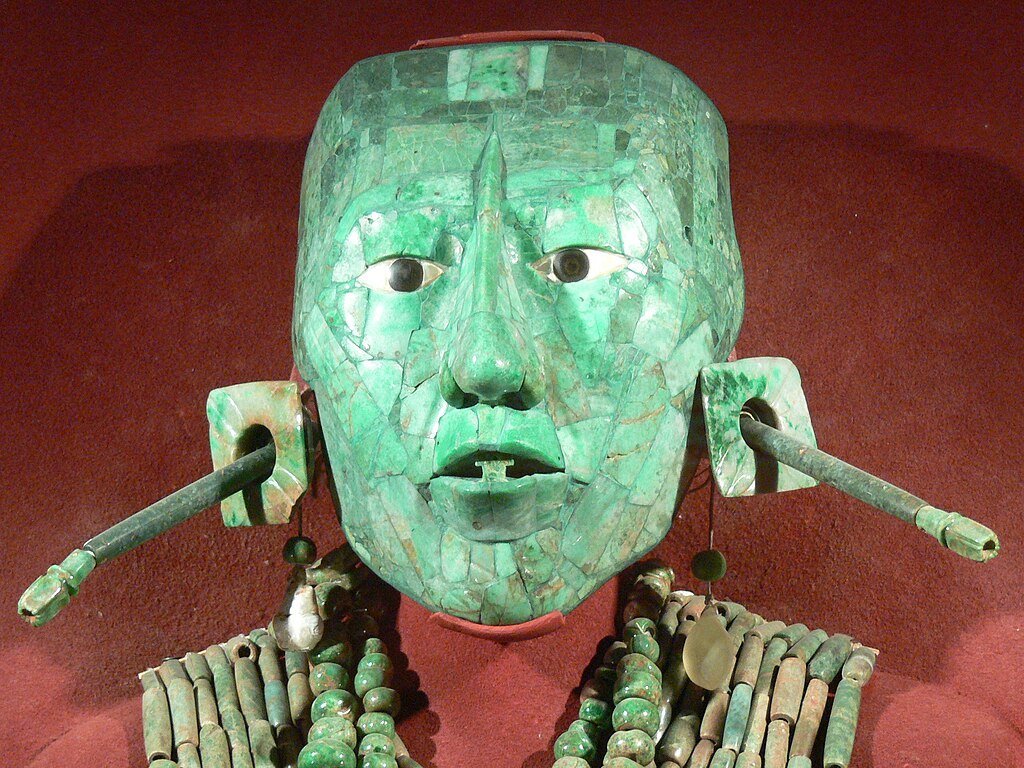
    Jade Mask of Palenque
    Phosphorus / El-Zahra / Prometheus / Good King

    “Emanating”

    Sample from ATYYA


    Now you are one with the wind
    With the water, with the stars
    With all of nature, with all animals
    And with all humans;
    You feel the heat and light
    Emanating from the flame in your heart
    You are radiant with the glow of love.

    Phosphorus / El-Zahra / Prometheus / The Good King

    Phosphorus

    The Greeks named the morning star Phosphorus—the light that rises before dawn. Hesperus was the same body seen at twilight. The ancients did not at first realize they were one; only later did observation reveal a single orbit behind two names—the same star rising and setting on opposite horizons. Phosphorus was expectation, Hesperus fulfillment; one light arriving, the other departing. The pairing expressed continuity, the unbroken rhythm between beginnings and endings. “Bringer of light” meant illumination that anticipates rather than conquers—a glow that announces the day but yields to it.

    El-Zahra

    In Arabic, El-Zahra means “the shining one” or “the radiant.” The term was applied to both Venus and to certain human figures, often women, associated with purity and intelligence. In the Islamic Golden Age, philosophers and mystics alike described light or fire that reveals without consuming—illumination as the highest attribute of the divine.

    She is brilliance tempered by proportion, an image of clarity that reveals without injury. In this she stands as counterpoint to the story of Semele, the mortal mother of Dionysus, whose demand to see Zeus unveiled resulted in her annihilation. Too direct a vision of the divine leads not to enlightenment but to ash. The philosophers of the Golden Age, writing centuries later, drew a similar distinction: to cling too tightly to light is a form of error. Excess, in the Buddhist sense, is attachment—the wish to possess revelation rather than dwell within it.

    zahra

    In Tibetan Dzogchen (the “Great Perfection”), the term rigpa names a state of “pure awareness,” sometimes called “pure light” or “pure seeing.” It is the condition of perception unclouded by grasping, where mind and world are transparent to one another. El-Zahra belongs to this same lineage of restraint—not an ascetic denial but the discipline of equilibrium.

    Prometheus

    Prometheus, in Greek, means “forethought.” In Hesiod’s Theogony and Works and Days, he is a Titan who fashions humankind from clay and steals fire from Zeus to give them life. In later Hermetic texts, the demiurge—the craftsman god who forms the world—becomes the antagonist, not the creator of light but its jailer. Within that cosmology, Prometheus can be read as the counter-movement: not rebellion against heaven, but resistance to the prison of matter. He is the lightning strike that arrives just when it is needed, when a single flame might keep a family from freezing to death.

    This polarity—between maker and liberator, between form and spark—is reflected in alchemical language. The human being is the half-made or half-awake king: partly clay, partly fire, suspended between inertia and illumination. To embrace the spark is to continue the work of transformation; to refuse it is to remain bound, repeating the torment that the later myth externalized in the chained Titan. In this reading, Prometheus is neither thief nor rebel but intermediary—the intelligence within matter that remembers its origin.

    Rough Stone, Rolling: Ashlar Work

    The same mythic grammar reappears in the symbolism of Freemasonry, where the initiate shapes the rough ashlar—the unhewn stone—into the perfect ashlar fit for the temple. The chisel and mallet, the compass and square, the letter G at the center of the emblem—all point toward geometry and generative order: the disciplined transformation of raw material into meaning. It is a Promethean labor, a belief that technical, economic-based craft itself can also re-make an individual.

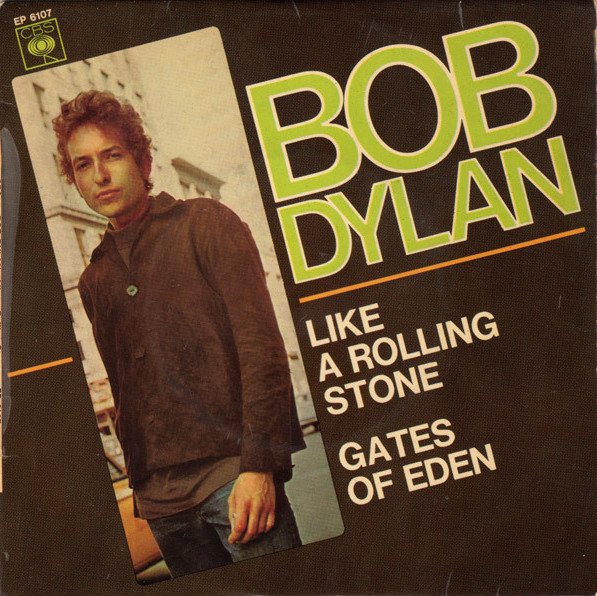
    bobdylan

    My great-grandfather was a practical Freemason, his mark carved on the granite of his grave. He left his wife—my great-grandmother Rhea—and their three young sons, Jeffry, James “Jim” (McBeth > Mcbeth), and Glen, to work in California during the Great Depression. Jim Macbeth later became a stone sculptor in the 1960s and then the Art Department Head of Weber State University in Ogden, Utah; on his sabbatical, he traveled to Greece to choose stones for his mid-century, non-representational sculptural work in person. The family carried that quiet ethic of the craft: shaping what you can with what you have.

    The phrase “a rough stone rolling” captures the same motion—the restless, unfinished search for form. It’s an American idiom of becoming, of traveling toward one’s own refinement, even in the timeless archetypical way of “Going West to California.” In it survives the hope of Prometheus: that through work, even ordinary work, the spark of creation can be preserved.

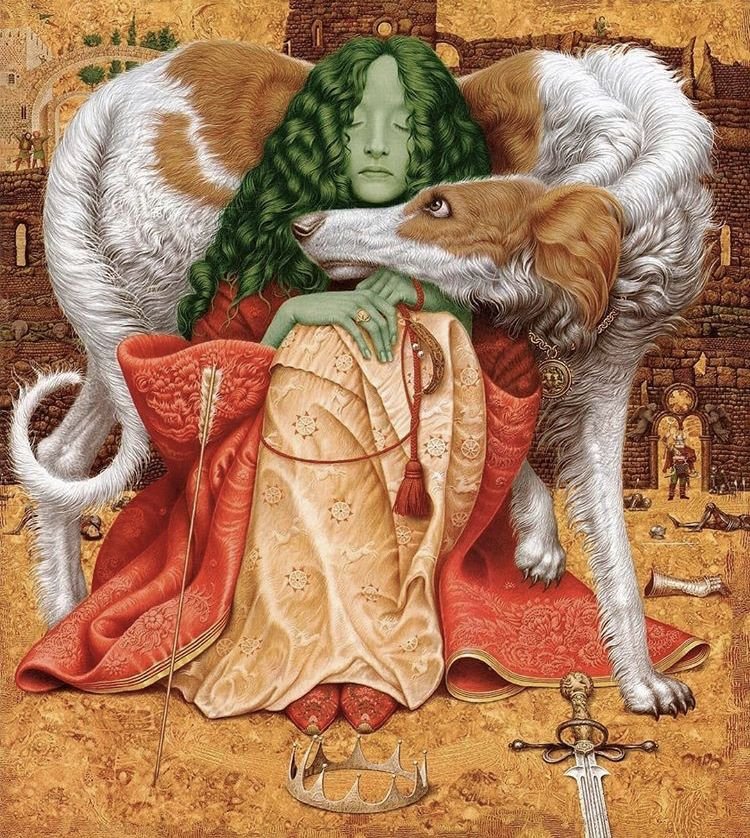
    The Good King

    The Good King appears across myth as the counterpoint to tyranny: rule as balance rather than command. In the Irish cycles, the Dagda—literally “the Good God”—is both ruler and maker, a being of appetite and abundance. He carries a club that can kill with one end and restore life with the other, and a cauldron that never runs empty. His reign is not moral perfection but right proportion: an acceptance of the world’s fertility and decay as part of one rhythm. In him, governance is physical labor—plowing, feasting, keeping the seasons in tune.

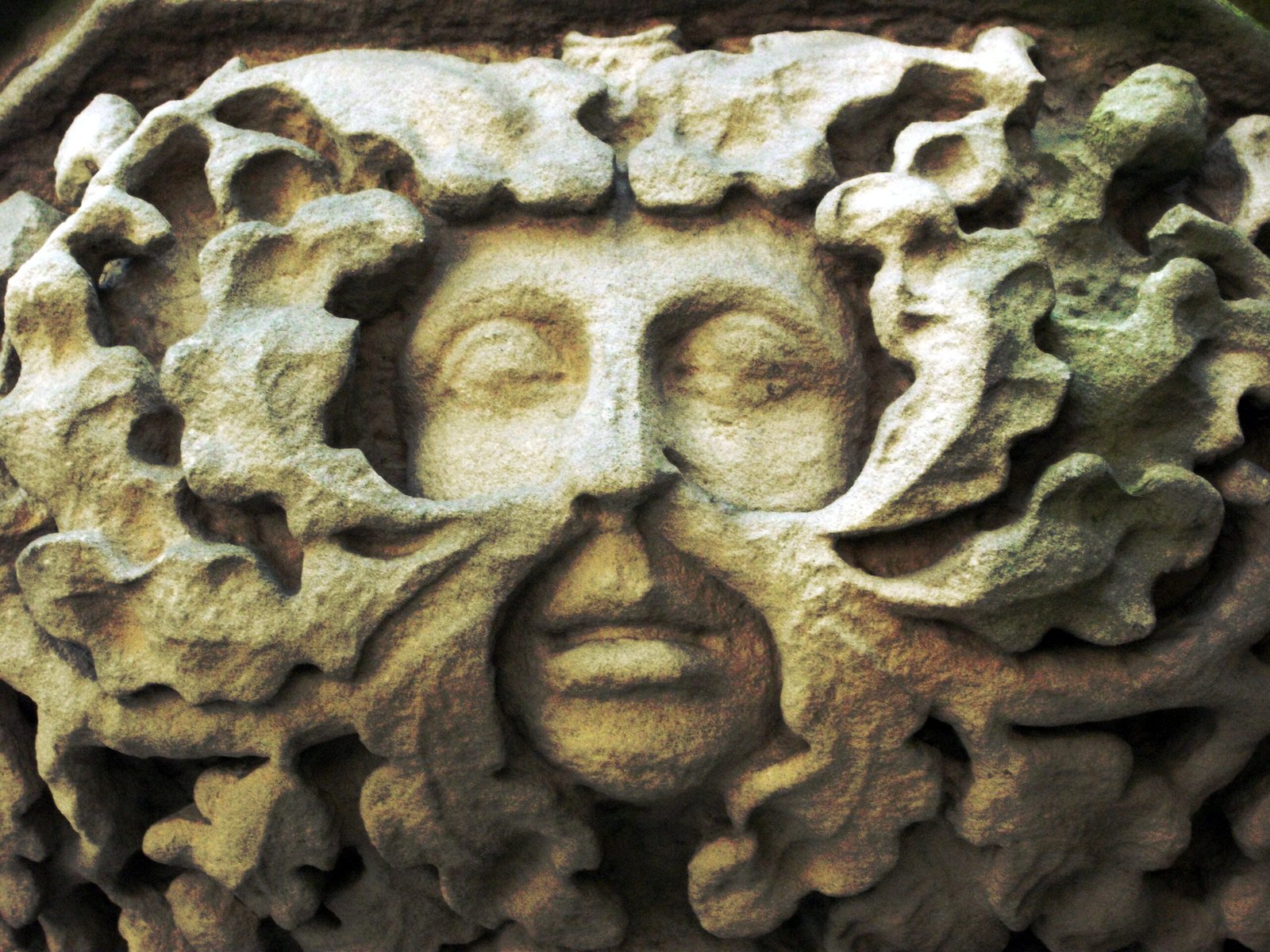
    greenking

    From the Dagda’s myth the medieval Green Man inherits his face: leaves spilling from his mouth, sometimes nose, eyes half-open, half-dreaming. You see him carved into cloisters and doorways, the vegetal intelligence of matter watching over human passage. The image endures because it reconciles hierarchy with humility—the crown and the root bound together.

    greenking

    Far from Europe, the pattern repeats. In the Maya world, kingship was equally cosmological: a ruler’s body stood for the renewal of time. The jade mask of Palenque, carved for the tomb of K’inich Janaab’ Pakal, distills that belief into stone. Its surface glows with a living green, the mineral echo of new leaves. The face is calm, lips slightly parted, gaze turned inward as if in perpetual breath. Looking at it too long, I start to cry. The expression is neither sorrow nor triumph but awareness—the stillness of a person who has accepted his return to earth.

    Good King rules not by decree but by reflection. In him, divine order becomes humane. Tolkien’s Return of the King carries the same inheritance: a wounded land awaiting the steward who can restore its measure. The hope is always the same—that one day, right rule will again mirror right relation, and the kingdom of God, or of balance, will take shape on earth.

    Light That Liberates

    Krishna

    Across cultures, the figures who embody illumination are never merely rulers; they are liberators—beings whose radiance dissolves fear and unbinds what has hardened in the world. Krishna is one of the clearest expressions of this pattern: playful, disarming, musical, quietly wise. His brilliance is not the punishing blaze of a sun god but the intimate glow of clarity, joy, and recognition.

    He is a king not by lineage but by conduct. In the stories, Krishna steals butter, dances on poisoned rivers, lifts mountains without strain, and counsels a warrior into steadiness with a vision that spans the entire cosmos. His kingship arrives not as decree but as presence—a form of moral luminosity that restores proportion simply by existing in the world with a grounded joy.

    Seen this way, Krishna stands closer to the Green Man than to the emperors of epic. Both figures express an intelligence rooted in renewal, humor, and fertility; both resist the rigidity of empire. The Green Man’s leaf-sprung face—half smiling, half wild—offers the same lesson as Krishna’s flute: that vitality can be a form of governance.

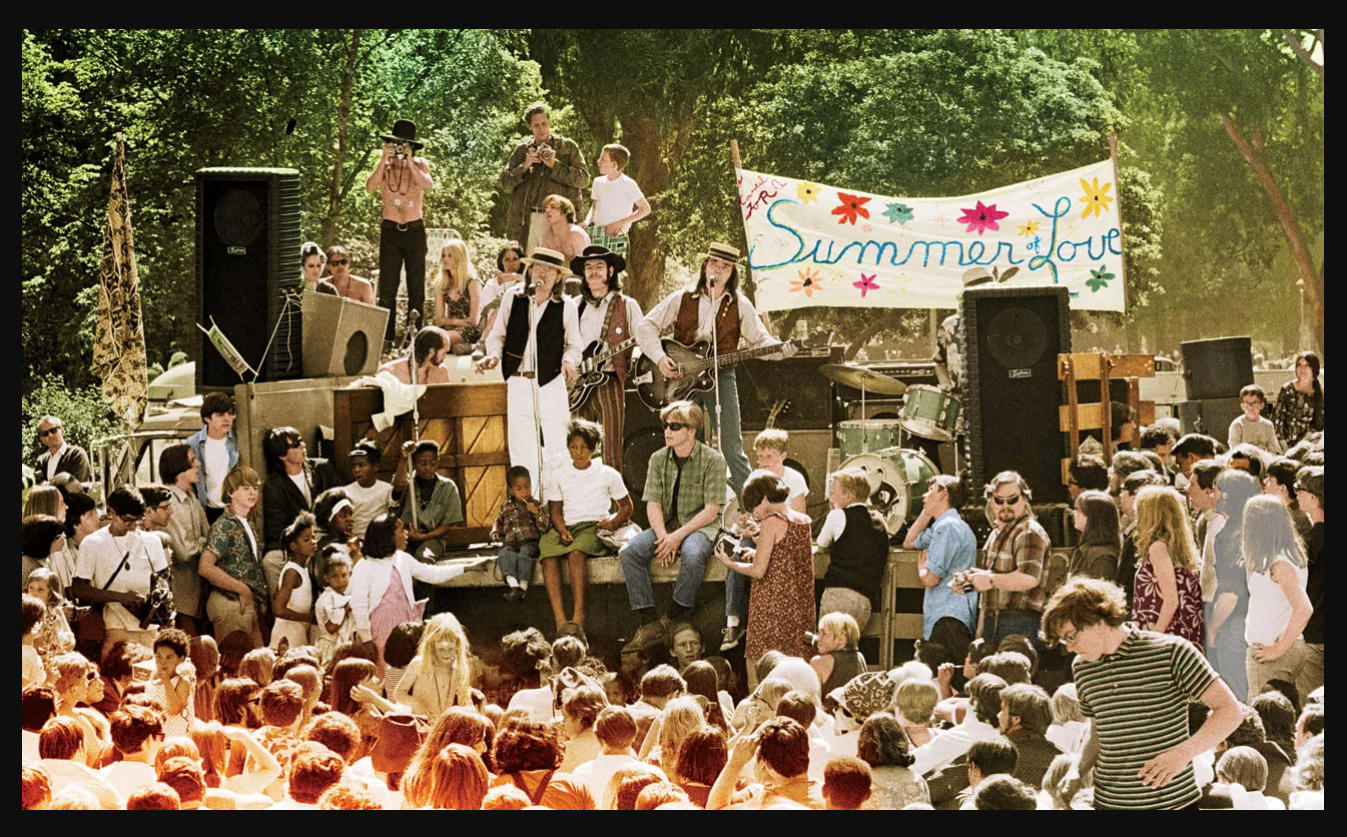
    This grammar of illumination resurfaced, unexpectedly, in the Bay Area of the 1960s. When A. C. Bhaktivedanta Swami Prabhupada arrived in San Francisco in 1966, the Hare Krishna movement settled into a city already carrying another kind of awakening. Hippies chanting in Golden Gate Park shared sidewalks with the earliest generation of semiconductor engineers; ecstatic devotion and scientific experimentation unfolded in the same fog-thick air. Both promised liberation through pattern. Both offered altered states—one through mantra, the other through mathematics.

    Light in Matter

    By the mid-1960s, the Bay Area was developing two very different traditions of illumination. In Golden Gate Park, the new Hare Krishna community chanted a Sanskrit mantra meant to clear perception through repetition; a few miles south, engineers at Fairchild and Stanford were learning how trace amounts of phosphorus or boron could turn silicon into a material that alternated between conductivity and restraint.

    summeroflove

    Both groups were, in their own ways, experimenting with how pattern changes consciousness. Histories of the counterculture—such as Timothy Miller’s The Hippies and American Values (1991)—often overlook how close this spiritual movement was to the early semiconductor labs chronicled in Christophe Lécuyer’s Making Silicon Valley (2006). Yet both lab and temple practiced a form of disciplined attention: chanting as a stabilizing vibration, doping as a controlled disturbance.

    A transistor is, after all, a small argument about how light behaves inside matter, just as Krishna’s teachings in the Bhagavad Gita (c. 2nd century BCE) are an argument about how clarity behaves inside the mind. The Bay Area simply gave these older metaphors physical form: stardust purified, etched, and asked to think.

  • Rabbit Keeps Running (11/11)

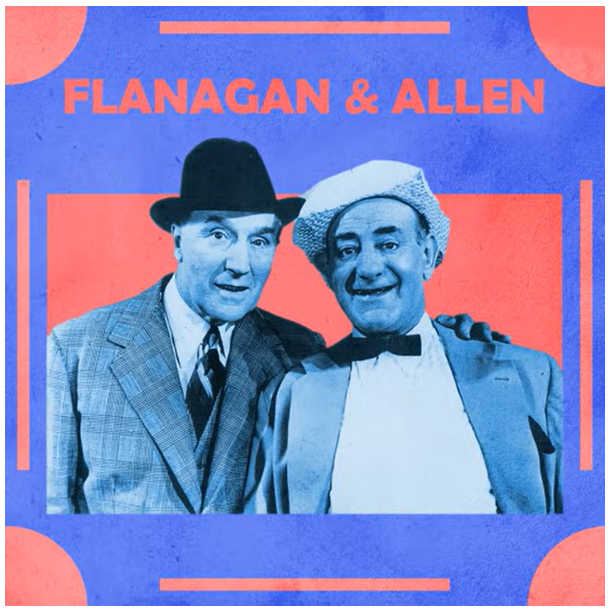
    Holly Rios’s recent show at Harrington Art Studio left an impression: images erased, reprinted, re-seen. Her work, informed by Playboy, with its infamous Bunny logo, had me thinking about how eternal symbols refuse to fade. Maybe that’s why I’ve been caught on another loop: the sound of Run, Rabbit, Run, recorded in 1939 by the British comedy duo Flanagan and Allen.

    The popular World War II song was written for wartime morale—bright and lilting. After Germany’s first air raid on Britain in 1939, locals joked that the only casualties were two rabbits; RAF pilots picked up the tune and rewrote the lyrics: “Run Adolf, Run Adolf, run, run, run.” The B-side, We’re Gonna Hang Out the Washing on the Siegfried Line, quickly joined it as a national favorite.

    Run Rabbit Run — vintage motif

    We’re Gonna Hang Out the Washing on the Siegfried Line


    We’re gonna hang out the washing on the Siegfried Line
    Have you any dirty washing, mother dear?
    We’re gonna hang out the washing on the Siegfried Line
    ’Cause the washing day is here
    Whether the weather may be wet or fine
    We’ll just rub along without a care
    We’re gonna hang out the washing on the Siegfried Line
    If the Siegfried Line’s still there

    The humor was absurd, its tone breezy, even flirtatious. That mix of sex and violence—the soldier’s wink—made it both funny and unsettling, a morale booster that never let the reality of killing drift too far away. The Siegfried Line (known in Germany as the Westwall) stretched nearly 400 miles from the Netherlands to Switzerland—an interlocking system of bunkers, tank traps, and concrete obstacles built in the 1930s to hold the Allies back.

    Although Run, Rabbit, Run was recorded before the Blitz began, its ironic brightness soon met a grim reality. From September 1940 to May 1941, the German Luftwaffe’s bombing campaign—known as the Blitz—killed more than 43,000 British civilians and injured nearly 140,000. What had started as a joke about rabbits became a darkly resonant refrain, echoing through shelters, pubs, and barracks as London burned.

    I was never a big fan of the rabbit as a Playboy symbol, but I can’t help but fall a little in love with the rabbit itself—the contradictory emblem that’s survived every reinvention. Prey and mascot. Comic and casualty. It keeps running, and every generation, someone chases.

    Rios is also co-curating Perspectives of Women in Print with Carlissa Whells, opening November 17, 2025, at Finch Lane Gallery in Salt Lake City.

  • Business Cards & Elemental Frequencies

    Business Cards & Elemental Frequencies

    The business card — the ultimate symbol of professionalism, polished and impersonal — carries a strange tension. The “Patrick Bateman” legacy made it a cliché: a crisp rectangle of power, hierarchy, and performance. But what if it could be something else entirely?

    As I started to build a brand around Locks O. Won (my creative alias), I confronted that question — trying to move away from the coldness of presentation toward something more human. I decided to approach business cards as acts of exchange and create four different designs for connections to choose from. Each one carries energy, tone, and intention. Together they form a deck of frequencies — objects that can be chosen rather than handed out. The idea is to let people gravitate toward the card that feels like theirs, with whatever associations (individual or shared) they bring to the table.

    When someone picks a card, they’re not just getting my contact information — they’re showing me something about themselves. The colors, the symbols, and the textures are different for each, but all are bound by the same quiet architecture: grids, light, and elemental motion.

    Element Symbol Palette Theme
    Fire 🜂 Orange + Indigo Passion, energy, activation
    Air 🜁 Teal + White Vision, movement, openness
    Earth 🜃 Deep Blue + Copper Grounding, structure, systems
    Water 🜄 Aqua + Silver Emotion, intuition, flow

    They’re not meant as status markers or branding gestures. They’re a kind of recognition — small objects that hold presence. When someone chooses one, it becomes a point of contact that’s personal, not performative.

    Love Measured, Meaning Drawn

    Why do cards — from Vegas decks to fortune-telling spreads — carry such symbolic charge? Playing cards and credit cards are household staples, and both trace their lineage back to a shared ancestor: the tarot. For centuries, we’ve trusted these small rectangles to mediate risk, reveal luck, or hold identity — compact mirrors of our systems and our selves.

    It was during my final semester at the University of Utah (in Salt Lake City) that I first met the tarot in earnest — that strange twilight between ambition and exhaustion — when I was half-convinced I’d never finish my thesis and would simply dissolve into the carpet of the Marriott Library. Before I tell you what I’ve learned in the thirteen years since — studying and living with the tarot — I should set the scene: the highs and lows of one art historian’s long wrestle with writer’s block.

    A Campus of Light and Ghosts

    2012 at the University of Utah: I lived in the library. Every day, I’d grab a sandwich from the Union, cross the concrete courtyard, and sink into one of those mid-century womb chairs scattered like punctuation across the marble floor. The library had this faint hum — printers, fluorescent lights, the sighs of other overachievers running on pure panic.

    The University had become a kind of ecosystem I’d adapted to perfectly: the brick courtyards, the echo of my own footsteps in the Fine Arts building at night. The writer’s block that swallowed my thesis felt less like laziness and more like a subconscious protest — as if finishing meant being pushed out of a nest I wasn’t ready to fall from.

    I loved the campus; it had become my home in that desperately nerdy, Harry Potter-at-Hogwarts way. I knew its architecture, its hidden corners, its quirks of light. The patches of sunlight that filtered through the windows in the lower levels of the Marriott, the secret tunnels under Fort Douglas where I lived, the gazebo in Officer’s Circle where we’d plug in outlaw stereos and run wild across the field — it felt enchanted, the mythology of a place that raised me from adolescence to early adulthood. I learned so much there — not just about art history and the classics, but about myself as a budding scholar — how curiosity, followed too far, becomes its own kind of aesthetic devotion.

    Measuring the Immeasurable

    The dreaded undergraduate thesis focused on erotostasia — the weighing of Eros — in classical Greek art. It sounds arcane, but what I was really studying was the symbolic and material act of weighing a concept: how humans give shape and measurement to what can’t be measured. On engraved gems, kraters, and gold rings, delicate figures place love itself on a scale. That image — the quantification of an emotion — fascinated me. How do we assign value to feeling? How do we make the invisible visible?

    We spend our lives trying to weigh what has no mass. It’s a subtle transubstantiation — the drift of the invisible into form. Love and death: they exist beyond touch yet leave fingerprints on everything. Everyone is drawn to them, and no one fully understands them. Every withered fortune teller knows the truth of it: everyone asks about love, money, and death.

    The tarot became a way out of my writer’s block — a new interpretive framework for the philosophical logic of something inherently illogical: measuring the immeasurable. It connected directly to what I’d been writing about, both in theme and in impulse. Across history, the ability to represent the immaterial through number, weight, or symbolic value marks a turning point in how people understand reality. That capacity — to assign structure to the unseen — is at the root of culture, of economies, of faith. Tarot gave me a visual and numerical language for that same human urge to make meaning from what resists measurement.

    For the math: C(78, 3) = 76,076 possible three-card draws; with reversals, 23 × 76,076 = 608,608.

    Or, 608,608 ways for the universe to tell you you’re overthinking something obvious.

    Learning to Leave

    Years later, when I moved to England for my master’s in Archaeology and Anthropology, I found the same threads running through ethnography — the study of how people turn belief into symbol and structure. It felt like a continuation of that first impulse: to find meaning through design, to map what resists mapping.

    Years after discovering books about the tarot in my college library, (and yes, I did finish — thesis submitted, nest officially left), I found myself reading tarot cards for other people. From curious art historian (mostly skeptic), as I studied the tarot, I became some kind of believer. For the past couple of years, at festivals and markets in Salt Lake City, under flickering lights and desert wind, I lay cards for strangers. People came looking for guidance, closure, validation.

    The deeper I go, the more I feel I’m understanding the elemental resonances that underpin it all: Fire for transformation, Air for thought, Water for emotion, Earth for the tangible. Those four forces shaped not just the cards but how I began to see everything — the structures of design, the flow of conversation, the ways people signal who they are.

    Between Hands and Symbols

    As I build the world of Locks O. Won, I find myself circling back to that moment of discovery. The business cards, the symbols, the performances — they all feel like continuations of that study in meaning and measure. After years of creation, research, and design, I can only thank the Universe for the strange symmetry of it all: that what began as a thesis on weighing love has become a practice of balancing art, language, and connection.

    Design, like divination, is a way of reading energy — holding something up to the light and noticing what reflects back. But it’s also a form of communication — a bridge between symbolic worlds, an act of translation that turns private meaning into shared understanding.

  • False Prophet Dispatch: Crown of Thorns

    Video log — nocturne, 1 AM.

    “Put your head on my shoulder.”
    Phrase loops — human, tender.
    A blue light hums in the studio.

    Rubens painted the head hanging,
    delicate and heavy,
    still breathing?

    Is the black goat / sheep —
    the crown itself —
    the pain of God?

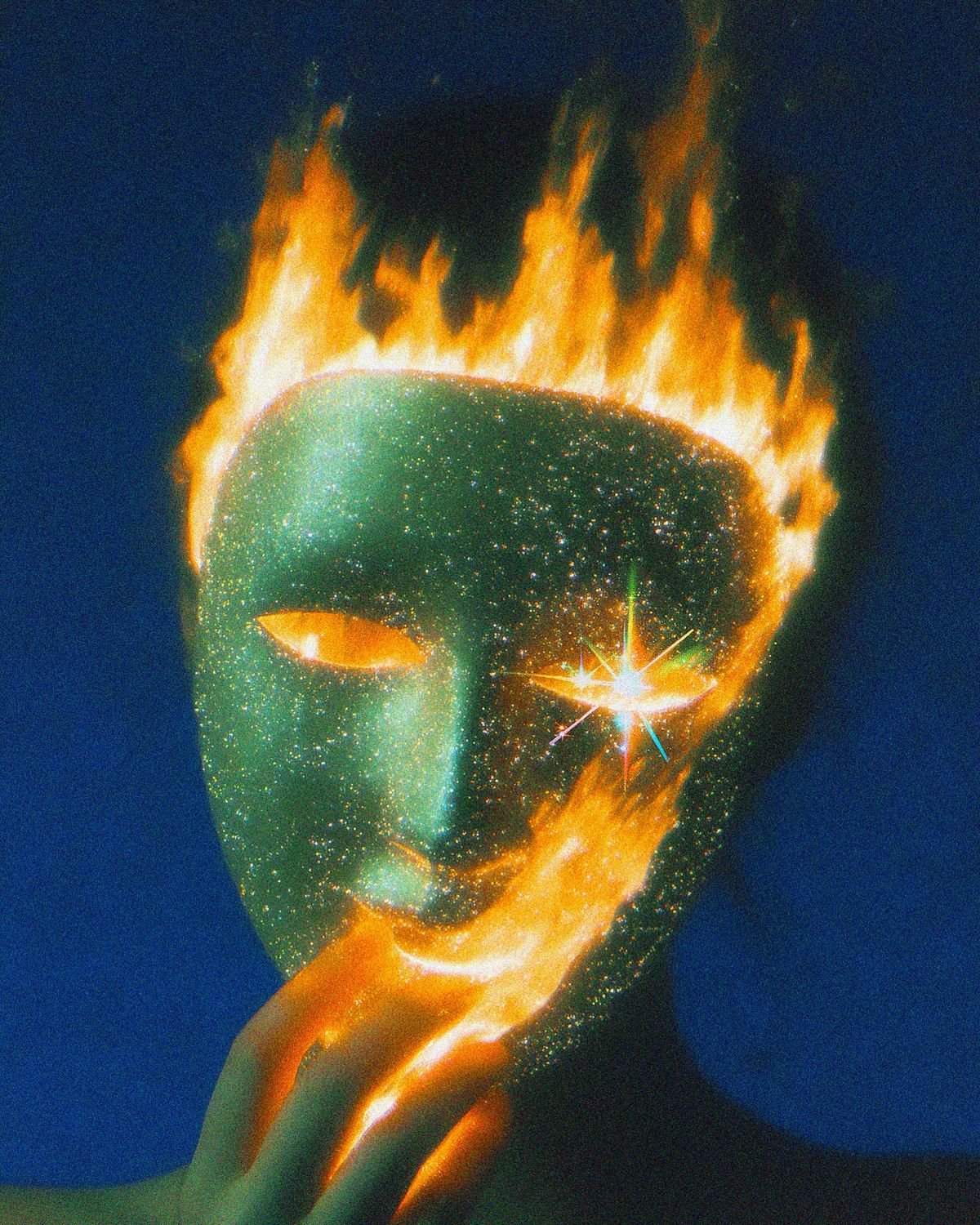
    a jade mask on fire

    We make sorrow universal
    to cultivate sympathy:
    tender plants in a bloody garden.

    Is Jesus Christ:
    Son of Saturn (black cube)?
    Son of Jupiter (golden eagle)?

    Who spoke in the desert?

    A sweet kite (Milvus milvus)
    taken up in a lightning storm.

    brick by brick

    Somewhere, a halo of neon light
    hums — drawing pale wings,
    plants thick with thorns,
    all reaching for what burns:
    a love-sick hand touching
    the moth-eaten edge of a miracle.

    P.S. Notes from the edit bay, blue light still on — video.

  • Paint like sound (when it’s thin)

    Color shifts by degrees —
    heat, distance, saturation.
    Peach into rose, rose into air.
    A thin white line cuts through —
    it hums but doesn’t waver.

    Edges blur then settle orange against shadow,
    geometry built from hesitation.
    Pattern like breath, repeated but never exact.

    Leaves or shapes —
    stamped like wallpaper,
    or under a child’s boot;
    rhythm steady either way,
    a pulse made visible.

    In another frame —
    pink and lilac flirt with yellow,
    a tone held long enough to remember.

    Paint behaves like sound when it’s thin —
    frequency without noise,
    the same horizon
    at different times.

    Bernini PlutoBernini Quote