Tag: art

  • Eleanor Rigby Weather

    Placeholder: swap in a meme or still that fits the mood.

    I genuinely cannot be in a bad mood when Monty Python starts whistling at me. “Always Look on the Bright Side of Life” is somehow powerful enough to override both rejection emails and Utah politics. Two notes and I’m cured. It also happens to be sung by men being crucified, which feels like an appropriate motivational model for writers.

    I try to remember that feeling when a literary magazine informs me—very politely—that I am not among the anointed ones (I am, unfortunately, not Brian). But unlike most magazines, Strange Pilgrims did something humane: they told the truth. More than 7,481 submissions landed at their virtual doorstep.

    That’s not a slush pile; that’s a full-scale literary migration. Entire ecosystems of poems, essays, experiments, and genre-adjacent apparitions. The editorial equivalent of having 7,481 feral kittens suddenly show up on your porch, each insisting it’s special. No one can read that many pieces without caffeine, spreadsheets, and a durable spirit. The breakdown:

    • 46% Short Stories
    • 29% Flash Fiction
    • 16% Creative Nonfiction (my corner)
    • 9% Flash CNF

    I’m one bright dot among thousands of people writing through whatever strange seasons they’re in—grad school recoveries, heartbreaks, quiet epiphanies, late-night typing fits.

    Because today arrived wrapped in steady rain, Salt Lake City drifted into an accidental British mood. On days like this, almost without thinking, I reach for British things—Beatles albums, Monty Python sketches, small scraps of comedy that work better than meditation apps. The rain, the rejection, the nostalgia: they braid together and pull me back toward the younger versions of myself who hadn’t yet been asked to have a future.

    Drifting Toward Whatever Color Glowed Brightest
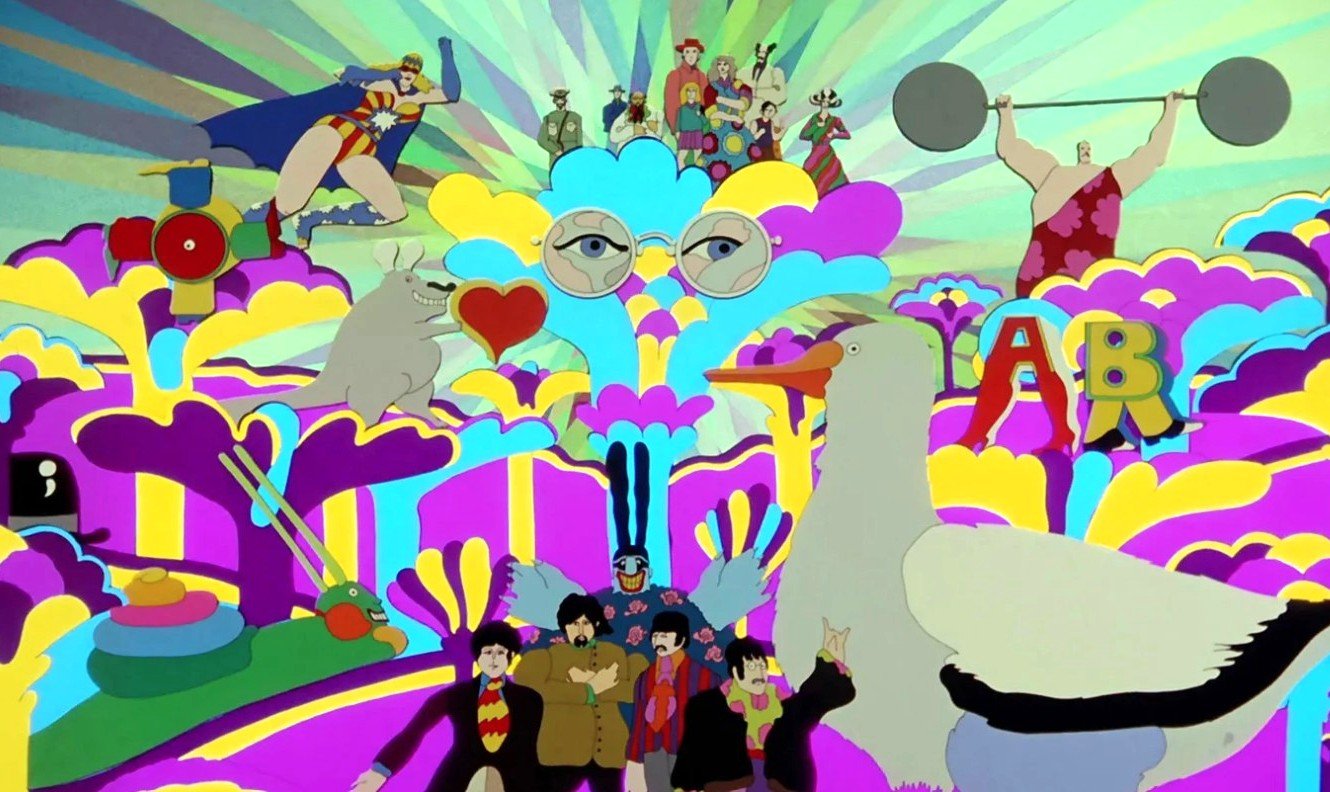
    Placeholder: swap in your favorite Yellow Submarine still.

    At seventeen I watched Yellow Submarine for the first time—unwrinkled, teenage-thin, balanced at the threshold of everything unnamed. My sense of self then was more of a faint outline than a shape. “Me” was still in beta. No degrees, no acceptances, no promotions. I was essentially an amoeba, soft and curious, drifting toward whatever color glowed brightest.

    Me at 17.
    Me as an amoeba.

    The film hit me the way certain things do when you’re still mostly potential: a psychedelic cartoon, strangely beautiful like fine art. I remember showing my boyfriend the “natural born lever-puller” scene—a joke that works on a few different levels if you notice the wordplay. The Beatles are from Liverpool, which makes them Liverpudlians, not lever-pullers; John delivers the line while literally pulling a lever on the submarine, grinning in a way that makes the implication unmistakably physical (to my hormonal teenage brain).

    And then came the Eleanor Rigby overture, with its lonely drawings of Liverpool rendered in muted grays and anonymous faces, the whole city walking beneath a private weather system. That rich animated sequence became my internal shorthand for England, more than landmarks, more than anything literal. The only other thing that captures that mood for me is “Kathy’s Song”, the way Simon sings about moving through rain and realizing that love, or longing, or some interior truth is the only thing that holds steady.

    On this rainy day—when my unemployment is hanging in the air like a stalled pressure front—I sit by the window and watch raindrops slide down the glass. The Wasatch Range disappears into fog and for a moment the valley feels like I’m at a different latitude.

    The Long and Winding Road from Reviewer to Artist

    A moment of clarity in the British drizzle reminded me of this: for six months I’ve been writing every day and learning new ways of making art. Some of that work has helped me understand my own life; some of it feels like it might matter to others who are trying to make sense of theirs. I keep writing about Utah artists and musicians because they deserve more light than they get. It’s the work that feels worth doing, and the hope that it might ease someone’s path the way other people’s art has eased mine.

    Being a magazine reviewer and corporate writer has meant most people don’t think of me as an artist. But in terms of writing, what I do is a kind of reduction and abstraction—paring language down, stripping away the unnecessary, following something like Hemingway’s discipline and something like what Dan Evans does visually in his cut-paper work (read my profile for 15 Bytes here). My writing isn’t really “content” anymore; it has form, created from writing, rewriting, and using words and semiotic chains like a material you can shape and manipulate.

    I didn’t expect visual art to open up for me during this unemployment stretch. AI video, especially—something about pairing music with moving images unlocked a kind of emotional processing I hadn’t been able to reach through writing alone. It feels closer to fine art than anything I’ve ever made: color, timing, rhythm, atmosphere. I can take the grief, the weirdness, the nonlinear memories, and shape them into something that moves—literally moves—in a way prose can’t. I’ve started thinking about these pieces the way I think about essays: structured, intentional, built from feeling rather than performance. It’s strange to say, but for the first time, I actually feel like someone who makes art, not just someone who writes about other people making it.

    A video animation created with AI based on original artwork

    Because I’m trying to hum on the bright side of life, I can admit this: I’ve made more progress in these months—more growth in understanding how I write and why—than I ever managed while employed. I’m finally submitting to magazines like Strange Pilgrims. Finally imagining myself as someone allowed to be there. Even if it feels like showing up scandalously late, something essential has shifted in how I make things.
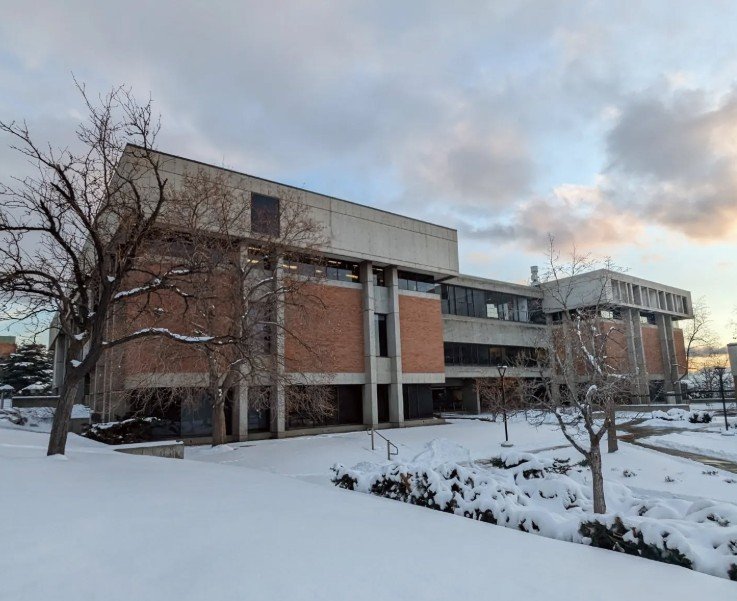
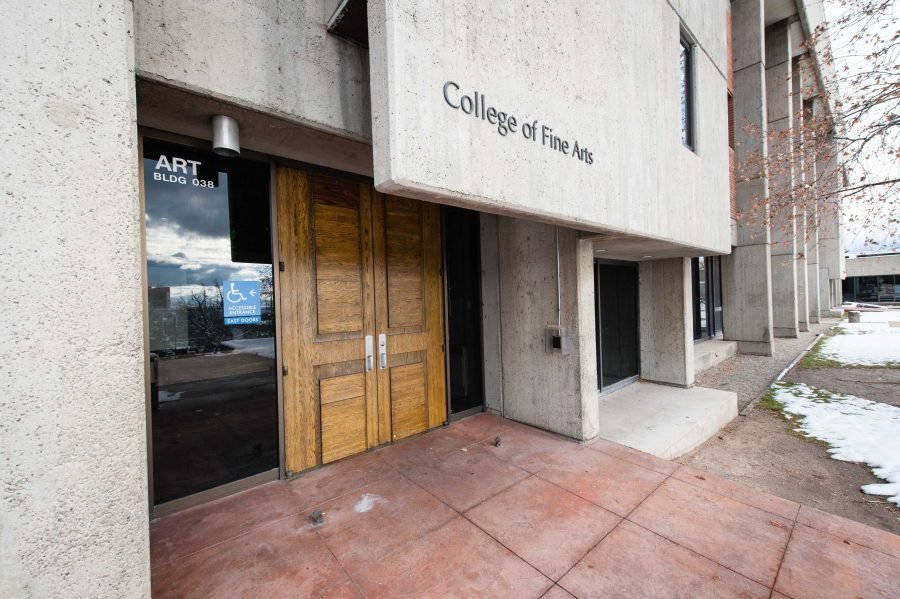
  • Concrete Lessons in Modernism and Memory at the University of Utah Fine Arts Building

    I learned the feeling of Modernism—before I could define it—by walking the Fine Arts & Architecture complex at the University of Utah. Designed around 1970 by Edwards & Daniels Associates, the complex rises in stacked planes and shadowed seams, a 140,000-square-foot maze of studios and galleries where every surface feels purposeful, guided by light, proportion, and clarity. I arrived there from West High on an academic scholarship, and those halls became my first real encounter with modernist form as something lived rather than studied.


    University of Utah Fine Arts & Architecture Complex

    I spent long evenings studying in the building’s corridors and studios, walking the terraces before finals, the building’s hard edges throwing shadows that made the campus feel both monumental and strangely quiet. The complex behaved like a modernist sculpture in the American postwar sense—an environment built on honest materials, structural clarity, and the idea that meaning could emerge without ornament.

    That late-modernist language runs through the campus. The J. Willard Marriott Library—completed in 1968 and spanning more than 600,000 square feet—shares the same architectural convictions: clean geometry, open interiors, long sightlines, and reading rooms shaped by natural light. Together, these buildings formed the atmosphere of the university: a campus grounded in the belief that form and learning could reinforce one another.

    University of Utah Fine Arts & Architecture Complex

    Fine Arts & Architecture Building: Notes

    • Extends the language of late modernism.
    • Reinforces Adolf Loos’s Raumplan at institutional scale.
    • Dramatic shifts in volume, light, and circulation.
    • Concrete left raw; brick infill carefully grouted.
    • Cedar used for warmth and acoustic softness.
    • Circulation alternates between platforms, lobbies, studios, and skywalks.

    Beat Lines, Drafting Lines

    For me, that concrete also carried a family echo. My grandfather, Jeffry Cloward McBeth, came out of the same era of Utah modernism that produced these buildings, and as a Fine Arts student at the University of Utah studying to become an architect, his life was threaded so tightly through the campus that it is hard to tell where the architecture ends and the family stories begin.

    He met my grandmother on the University of Utah hillsides in the late ’50s—she still remembers him pedaling up Elizabeth Street to pick her up for dates. The stories I grew up with are full of postwar optimism and poured concrete: new campuses, new programs, new forms of art and architecture stretching along the Wasatch Front. His older brother, my great-uncle James “Jim” MacBeth, pushed the impulse into sculpture; two of the three McBeth boys becoming professional artists.

    After my grandparents finished their art degrees, they did what many young artists of the time hoped to do: they left Utah for San Francisco. Both had been raised in strict, traditional households; moving to Haight-Ashbury in the early ’60s felt like stepping sideways into a wider, more permissive world.


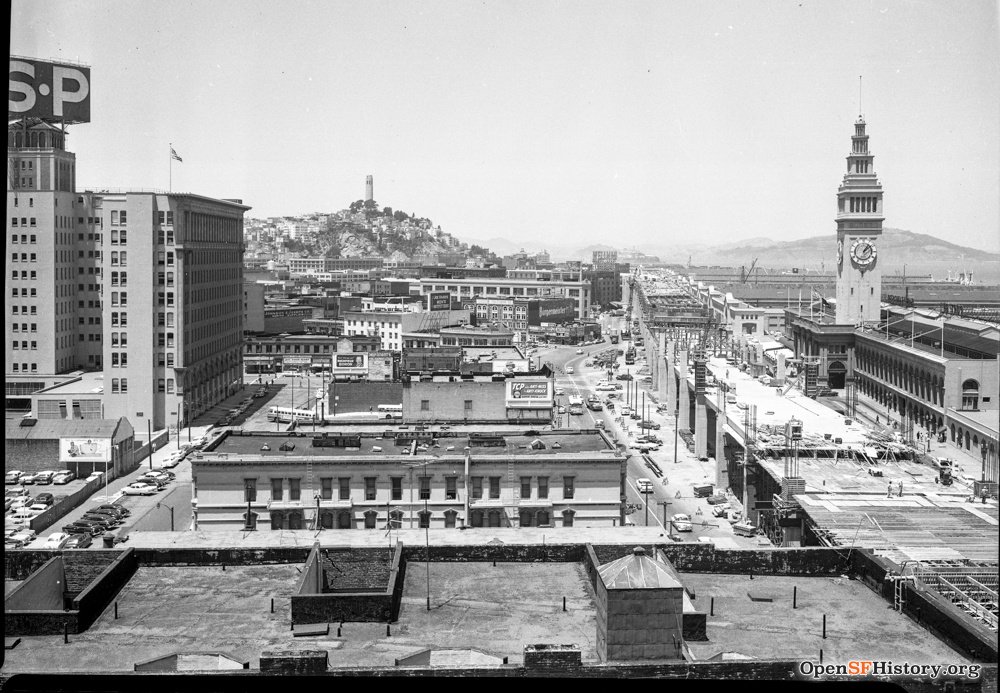
    Historic view of San Francisco’s Financial District

    From 1962 to 1963—those hinge years when the city was shifting from Beat quiet to full counterculture bloom—they chased the post-graduate art life they’d imagined from afar. Jeff worked as a architectural draftsman in the Financial District, drawing elevations and facades with the same instinctive love of straight lines and structural clarity that shaped him from childhood.

    Even in a city crowded with ornament, his precision never felt rigid. It read as a worldview, a belief that clarity, discipline, and restraint could carry their own kind of beauty. They returned to Utah in 1964 with their first child, my mom, and brought back the openness and confidence they had gathered during that short San Francisco chapter.

    Sculpture in the Civic Grain

    That impulse toward structure ran through the family in different ways. Jim followed a parallel artistic path north to Ogden, where he became a sculptor and later the Head of the Art Department at Weber State University in Ogden, Utah.


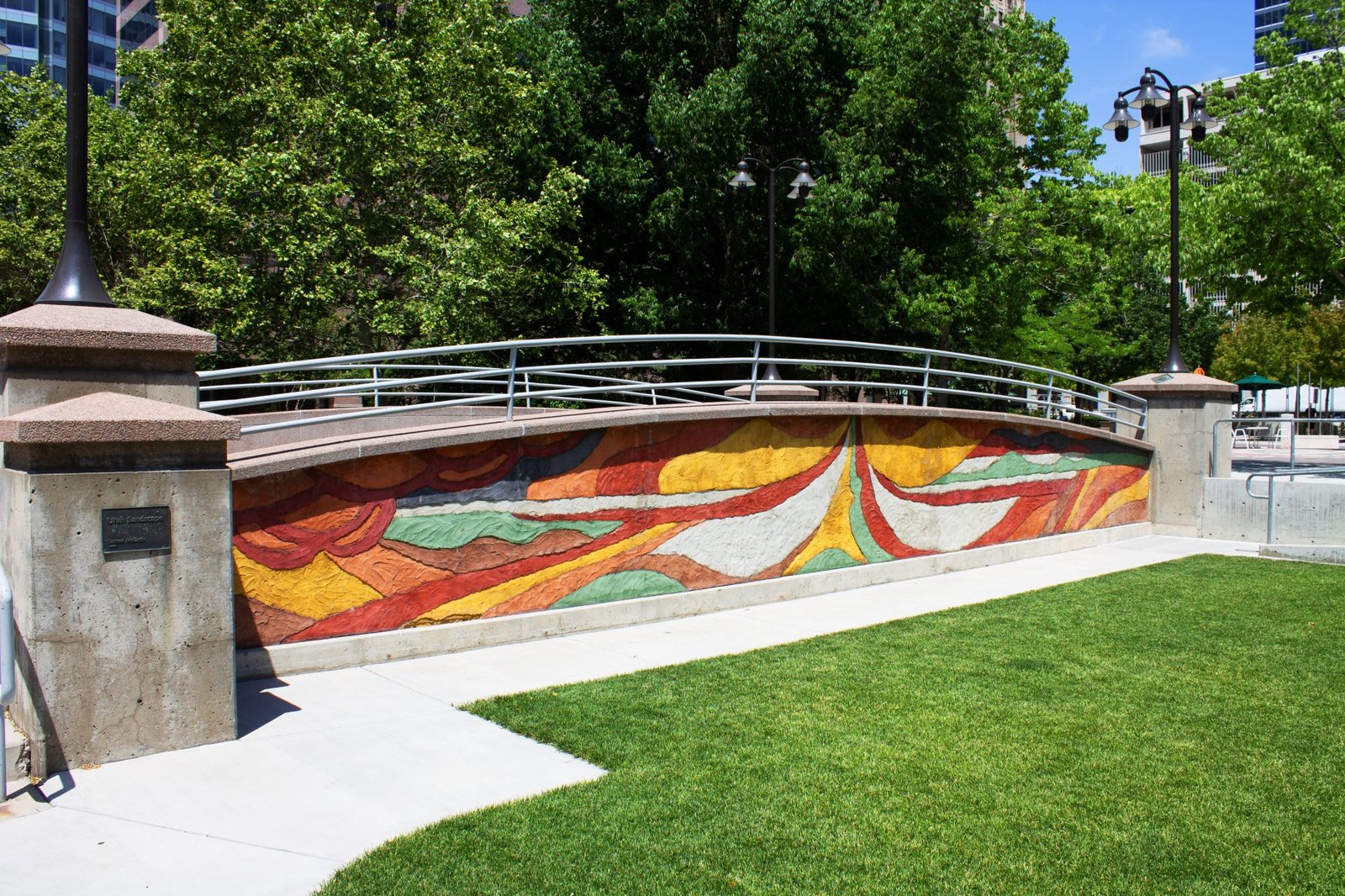
    James MacBeth sculpture in Utah

    His work entered Utah’s public landscape at a moment when cities across the state were embracing modernism in their civic spaces—treating sculpture and architecture as a shared visual language. MacBeth’s best-documented works appear across Northern Utah, including Utah Sandscape (1996), an abstract desert-inspired installation created from tinted mortar on the pedestrian bridge at Salt Lake City’s Gallivan Center, and Connections (1998), a 2,000-pound stainless-steel sculpture mounted above the main east entrance of Weber State’s Shepherd Union Building.

    About Utah Sandscape, Jim said: “I would like (people) to get a feeling of a natural landscape – something that doesn’t happen in the city. It carries people into another environment while still in an urban area.”

    Additional works appear in Ogden City’s public-art catalog, including installations at Lorin Farr Park. His materials were pragmatic—mortar, steel, colored aggregates. He worked in the abstract modernist belief that form should clarify and enhance space, not decorate it.

    Where Jeff practiced modernism through drafting tables and elevations, Jim carried it into public sculpture, creating objects that shaped how people moved, paused, and oriented themselves in the built environment.


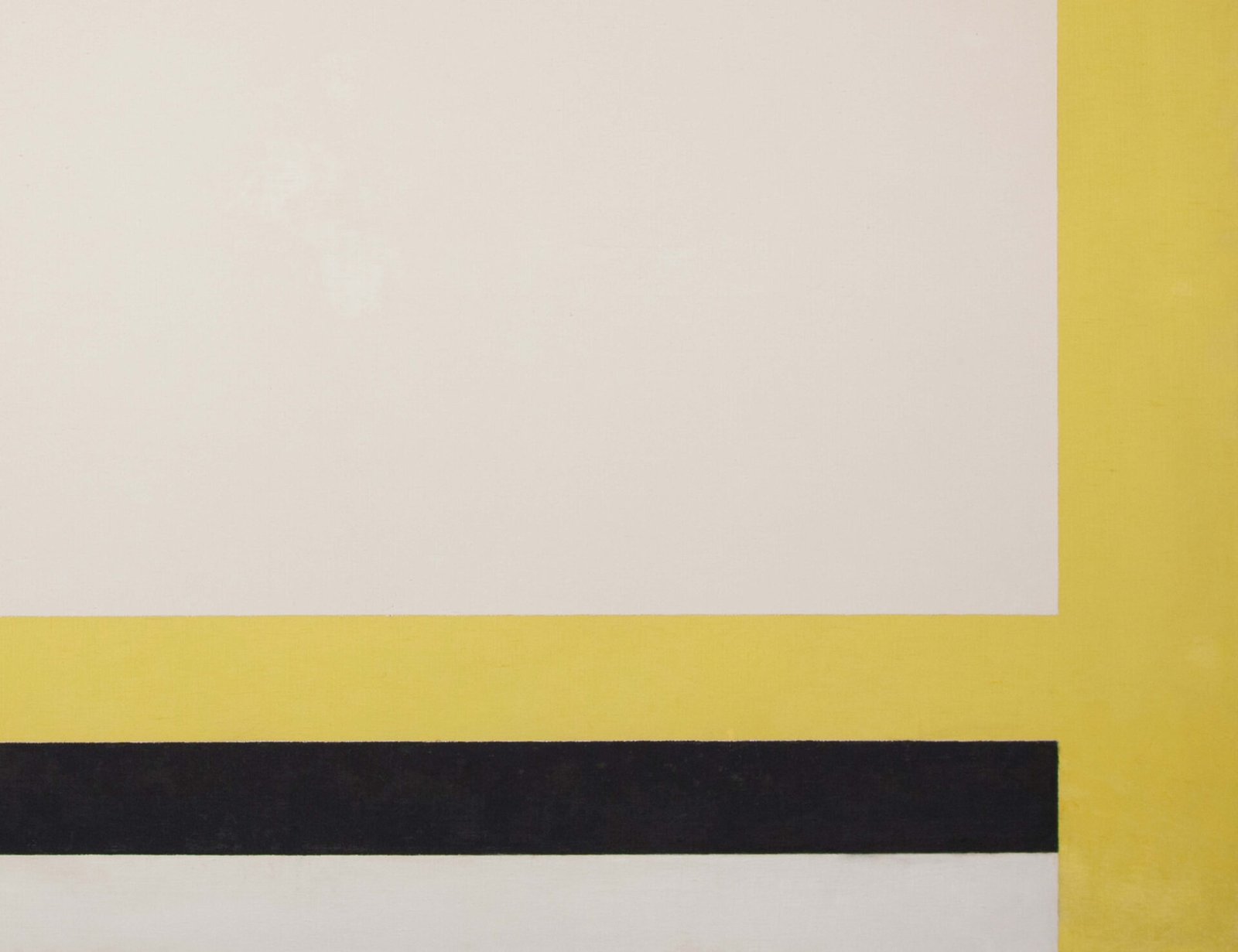
    Abstract painting at the Utah Museum of Fine Arts

    Learning to Name Abstraction

    As I learned as an undergraduate in Art History at the U, Modernism means simplification with intent, structure without apology, and clarity that doesn’t fear silence. The Utah Museum of Fine Arts, just down the hill, reinforced this education through the work of mid-century abstractionists like Ilya Bolotowsky and John D. McLaughlin (the image above is #21, 1958 on display at UMFA), whose balanced geometries and disciplined reduction echoed the same values embedded in the buildings outside. Their paintings made abstraction feel less like an artistic choice and more like a way of thinking, shaped entire landscapes, from museum walls to the structural bones of campus.

    Concrete, Memory, Lineage


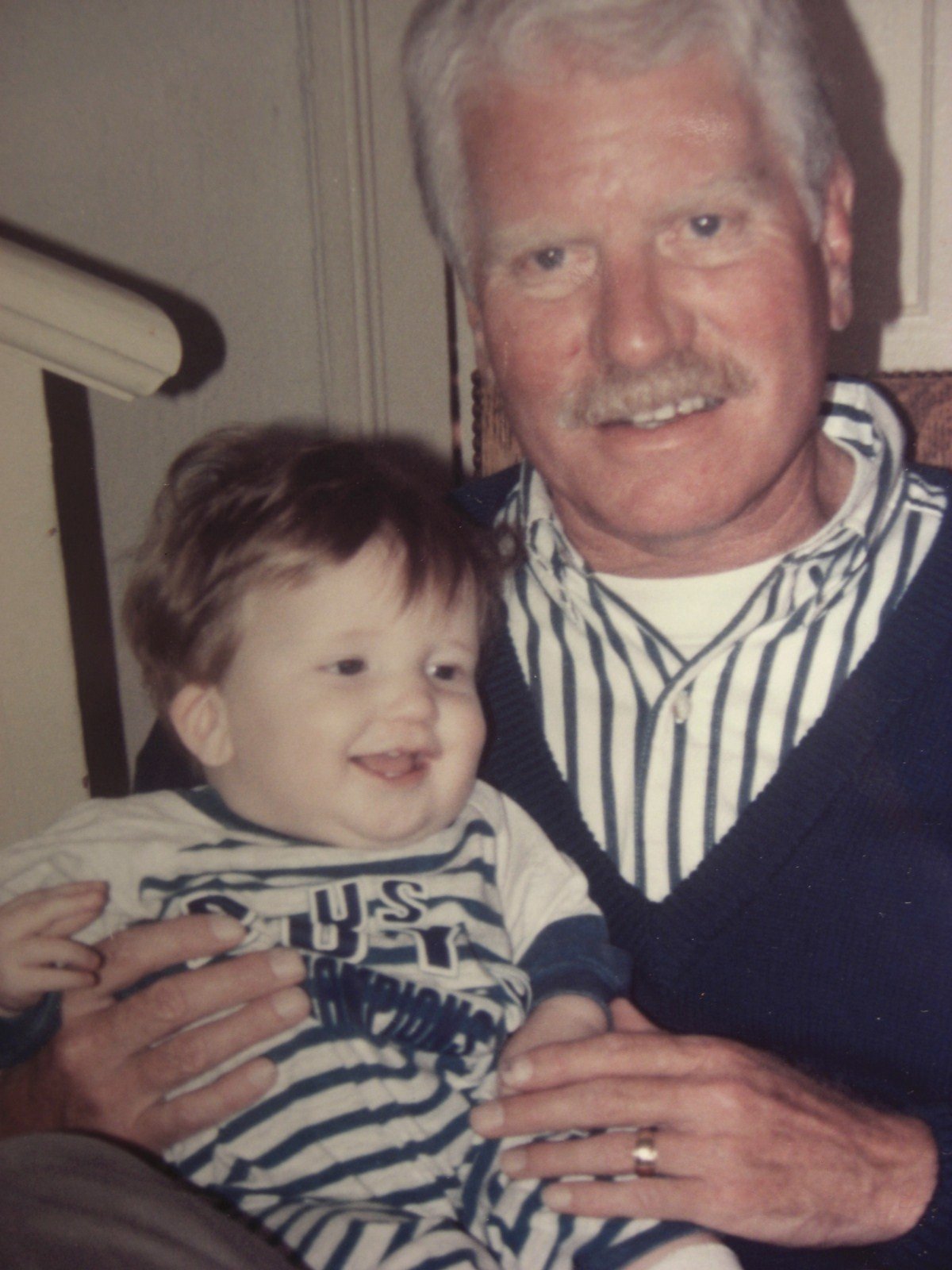
    Jeff McBeth

    Walking the campus, I feel my grandfather in the architecture itself. The Fine Arts complex and the Marriott Library shaped part of my education long before I arrived, their forms echoing the hard-edge paintings at UMFA and the sculptures spread across the Wasatch Front. My grandfather and great-uncle never approached art as theory. They built and taught, and the discipline of their work lived in the way they moved through the world. When I write about Utah’s artists now, I return to that early understanding: the way structure becomes memory, and memory becomes a way of seeing.

  • Paint like sound (when it’s thin)

    Color shifts by degrees —
    heat, distance, saturation.
    Peach into rose, rose into air.
    A thin white line cuts through —
    it hums but doesn’t waver.

    Edges blur then settle orange against shadow,
    geometry built from hesitation.
    Pattern like breath, repeated but never exact.

    Leaves or shapes —
    stamped like wallpaper,
    or under a child’s boot;
    rhythm steady either way,
    a pulse made visible.

    In another frame —
    pink and lilac flirt with yellow,
    a tone held long enough to remember.

    Paint behaves like sound when it’s thin —
    frequency without noise,
    the same horizon
    at different times.

    Bernini PlutoBernini Quote