Author: hannahmcbeth22@gmail.com

  • Phosphorus / El-Zahra / Prometheus / The Good King

    Emanating
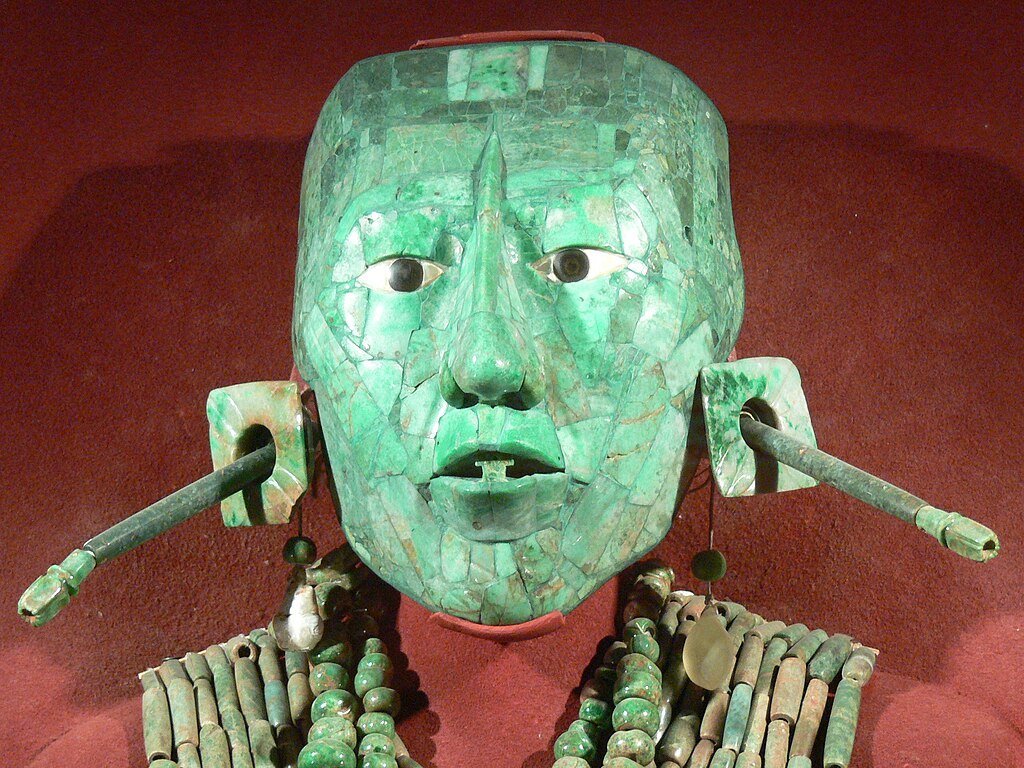
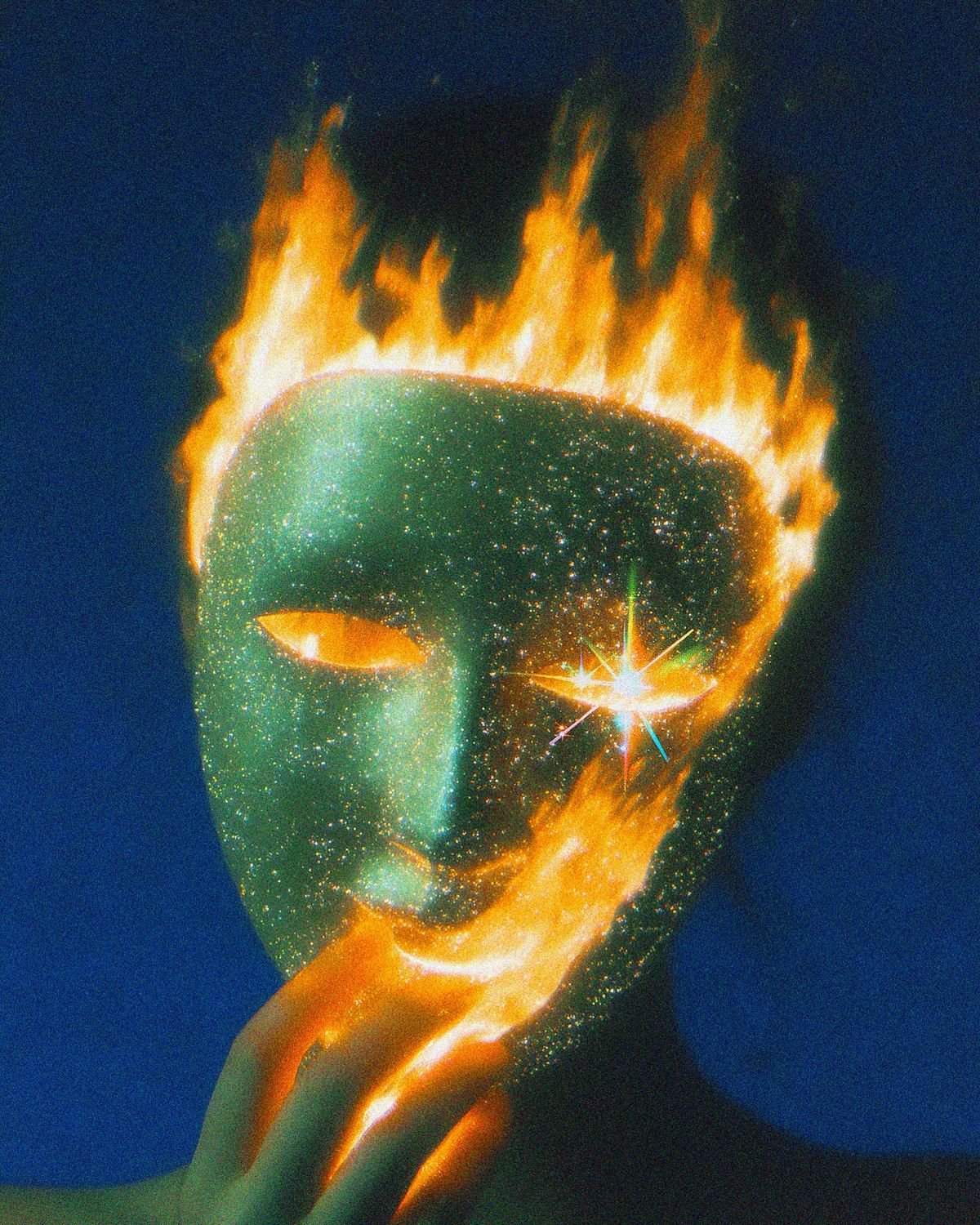
    Jade Mask of Palenque
    Phosphorus / El-Zahra / Prometheus / Good King

    “Emanating”

    Sample from ATYYA


    Now you are one with the wind
    With the water, with the stars
    With all of nature, with all animals
    And with all humans;
    You feel the heat and light
    Emanating from the flame in your heart
    You are radiant with the glow of love.

    Phosphorus / El-Zahra / Prometheus / The Good King

    Phosphorus

    The Greeks named the morning star Phosphorus—the light that rises before dawn. Hesperus was the same body seen at twilight. The ancients did not at first realize they were one; only later did observation reveal a single orbit behind two names—the same star rising and setting on opposite horizons. Phosphorus was expectation, Hesperus fulfillment; one light arriving, the other departing. The pairing expressed continuity, the unbroken rhythm between beginnings and endings. “Bringer of light” meant illumination that anticipates rather than conquers—a glow that announces the day but yields to it.

    El-Zahra

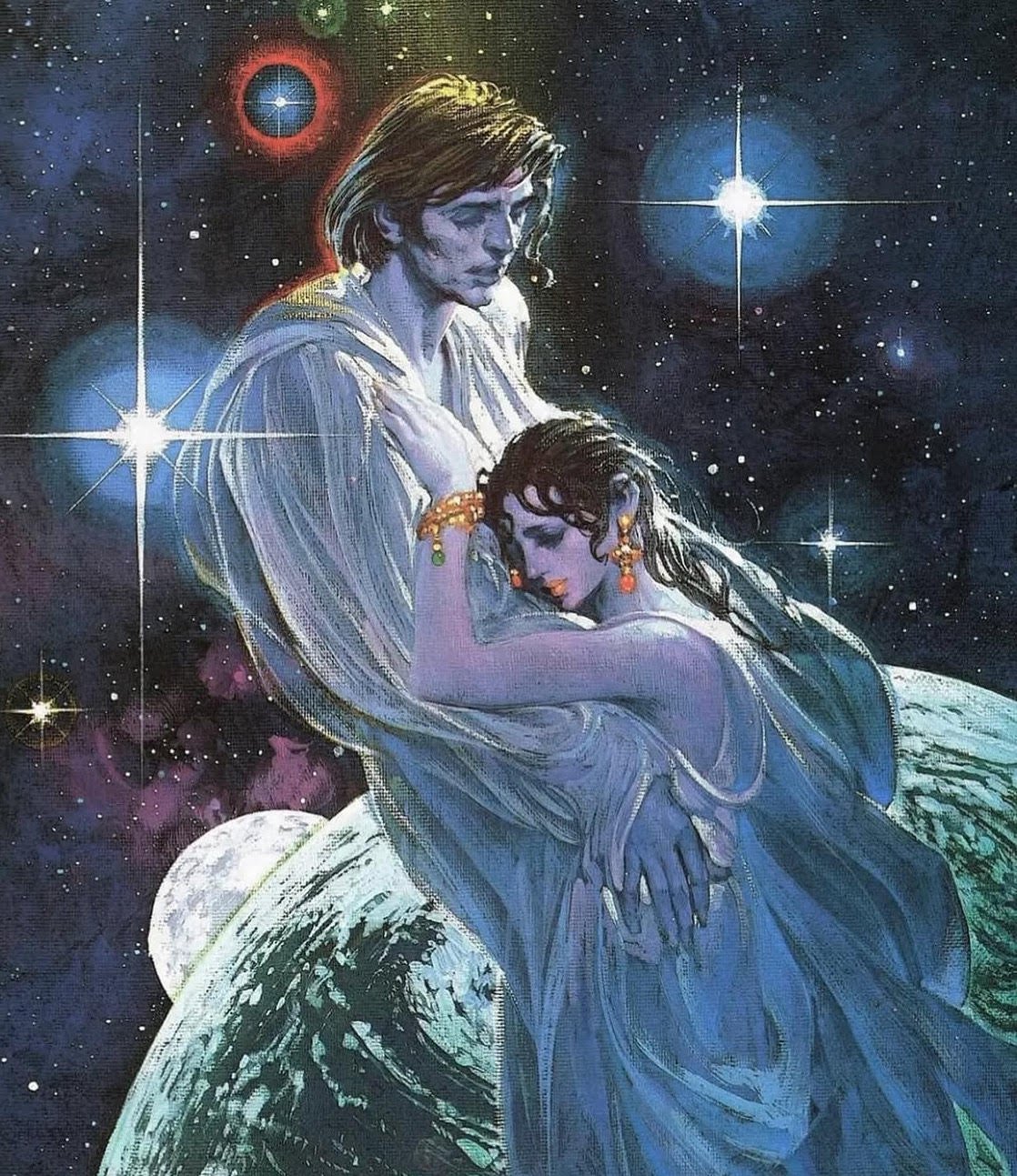
    In Arabic, El-Zahra means “the shining one” or “the radiant.” The term was applied to both Venus and to certain human figures, often women, associated with purity and intelligence. In the Islamic Golden Age, philosophers and mystics alike described light or fire that reveals without consuming—illumination as the highest attribute of the divine.

    She is brilliance tempered by proportion, an image of clarity that reveals without injury. In this she stands as counterpoint to the story of Semele, the mortal mother of Dionysus, whose demand to see Zeus unveiled resulted in her annihilation. Too direct a vision of the divine leads not to enlightenment but to ash. The philosophers of the Golden Age, writing centuries later, drew a similar distinction: to cling too tightly to light is a form of error. Excess, in the Buddhist sense, is attachment—the wish to possess revelation rather than dwell within it.
    zahra

    In Tibetan Dzogchen (the “Great Perfection”), the term rigpa names a state of “pure awareness,” sometimes called “pure light” or “pure seeing.” It is the condition of perception unclouded by grasping, where mind and world are transparent to one another. El-Zahra belongs to this same lineage of restraint—not an ascetic denial but the discipline of equilibrium.

    Prometheus

    Prometheus, in Greek, means “forethought.” In Hesiod’s Theogony and Works and Days, he is a Titan who fashions humankind from clay and steals fire from Zeus to give them life. In later Hermetic texts, the demiurge—the craftsman god who forms the world—becomes the antagonist, not the creator of light but its jailer. Within that cosmology, Prometheus can be read as the counter-movement: not rebellion against heaven, but resistance to the prison of matter. He is the lightning strike that arrives just when it is needed, when a single flame might keep a family from freezing to death.

    This polarity—between maker and liberator, between form and spark—is reflected in alchemical language. The human being is the half-made or half-awake king: partly clay, partly fire, suspended between inertia and illumination. To embrace the spark is to continue the work of transformation; to refuse it is to remain bound, repeating the torment that the later myth externalized in the chained Titan. In this reading, Prometheus is neither thief nor rebel but intermediary—the intelligence within matter that remembers its origin.

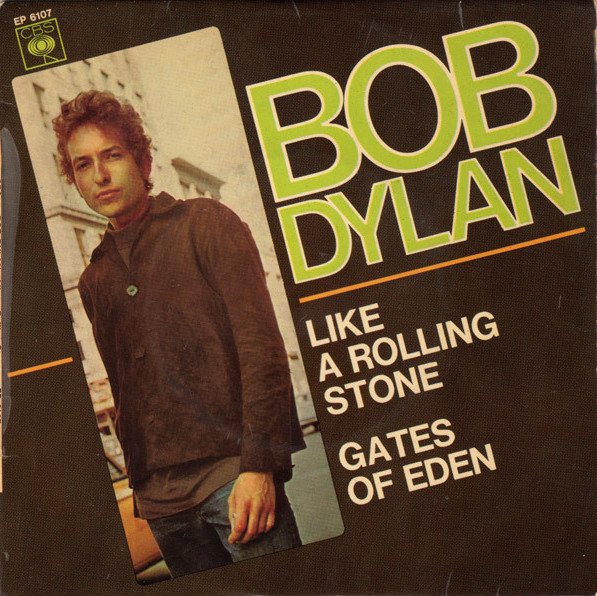
    Rough Stone, Rolling: Ashlar Work

    The same mythic grammar reappears in the symbolism of Freemasonry, where the initiate shapes the rough ashlar—the unhewn stone—into the perfect ashlar fit for the temple. The chisel and mallet, the compass and square, the letter G at the center of the emblem—all point toward geometry and generative order: the disciplined transformation of raw material into meaning. It is a Promethean labor, a belief that technical, economic-based craft itself can also re-make an individual.
    bobdylan

    My great-grandfather was a practical Freemason, his mark carved on the granite of his grave. He left his wife—my great-grandmother Rhea—and their three young sons, Jeffry, James “Jim” (McBeth > Mcbeth), and Glen, to work in California during the Great Depression. Jim Macbeth later became a stone sculptor in the 1960s and then the Art Department Head of Weber State University in Ogden, Utah; on his sabbatical, he traveled to Greece to choose stones for his mid-century, non-representational sculptural work in person. The family carried that quiet ethic of the craft: shaping what you can with what you have.

    The phrase “a rough stone rolling” captures the same motion—the restless, unfinished search for form. It’s an American idiom of becoming, of traveling toward one’s own refinement, even in the timeless archetypical way of “Going West to California.” In it survives the hope of Prometheus: that through work, even ordinary work, the spark of creation can be preserved.

    The Good King

    The Good King appears across myth as the counterpoint to tyranny: rule as balance rather than command. In the Irish cycles, the Dagda—literally “the Good God”—is both ruler and maker, a being of appetite and abundance. He carries a club that can kill with one end and restore life with the other, and a cauldron that never runs empty. His reign is not moral perfection but right proportion: an acceptance of the world’s fertility and decay as part of one rhythm. In him, governance is physical labor—plowing, feasting, keeping the seasons in tune.
    greenking

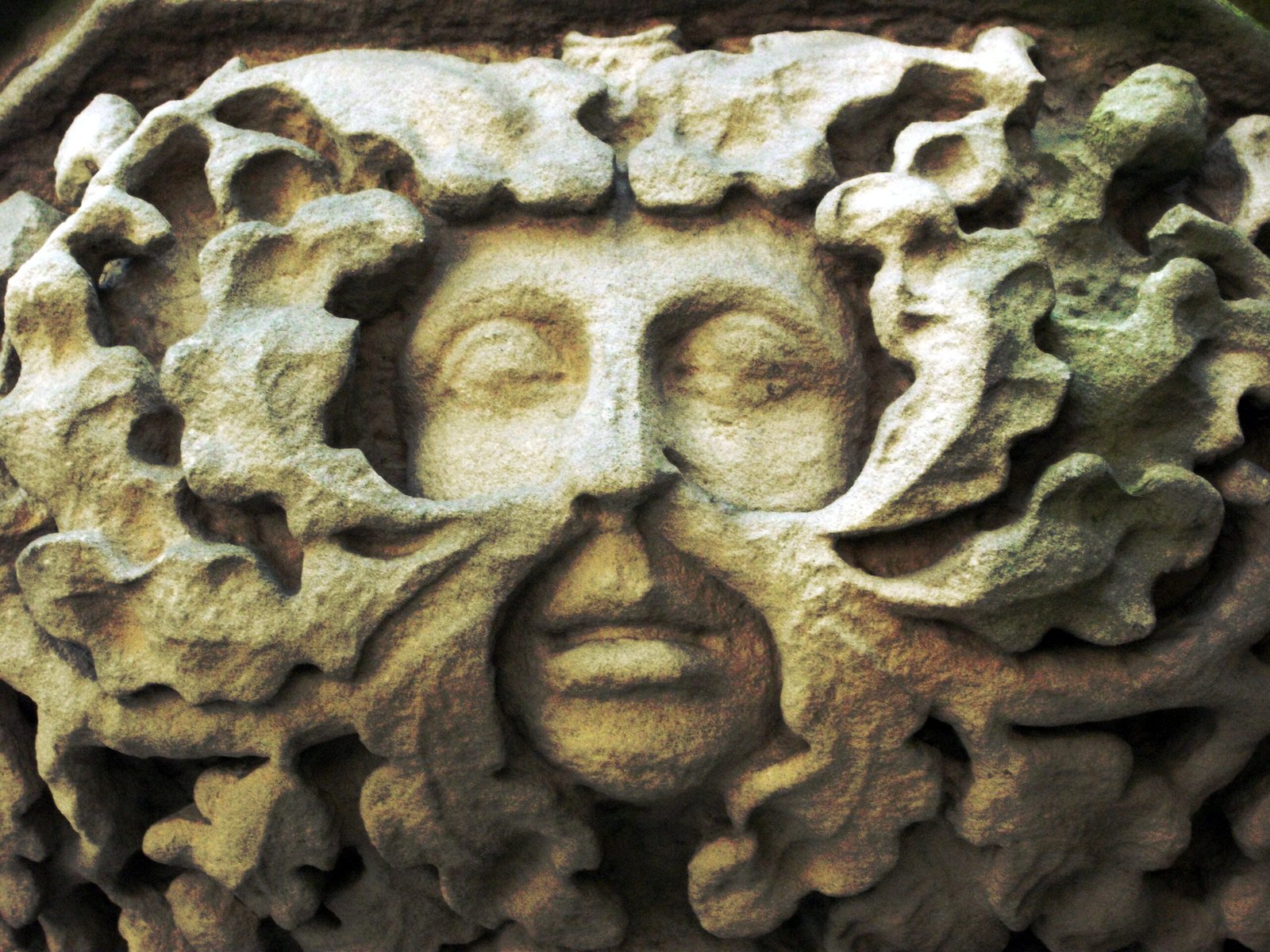
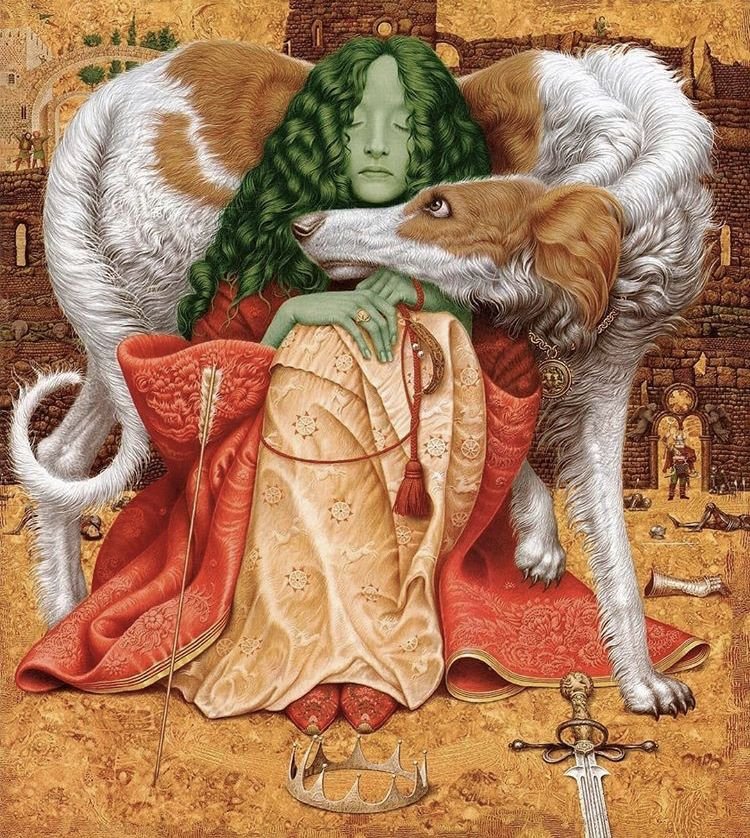
    From the Dagda’s myth the medieval Green Man inherits his face: leaves spilling from his mouth, sometimes nose, eyes half-open, half-dreaming. You see him carved into cloisters and doorways, the vegetal intelligence of matter watching over human passage. The image endures because it reconciles hierarchy with humility—the crown and the root bound together.
    greenking

    Far from Europe, the pattern repeats. In the Maya world, kingship was equally cosmological: a ruler’s body stood for the renewal of time. The jade mask of Palenque, carved for the tomb of K’inich Janaab’ Pakal, distills that belief into stone. Its surface glows with a living green, the mineral echo of new leaves. The face is calm, lips slightly parted, gaze turned inward as if in perpetual breath. Looking at it too long, I start to cry. The expression is neither sorrow nor triumph but awareness—the stillness of a person who has accepted his return to earth.

    Good King rules not by decree but by reflection. In him, divine order becomes humane. Tolkien’s Return of the King carries the same inheritance: a wounded land awaiting the steward who can restore its measure. The hope is always the same—that one day, right rule will again mirror right relation, and the kingdom of God, or of balance, will take shape on earth.

    Light That Liberates
    Krishna

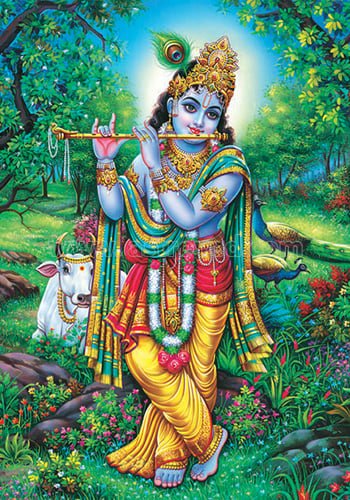
    Across cultures, the figures who embody illumination are never merely rulers; they are liberators—beings whose radiance dissolves fear and unbinds what has hardened in the world. Krishna is one of the clearest expressions of this pattern: playful, disarming, musical, quietly wise. His brilliance is not the punishing blaze of a sun god but the intimate glow of clarity, joy, and recognition.

    He is a king not by lineage but by conduct. In the stories, Krishna steals butter, dances on poisoned rivers, lifts mountains without strain, and counsels a warrior into steadiness with a vision that spans the entire cosmos. His kingship arrives not as decree but as presence—a form of moral luminosity that restores proportion simply by existing in the world with a grounded joy.

    Seen this way, Krishna stands closer to the Green Man than to the emperors of epic. Both figures express an intelligence rooted in renewal, humor, and fertility; both resist the rigidity of empire. The Green Man’s leaf-sprung face—half smiling, half wild—offers the same lesson as Krishna’s flute: that vitality can be a form of governance.

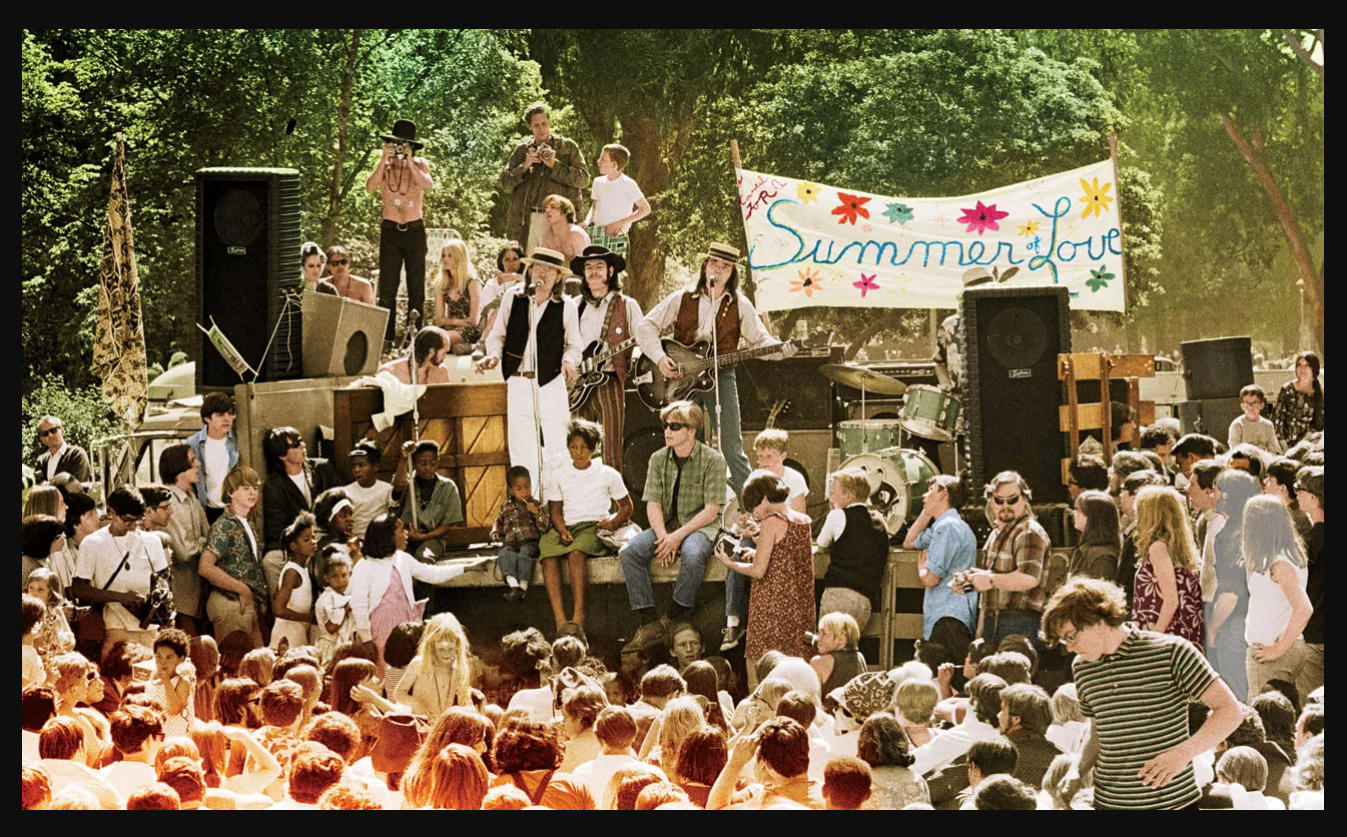
    This grammar of illumination resurfaced, unexpectedly, in the Bay Area of the 1960s. When A. C. Bhaktivedanta Swami Prabhupada arrived in San Francisco in 1966, the Hare Krishna movement settled into a city already carrying another kind of awakening. Hippies chanting in Golden Gate Park shared sidewalks with the earliest generation of semiconductor engineers; ecstatic devotion and scientific experimentation unfolded in the same fog-thick air. Both promised liberation through pattern. Both offered altered states—one through mantra, the other through mathematics.

    Light in Matter

    By the mid-1960s, the Bay Area was developing two very different traditions of illumination. In Golden Gate Park, the new Hare Krishna community chanted a Sanskrit mantra meant to clear perception through repetition; a few miles south, engineers at Fairchild and Stanford were learning how trace amounts of phosphorus or boron could turn silicon into a material that alternated between conductivity and restraint.
    summeroflove

    Both groups were, in their own ways, experimenting with how pattern changes consciousness. Histories of the counterculture—such as Timothy Miller’s The Hippies and American Values (1991)—often overlook how close this spiritual movement was to the early semiconductor labs chronicled in Christophe Lécuyer’s Making Silicon Valley (2006). Yet both lab and temple practiced a form of disciplined attention: chanting as a stabilizing vibration, doping as a controlled disturbance.

    A transistor is, after all, a small argument about how light behaves inside matter, just as Krishna’s teachings in the Bhagavad Gita (c. 2nd century BCE) are an argument about how clarity behaves inside the mind. The Bay Area simply gave these older metaphors physical form: stardust purified, etched, and asked to think.
  • Rabbit Keeps Running (11/11)

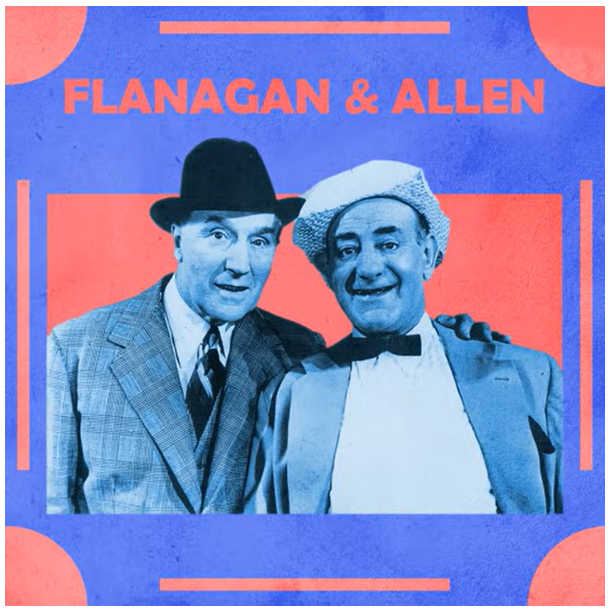
    Holly Rios’s recent show at Harrington Art Studio left an impression: images erased, reprinted, re-seen. Her work, informed by Playboy, with its infamous Bunny logo, had me thinking about how eternal symbols refuse to fade. Maybe that’s why I’ve been caught on another loop: the sound of Run, Rabbit, Run, recorded in 1939 by the British comedy duo Flanagan and Allen.

    The popular World War II song was written for wartime morale—bright and lilting. After Germany’s first air raid on Britain in 1939, locals joked that the only casualties were two rabbits; RAF pilots picked up the tune and rewrote the lyrics: “Run Adolf, Run Adolf, run, run, run.” The B-side, We’re Gonna Hang Out the Washing on the Siegfried Line, quickly joined it as a national favorite.

    Run Rabbit Run — vintage motif

    We’re Gonna Hang Out the Washing on the Siegfried Line


    We’re gonna hang out the washing on the Siegfried Line
    Have you any dirty washing, mother dear?
    We’re gonna hang out the washing on the Siegfried Line
    ’Cause the washing day is here
    Whether the weather may be wet or fine
    We’ll just rub along without a care
    We’re gonna hang out the washing on the Siegfried Line
    If the Siegfried Line’s still there

    The humor was absurd, its tone breezy, even flirtatious. That mix of sex and violence—the soldier’s wink—made it both funny and unsettling, a morale booster that never let the reality of killing drift too far away. The Siegfried Line (known in Germany as the Westwall) stretched nearly 400 miles from the Netherlands to Switzerland—an interlocking system of bunkers, tank traps, and concrete obstacles built in the 1930s to hold the Allies back.

    Although Run, Rabbit, Run was recorded before the Blitz began, its ironic brightness soon met a grim reality. From September 1940 to May 1941, the German Luftwaffe’s bombing campaign—known as the Blitz—killed more than 43,000 British civilians and injured nearly 140,000. What had started as a joke about rabbits became a darkly resonant refrain, echoing through shelters, pubs, and barracks as London burned.

    I was never a big fan of the rabbit as a Playboy symbol, but I can’t help but fall a little in love with the rabbit itself—the contradictory emblem that’s survived every reinvention. Prey and mascot. Comic and casualty. It keeps running, and every generation, someone chases.

    Rios is also co-curating Perspectives of Women in Print with Carlissa Whells, opening November 17, 2025, at Finch Lane Gallery in Salt Lake City.

  • Business Cards & Elemental Frequencies

    Business Cards & Elemental Frequencies

    The business card — the ultimate symbol of professionalism, polished and impersonal — carries a strange tension. The “Patrick Bateman” legacy made it a cliché: a crisp rectangle of power, hierarchy, and performance. But what if it could be something else entirely?

    As I started to build a brand around Locks O. Won (my creative alias), I confronted that question — trying to move away from the coldness of presentation toward something more human. I decided to approach business cards as acts of exchange and create four different designs for connections to choose from. Each one carries energy, tone, and intention. Together they form a deck of frequencies — objects that can be chosen rather than handed out. The idea is to let people gravitate toward the card that feels like theirs, with whatever associations (individual or shared) they bring to the table.

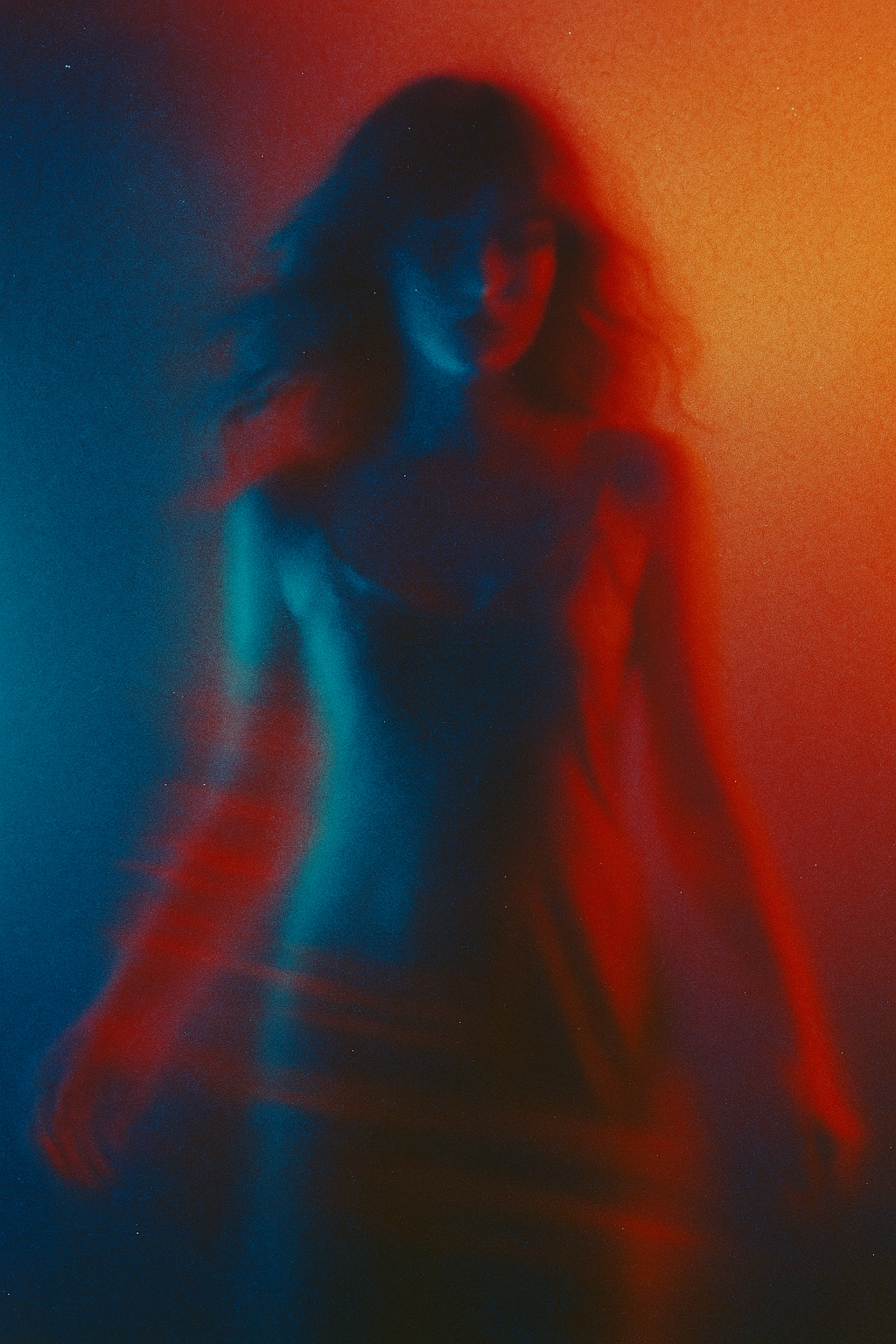
    When someone picks a card, they’re not just getting my contact information — they’re showing me something about themselves. The colors, the symbols, and the textures are different for each, but all are bound by the same quiet architecture: grids, light, and elemental motion.

    Element Symbol Palette Theme
    Fire 🜂 Orange + Indigo Passion, energy, activation
    Air 🜁 Teal + White Vision, movement, openness
    Earth 🜃 Deep Blue + Copper Grounding, structure, systems
    Water 🜄 Aqua + Silver Emotion, intuition, flow

    They’re not meant as status markers or branding gestures. They’re a kind of recognition — small objects that hold presence. When someone chooses one, it becomes a point of contact that’s personal, not performative.

    Love Measured, Meaning Drawn

    Why do cards — from Vegas decks to fortune-telling spreads — carry such symbolic charge? Playing cards and credit cards are household staples, and both trace their lineage back to a shared ancestor: the tarot. For centuries, we’ve trusted these small rectangles to mediate risk, reveal luck, or hold identity — compact mirrors of our systems and our selves.

    It was during my final semester at the University of Utah (in Salt Lake City) that I first met the tarot in earnest — that strange twilight between ambition and exhaustion — when I was half-convinced I’d never finish my thesis and would simply dissolve into the carpet of the Marriott Library. Before I tell you what I’ve learned in the thirteen years since — studying and living with the tarot — I should set the scene: the highs and lows of one art historian’s long wrestle with writer’s block.

    A Campus of Light and Ghosts

    2012 at the University of Utah: I lived in the library. Every day, I’d grab a sandwich from the Union, cross the concrete courtyard, and sink into one of those mid-century womb chairs scattered like punctuation across the marble floor. The library had this faint hum — printers, fluorescent lights, the sighs of other overachievers running on pure panic.

    The University had become a kind of ecosystem I’d adapted to perfectly: the brick courtyards, the echo of my own footsteps in the Fine Arts building at night. The writer’s block that swallowed my thesis felt less like laziness and more like a subconscious protest — as if finishing meant being pushed out of a nest I wasn’t ready to fall from.

    I loved the campus; it had become my home in that desperately nerdy, Harry Potter-at-Hogwarts way. I knew its architecture, its hidden corners, its quirks of light. The patches of sunlight that filtered through the windows in the lower levels of the Marriott, the secret tunnels under Fort Douglas where I lived, the gazebo in Officer’s Circle where we’d plug in outlaw stereos and run wild across the field — it felt enchanted, the mythology of a place that raised me from adolescence to early adulthood. I learned so much there — not just about art history and the classics, but about myself as a budding scholar — how curiosity, followed too far, becomes its own kind of aesthetic devotion.

    Measuring the Immeasurable

    The dreaded undergraduate thesis focused on erotostasia — the weighing of Eros — in classical Greek art. It sounds arcane, but what I was really studying was the symbolic and material act of weighing a concept: how humans give shape and measurement to what can’t be measured. On engraved gems, kraters, and gold rings, delicate figures place love itself on a scale. That image — the quantification of an emotion — fascinated me. How do we assign value to feeling? How do we make the invisible visible?

    We spend our lives trying to weigh what has no mass. It’s a subtle transubstantiation — the drift of the invisible into form. Love and death: they exist beyond touch yet leave fingerprints on everything. Everyone is drawn to them, and no one fully understands them. Every withered fortune teller knows the truth of it: everyone asks about love, money, and death.

    The tarot became a way out of my writer’s block — a new interpretive framework for the philosophical logic of something inherently illogical: measuring the immeasurable. It connected directly to what I’d been writing about, both in theme and in impulse. Across history, the ability to represent the immaterial through number, weight, or symbolic value marks a turning point in how people understand reality. That capacity — to assign structure to the unseen — is at the root of culture, of economies, of faith. Tarot gave me a visual and numerical language for that same human urge to make meaning from what resists measurement.

    For the math: C(78, 3) = 76,076 possible three-card draws; with reversals, 23 × 76,076 = 608,608.

    Or, 608,608 ways for the universe to tell you you’re overthinking something obvious.

    Learning to Leave

    Years later, when I moved to England for my master’s in Archaeology and Anthropology, I found the same threads running through ethnography — the study of how people turn belief into symbol and structure. It felt like a continuation of that first impulse: to find meaning through design, to map what resists mapping.

    Years after discovering books about the tarot in my college library, (and yes, I did finish — thesis submitted, nest officially left), I found myself reading tarot cards for other people. From curious art historian (mostly skeptic), as I studied the tarot, I became some kind of believer. For the past couple of years, at festivals and markets in Salt Lake City, under flickering lights and desert wind, I lay cards for strangers. People came looking for guidance, closure, validation.

    The deeper I go, the more I feel I’m understanding the elemental resonances that underpin it all: Fire for transformation, Air for thought, Water for emotion, Earth for the tangible. Those four forces shaped not just the cards but how I began to see everything — the structures of design, the flow of conversation, the ways people signal who they are.

    Between Hands and Symbols

    As I build the world of Locks O. Won, I find myself circling back to that moment of discovery. The business cards, the symbols, the performances — they all feel like continuations of that study in meaning and measure. After years of creation, research, and design, I can only thank the Universe for the strange symmetry of it all: that what began as a thesis on weighing love has become a practice of balancing art, language, and connection.

    Design, like divination, is a way of reading energy — holding something up to the light and noticing what reflects back. But it’s also a form of communication — a bridge between symbolic worlds, an act of translation that turns private meaning into shared understanding.

  • False Prophet Dispatch: Crown of Thorns

    Video log — nocturne, 1 AM.

    “Put your head on my shoulder.”
    Phrase loops — human, tender.
    A blue light hums in the studio.

    Rubens painted the head hanging,
    delicate and heavy,
    still breathing?

    Is the black goat / sheep —
    the crown itself —
    the pain of God?

    a jade mask on fire

    We make sorrow universal
    to cultivate sympathy:
    tender plants in a bloody garden.

    Is Jesus Christ:
    Son of Saturn (black cube)?
    Son of Jupiter (golden eagle)?

    Who spoke in the desert?

    A sweet kite (Milvus milvus)
    taken up in a lightning storm.

    brick by brick

    Somewhere, a halo of neon light
    hums — drawing pale wings,
    plants thick with thorns,
    all reaching for what burns:
    a love-sick hand touching
    the moth-eaten edge of a miracle.

    P.S. Notes from the edit bay, blue light still on — video.

  • Paint like sound (when it’s thin)

    Color shifts by degrees —
    heat, distance, saturation.
    Peach into rose, rose into air.
    A thin white line cuts through —
    it hums but doesn’t waver.

    Edges blur then settle orange against shadow,
    geometry built from hesitation.
    Pattern like breath, repeated but never exact.

    Leaves or shapes —
    stamped like wallpaper,
    or under a child’s boot;
    rhythm steady either way,
    a pulse made visible.

    In another frame —
    pink and lilac flirt with yellow,
    a tone held long enough to remember.

    Paint behaves like sound when it’s thin —
    frequency without noise,
    the same horizon
    at different times.

    Bernini PlutoBernini Quote