When I lived in the 9th & 9th neighborhood during the pandemic, behind the Dolcetti
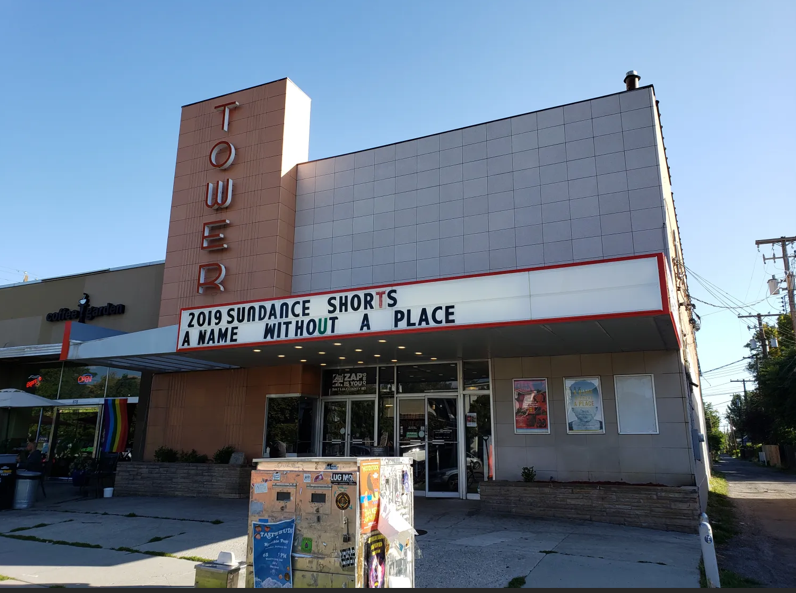
I mentioned yesterday, I walked past the Tower Theatre nearly every day. The marquee stayed dark, the brickwork grew more weathered, and the whole building held that peculiar stillness the city carried in 2020. Even so, the corner near Liberty Park still felt like a point where Salt Lake history pooled.
Revolution 9th & 9th
900 South and 900 East — known locally as “9th & 9th” — grew out of early streetcar suburbs and farmland into one of Salt Lake’s most walkable residential districts. Much of the surrounding housing stock dates from before 1940, with a mix of Victorian, Tudor, Prairie, and Craftsman homes.
The business district along 900 South developed into a cluster of independent shops, restaurants, and cafés — what some writers once described as an “anti-mall.” The roundabout at 900 S and 1100 E is home to Out of the Blue, a 23-foot humpback whale sculpture that became a neighborhood landmark almost overnight.
The Tower Theatre
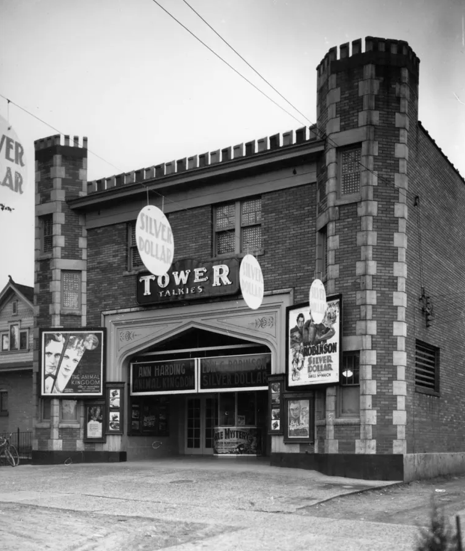
The Tower Theatre opened around January 1928 at 876 E 900 S, one of the earliest purpose-built neighborhood cinemas in the valley. It originally featured two small masonry towers on either side of the entrance — a facade modeled loosely on fortress architecture, possibly even the Tower of London according to early promotional descriptions.
By the 1950s, the towers and much of that ornate facade were removed or covered during mid-century “modernization” efforts; Carter Williams at KSL
says: “Its current facade dates back to the 1950s, when the building underwent a major renovation to keep up with the industry.” Over its long life the Tower has been a single-screen movie house, an art-house venue, and eventually a key site for the Salt Lake Film Society, which took over operations in the early 2000s. It is one of the oldest cinema spaces in Salt Lake City still intended for film exhibition, even as renovation plans continue to move through approvals.
999 Magic
When I lived in that apartment during the pandemic, one of the few social things that never really stopped was the 999 bike ride — this loose, late-night Thursday swarm of cyclists that always managed to gather at 9th & 9th no matter how strange the world felt.
It was this oddly steady pulse of life in a year when almost everything else had shut down. We’d drift downtown, sliding through empty parking garages and echoing stairwells, the whole group lit by bike lights and someone’s portable speaker bouncing around the concrete. It was loose and a little chaotic, but it was one of the few things that made the city feel alive.
The Tower as a Symbol
In tarot, The Tower card (XVI) represents rupture — structures breaking apart, assumptions falling away, and the moment when something old can no longer support what has been built on top of it. The actual Tower Theatre carries a milder, architectural version of that symbolism: built with confidence and ornament, stripped of its towers mid-century, and now in the process of another reinvention.
The neighborhood around it has shifted too, from a quiet streetcar corridor to a lively strip of shops, galleries, filmgoers, festivals, and public art. The Tower’s name, once literal, now feels symbolic in a different way: a reminder that Salt Lake City’s cultural spaces don’t stay static — sometimes they erode, sometimes they’re restored, sometimes they return as something new.
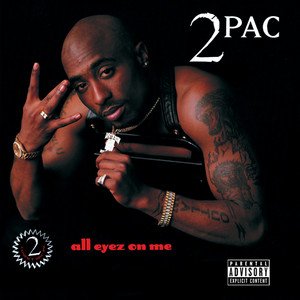
The intricate designs of my lethal lines, criminal rhymes
From the mind of a thug shaking state time
Take it to the next phase you had your time to talk sh*t
Now b*tches bustas getting checkmated
…
To all the players on the Westside
We’ll still be ballin’ on these b*tches when the rest die
Players on the Westside
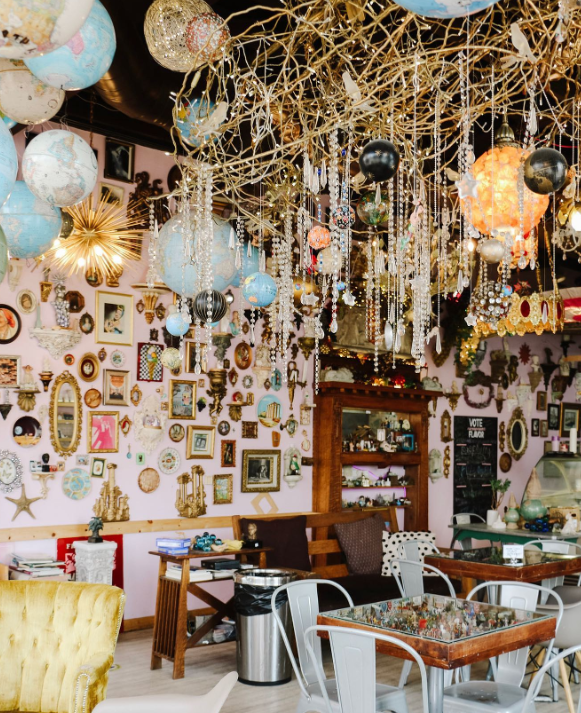
2020–21 was an oddly energetic, almost enchanted time to live in downtown Salt Lake City. After moving back from England to my hometown in June 2019, I rented a small apartment behind Dolcetti — the gelato shop founded by Mark and Kari England in 2004, known for its 150 rotating, small-batch flavors (Dolcetti). Inside, the place looks like the I Spy books and Wes Anderson had a baby and then coated everything in thrift-shop gold: curiosities on every shelf, saturated colors, odd treasures arranged with the confidence of someone who knows exactly where beauty hides. I loved sitting next to the window to write and observe passersby.
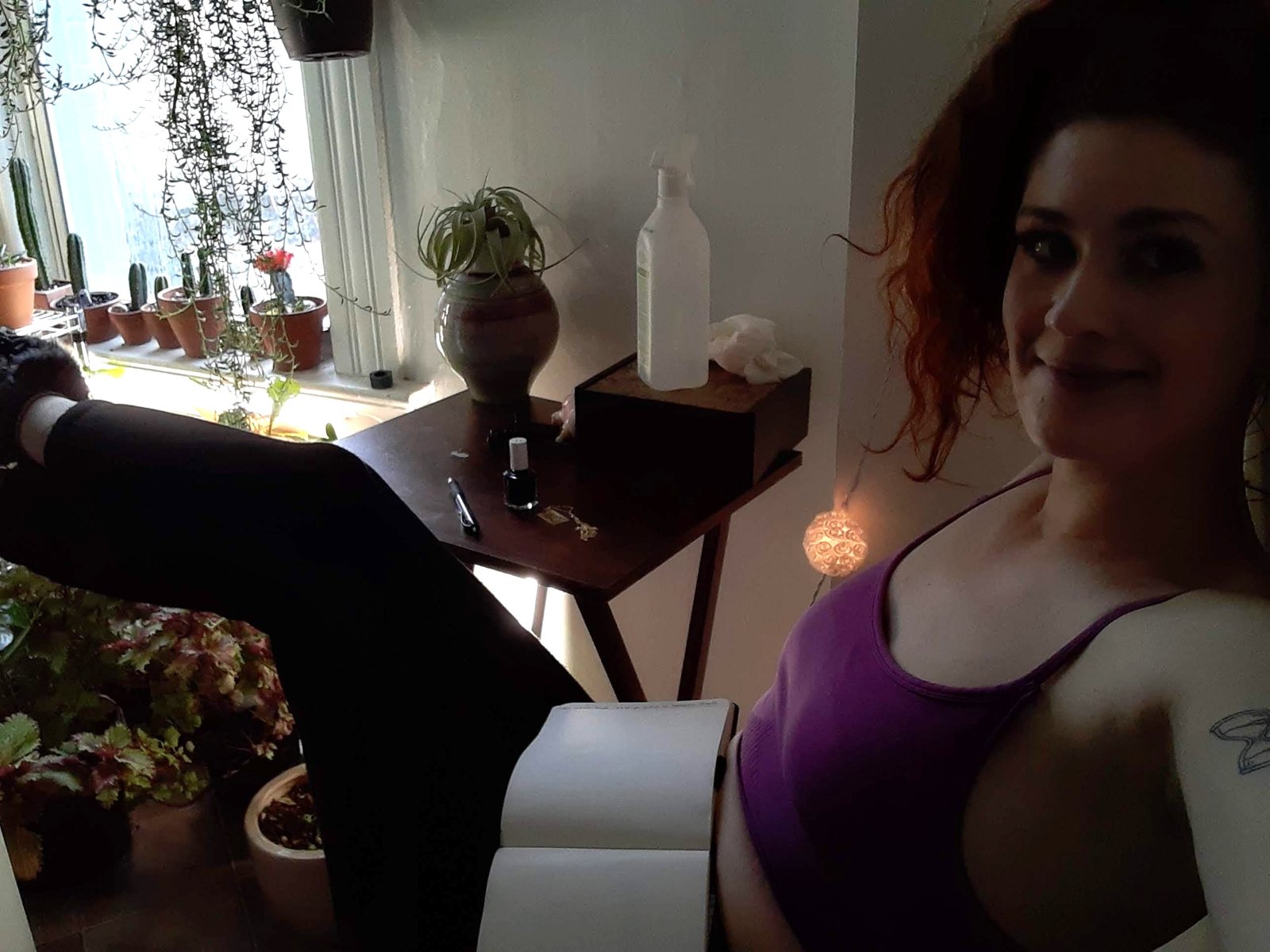
My apartment was a tight 900 square feet for me, my cat, and a plant collection increasingly convinced it could overthrow the living room. But it sat at the center of a downtown that felt, even in the quietest moments of the pandemic, strangely evolving. I watched George Floyd marches move past my corner, mourned the independent shops that couldn’t survive the shutdowns, and nurtured a growing affection for the Criterion Collection as if it were an underground library I’d smuggled back from another life.
It was in the middle of all this that I met Michael Patton, who works under the artistic name Michael Valentine. Patton is a direct descendant of General George S. Patton — a lineage he acknowledges even as he rejects its militaristic implications. He chose Valentine as a kind of ongoing protest against war culture, a refusal to be defined by the mythology of battle. And yet, his ancestor’s grit runs straight through him, whether the peace-loving activist in him likes it or not. Once, when I was interviewing him for an article for SLUG and we were driving around looking for a place to get lunch, he said, almost resigned and almost proud, “Yeah, I know where the grit comes from. I can’t pretend I didn’t inherit it.”
Valentine hosted a weekly vintage-film gathering outside the shuttered Pantages Theater on Main Street, and I hadn’t even noticed the building until I wandered across a cluster of folding chairs, a projector, and a rotating cast of people keeping cinematic vigil. He and Casey O’Brien McDonough — the Irish preservation activist who later ran for governor — were partners in the fight to save the building, a kind of two-person engine powered by research, outrage, and sheer stamina. Their efforts were widely documented, including in a 2023 Utah Stories report (saving the Pantages) and by archival groups like Preservation Utah (Pantages archive). Together, they welcomed every rag-tag citizen of downtown Salt Lake — film geeks, artists, unhoused neighbors, accidental passersby, and the rest of us drifting through pandemic-era loneliness — into the Pantages film club.
Two Bloody Characters
It occurs to me now that both Valentine and I grew up in the shadows of men known for bloodshed: his, the general who charged across Europe; mine, the mythic king who dies in every retelling. Patton and Macbeth — tactician and traitor, hero and villain, depending on who’s telling the story. Maybe that’s why we both gravitated toward fairytales, and toward the Pantages, which offered its own kind of mythic refuge.
As I wrote in my last blog, the Pantages didn’t survive. The campaign to save it ended in a brutal civic heartbreak in April 2022: Valentine’s hunger strike, a lawsuit filed against him by the mayor, and eventually his decision to run for mayor himself in an attempt to protect his ability to protest. None of it was enough. The building was demolished, and with it went a strange but vital axis of the downtown arts ecosystem — the kind of space where eccentricity, history, and stubborn idealism could still sit side by side.
The demolition unfolded under the administration of Salt Lake City’s mayor, Erin Mendenhall — a Democrat who branded herself as a progressive environmentalist while advancing some of the most aggressive pro-development and anti-preservation policies the city had seen in decades. Mendenhall’s office not only dismissed community objections to the demolition but actively escalated conflict with activists; at one point her administration filed a lawsuit against Valentine, alleging he was “stalking Erin” while the Mayor’s office was also obsessively following everything Michael did. The gap between her public rhetoric and her actual governance was so wide it felt like its own kind of theater — a performance of civic virtue masking a pattern of decisions that consistently favored developers over communities.
She even contacted SLUG to ask who had anonymously published the story about the Pantages — a moment that made the whole situation feel less like civic governance and more like an administration unusually preoccupied with controlling the narrative. When my article on the Pantages came out, it was hit by the publication’s most intense troll attack in recent memory — an onslaught that many in the local arts and activist community speculated was coordinated, possibly even by people aligned with her PR team. Whether that rumor was true or not, the effect was clear: the piece struck a nerve inside the machinery of power.
But the back-and-forth between Valentine and Salt Lake City didn’t not stop there. In June 2025, through his cider company Six Sailor Cider LLC, he filed a lawsuit in 3rd District Court against the tyrannical Utah Department of Alcoholic Beverage Services (DABS) and the commission that oversees it. The complaint argues the commission violated Utah’s Open and Public Meetings Act when it voted on May 29 to deny a liquor license to his bar, Apparition. The suit asks a judge to void the vote, overturn the decision, or send it back to the commission with instructions to grant the license. It’s another chapter in the same long narrative: one man insisting that institutions should follow the rules they claim to uphold. But Michael’s not a saint: He also garnered controvery for saying Zionists weren’t welcome at Apparition (which I publically condemned).
Telling Ourselves What’s Really Real
And maybe that’s where the fairytale really begins — not the sweet, storybook kind, but the darker kind we use to warn ourselves, to name what’s broken, and to survive contradictions we can’t fully articulate. That’s actually what Zionism is: a fairytale told to keep people from losing hope after they lost everything else. Valentine has his fairytale of the Pantages. The city has its fairytale of progress. We all carry narratives like that: simplified, hopeful, a little irrational, just coherent enough to hold back the chaos. The truest fairytales are the ones that don’t quite make sense, because they tell the truth slant — they let the light and the darkness sit in the same room without resolving anything.
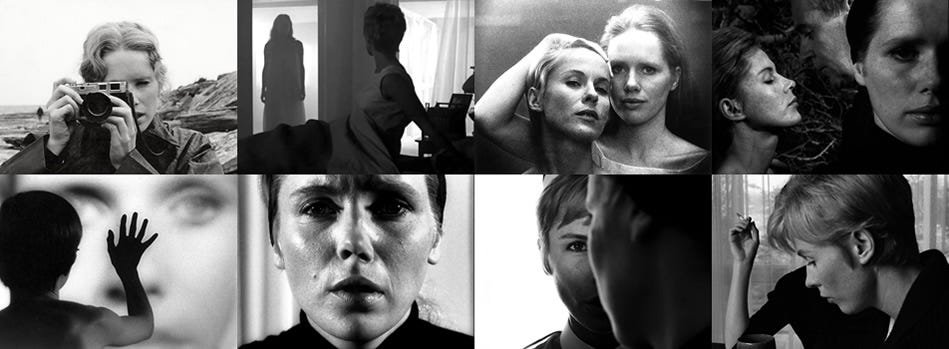
Which is maybe why Persona hit me the way it did. I think it’s the best film ever made — Citizen Kane be damned — and in 2021 I watched every Bergman film in chronological order. Nothing prepared me for Persona. It’s the rare work of art that doesn’t just tell a story but exposes the narratives we use to protect ourselves: the ones that collapse under scrutiny, the ones too sugary to be real, the ones that turn toxic when we mistake them for truth. It’s a film that diagnoses the human condition by peeling back the performances we cling to and showing what happens when they finally split.
The Plot of Persona (Briefly)
A famous stage actress, Elisabet Vogler (Liv Ullmann), abruptly stops speaking during a performance. Nothing is physically wrong with her — she simply refuses to talk. A young nurse, Alma (Bibi Andersson), is assigned to care for her, and the two retreat to a remote seaside cottage. There, with Elisabet silent and watchful, Alma begins to fill the quiet, confessing her insecurities, affairs, fears, and buried shame. Slowly the boundary between them dissolves. Elisabet studies Alma; Alma imitates Elisabet; their identities merge, fracture, and reassemble. By the end, it’s unclear whether two women exist — or one consciousness split across two bodies.
The Psychological Terrain
Bergman uses this plot as a kind of Freudian X-ray. The entire film is built around the terrifying simplicity of a question: Who are you when you stop performing? Alma is the “good girl” who has spent her life being pleasant, compliant, socially acceptable — a mask so airtight she doesn’t realize she’s wearing it. Elisabet, the actress, stops speaking because she can no longer tolerate the falseness of her own public self. Her muteness is a rebellion against the “theater” she was born into, professionally and socially. She opts out.
Put them together and the film becomes a study in identity erosion: the psychological cost of pretending, the masks we inherit and the masks we craft, the social demand to always perform the self people expect, the way silence can be a weapon, and the way speaking can expose more than it protects.
Alma’s breakdown is essentially the collapse of a persona she can no longer hold upright. Elisabet’s silence is the collapse of a persona she refuses to uphold any longer. They meet in the wreckage. And Bergman’s point, delivered through a surreal, self-reflexive film that literally breaks apart on screen, is that when the performance becomes unbearable, the self starts to disintegrate.
Pretty on the Outside
In Salt Lake City, this idea of crafting a perfectly managed self takes on its own regional flavor. There are plenty of people who look beautiful, polished, virtuous — people from the right families, with the right social networks, projecting the right kind of civic goodness. And yet, time and again, you discover just how many of them are “two-face,” switching between public benevolence and private ambition with unsettling ease.
The politicians and employees inside the city and state government — some truly are good people. But many mistake their own checklist of credentials, connections, and cultivated traits as proof of who they are on the inside. They forget that outward virtue is not the same thing as inner integrity. And some of them, make no mistake, are rotten to the core.