Tag: The Invention of Lying

  • Every Generation Gets the Eating Disorder It Deserves

    Invention of Lying

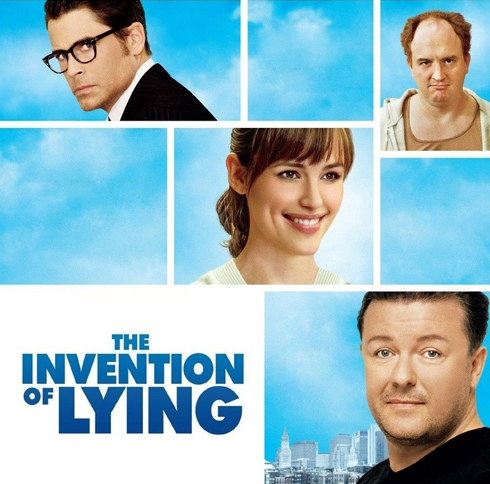
    In The Invention of Lying, Ricky Gervais plays a man living in a world where nobody ever evolved the ability to lie, a premise that shapes every part of the movie’s universe. Like all good speculative fiction, the film commits to the bit: conversations feel like brutally honest Yelp reviews, people casually tell dates they’re unattractive like they’re commenting on traffic, and television seems to consist almost entirely of depressing historical lectures.

    For about twenty minutes, it is one of the funniest premises imaginable. What makes the concept work is that the hypothetical world only feels convincing because the underlying logic feels plausible. Gradually, the premise starts revealing something much stranger underneath. In this universe, saying something comforting instead of brutally factual would be treated almost like fraud. The people in The Invention of Lying seem to be suppressing a constant stream of humiliating observations, while civilization exists mainly as a giant conspiracy to prevent them from saying these things out loud.

    The premise only really makes sense if you accept the movie’s deeper assumption that politeness, tact, romance and social grace are fundamentally forms of dishonesty rather than fragile cultural achievements.

    The Invention of Lying
    A movie that could launch a thousand uncomfortable conversations.

    Part of what makes the movie funny is that it captures a real cultural shift born from early internet forum culture, where mocking and inverting ordinary social norms felt rebellious, clarifying and somehow more honest than everyday life. Online, the rude interpretation gained prestige because it violated polite consensus. The internet promised access to whatever society suppressed: pornography, piracy, fringe politics, anti-social thoughts, humiliating desires. What previous generations concealed out of shame or discretion suddenly appeared online with the force of revelation. Beneath civilization’s soft performances, internet culture insisted, lurked a darker and more brutally honest reality.

    The Invention of Lying quietly absorbs this worldview without fully questioning it. The movie assumes the harshest interpretation of reality is also the truest one: cruel intrusive thoughts become honesty, cynicism becomes wisdom, romance becomes delusion. Politeness and emotional protection are treated as embarrassing lies people tell themselves to avoid confronting status, money, sex and self-interest.

    But why should inversion automatically count as truth? The internet trained an entire generation to associate transgression with authenticity because online culture developed largely in opposition to institutional authority. Sometimes that exposed hypocrisy or created space for marginalized identities and dissenting ideas. But over time, especially in the United States, that mindset hardened into something closer to a worldview: what I’ve started calling Materialistic Utilitarianism. The Invention of Lying turns out to be one of the clearest portraits not just of that worldview, but what it produces in people.

    The Prosperity Gospel of Abs

    By the time I returned to Utah in 2019 after years living in France and the UK, I already felt I had crossed some invisible civilizational fault line. Since then, I’ve found myself trying to understand the strange bipolarity of Utah culture, especially the ex-Mormon dating scene, which often feels less like a rejection of Mormonism than its distorted mirror image. When my much younger, gym-obsessed ex-boyfriend showed me The Invention of Lying in 2024, my visceral disgust clarified something I had been struggling to articulate for years. It also exposed something I recognized in myself, dating a Gen Z boyfriend with a nasty case of body dysmorphia.

    At one point, he was taking steroids after apparently consulting ChatGPT for fitness advice while simultaneously treating alcohol, especially beer and wine, with total disgust. A glass of wine at dinner was framed as bodily sabotage; beer became symbolic of laziness and decline. The contradiction fascinated me: synthetic hormones injected in pursuit of aesthetic perfection registered as rational self-improvement, while wine with pasta bordered on moral collapse.

    That mentality feels especially intense in Utah, where alcohol rarely exists as something neutral or ordinary. Even after raising grocery-store beer from 3.2% to 5%, the state still maintains the strictest DUI threshold in the country at 0.05%, and alcohol remains wrapped in a culture of regulation, purity and supervision. What increasingly unsettled me, though, was how easily this merged with the hyper-optimized logic of internet culture and modern dating discourse.

    When I asked him what felt “authentic” about the movie, he answered immediately: “Everything.” That, he explained, was more or less how he actually saw the world. So I asked the obvious follow-up question. If that worldview were really true, would he immediately trade me in for one of the surgically optimized Utah Valley women described, without irony, as “the top of the genetic food chain”?

    “Well, not exactly,” he said.

    He explained that our shared experiences together — including, very bluntly, some of the best sexual experiences of his life — created a kind of internal ranking system in his mind. Those experiences raised my overall “score” enough that whatever physical flaws or “deformities” he perceived in me could still pass some threshold of desirability. Listening to him felt a little like sitting through a quarterly performance review conducted by a Tinder algorithm that had recently discovered evolutionary psychology.

    Marcel Proust and the radical act of wasting time

    When I went to Europe the first time during a high school trip in 2005, I couldn’t help noticing that people lingered in cafés debating books, philosophy, music and politics. Thinkers were admired like celebrities, and museums displayed artists’ belongings like religious relics. The low-level depression and isolation I had carried for years seemed to dissolve. From that point on, I became convinced I had been born on the wrong continent.

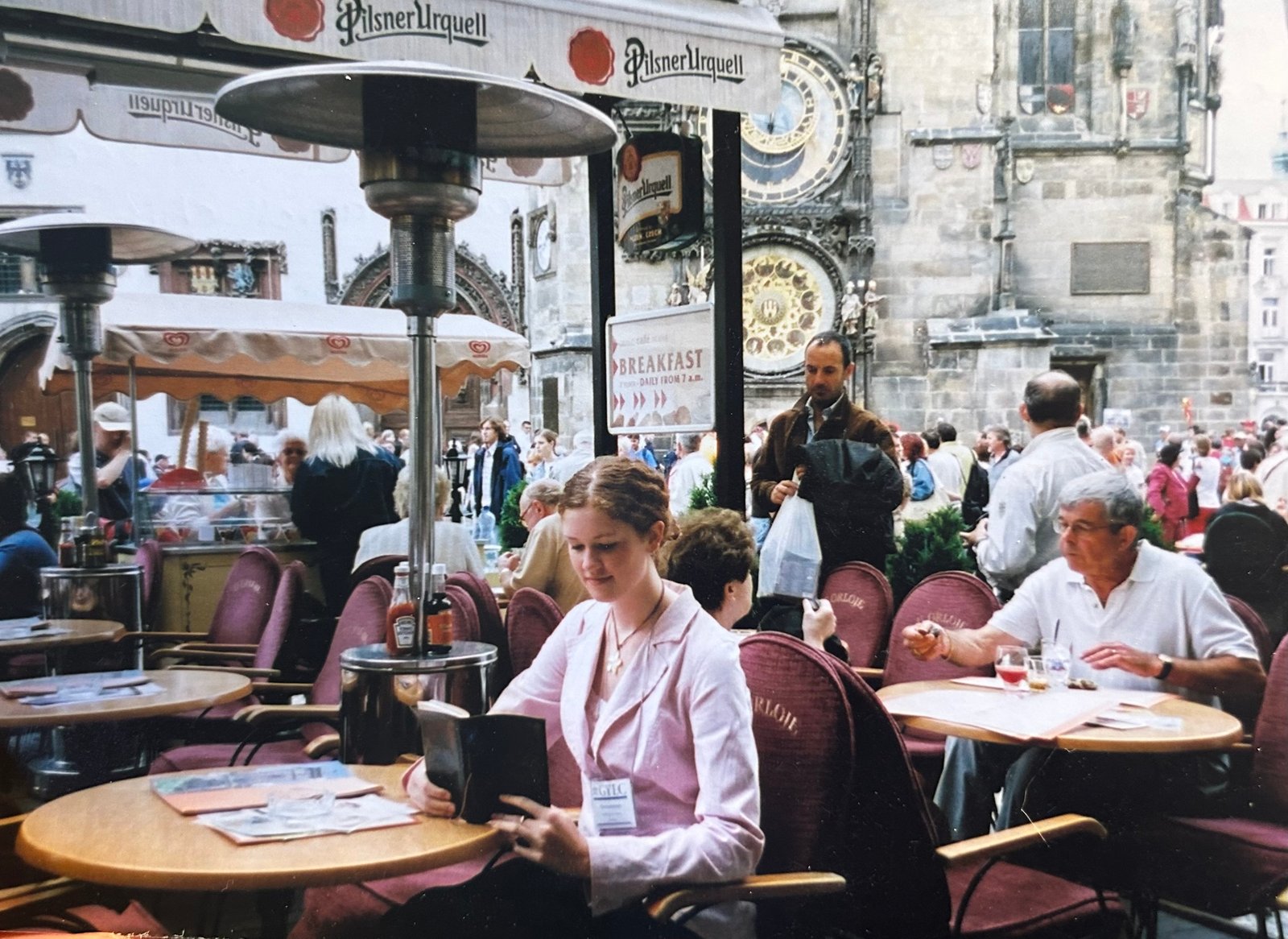
    Prague
    Me in a cafe at 15

    A few years later, armed with a Eurail pass and a head full of Before Sunrise, I joined the international backpacker-Couchsurfing community (“Couch Surfers™: we put the ‘cult’ in cultural exchange”). I drifted through Paris, Barcelona, Rome and Athens, where spending three hours in a hostel kitchen debating philosophy with strangers somehow counted as a normal evening rather than evidence you were unemployable.

    At 2am in Athens, I once climbed onto a massive boulder overlooking the Acropolis with a South African girl named Tecla, passing cheap bottles of wine back and forth while she explained her obsession with classical mosaics made from tiny colored stones called tesserae. She loved the faint echo between her name and the word, even though the connection was more poetic than linguistic: Tecla came from the Greek Thekla, associated with divine glory, while tessera derived from tessares, meaning four, after the small four-sided tiles used in mosaics. She liked the accidental resemblance anyway, which felt very characteristic of the kind of people one meets at 2am in Athens discussing linguistics instead of measurable goals.

    Athens
    Athens, 2010; I may never be this happy again…

    It remains one of those strangely treasured memories that appear to serve no practical purpose whatsoever. I still loosely follow her on Instagram, but the real magic arrives whenever I see some news story about a newly uncovered mosaic in Herculaneum. For a moment, I remember her, remember that perfect night in Athens and catch myself smiling off into space, wasting time again.

    Proust’s interior world in In Search of Lost Time (1913–1927), with its obsession with memory, aristocratic decay, undercurrents of homosexuality and almost supernatural sensitivity to social nuance, more or less encapsulates the “not very American.” Nothing happens for hundreds of pages except perception itself. People sit in drawing rooms decoding glances, misremembering conversations and psychologically disintegrating over seating arrangements. The entire project is radically anti-utilitarian.

    France treats Proust less like an embarrassing overeducated niche interest than part of the national inheritance. Intellectual life there still retains traces of public prestige in a way that feels almost incomprehensible within modern American culture, where intelligence is often expected to justify itself through market value, productivity or technological application. Reading difficult literature in public in the United States can sometimes feel faintly transgressive, as though you are visibly failing to monetize your own consciousness correctly.

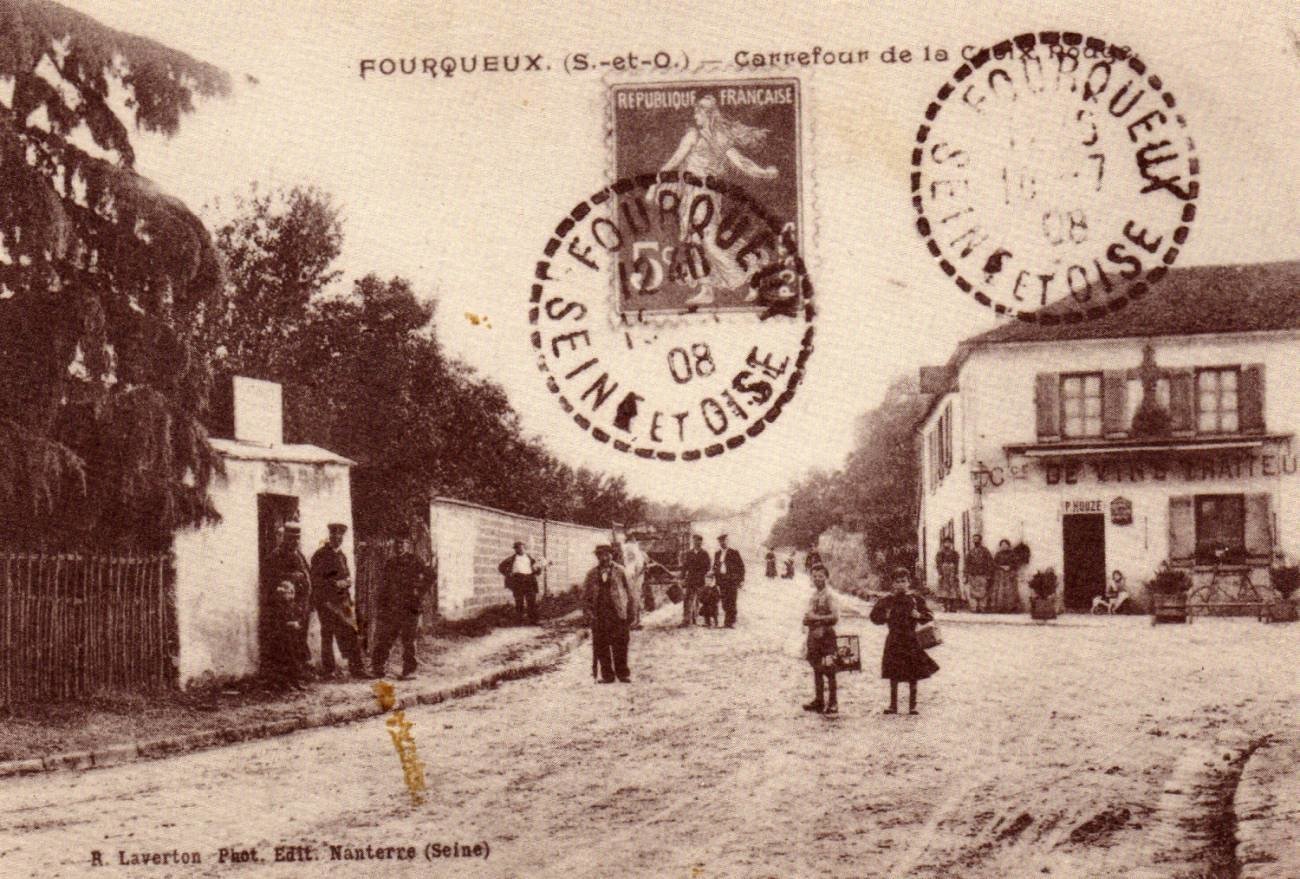
    La Croix Rouge, ancienne
    A postcard from La Croix Rouge in Fourqueux

    Back in Fourqueux in 2018, I shared a love of French philosophers and thinkers with my French boyfriend, his elderly mother and their retired neighbors, who spoke no English and had little connection to modern American culture (I was in Heaven, truth be told). Abraham and I eventually agreed that Proust was too mainstream to function as a true marker of intellectual seriousness. Instead, I picked up Stéphane Mallarmé and studied Guy de Maupassant while trying my hand at Gothic short stories in my favorite neighborhood café, La Croix Rouge.

    La Croix Rouge
    The modern La Croix Rouge, where I spent long afternoons reading and writing.

    What would Ricky Gervais’s character say about me reading Hemingway in a French café that has barely changed since the Second World War?

    • “Are you actually reading that or just trying to look intelligent?”
    • “You know the book could’ve been, like, 900 pages shorter.”
    • “This café has been here since World War II? Why hasn’t somebody turned it into luxury apartments yet?”
    • “You sat here talking about philosophy for five hours and nobody made any money?”
    • “You paid for a ridiculously tiny espresso in a porcelain cup when you could’ve had an XXL soda with twenty flavors?”

    The jokes work because most Americans immediately recognize the type being mocked: the overeducated pseudo-intellectual lingering in cafés performing aesthetic sensitivity instead of participating in the economy correctly. “French culture versus American culture” is basically its own comedy genre at this point, but beneath the jokes sits a real cultural divide about utility, intellect and the growing pressure to justify human activity in practical terms. Cue annoying American laugh track:

    The Big Bang Theory may be Satanic Ritual Abuse
    Q: What is it called it when you take someone, put them in a middle of a room and cue a large group of strangers to mock them? A: Los Angeles and New York City
    The Swamp of Sadness in The Neverending Story

    One of the things that saddens me most about the past few years is how easily everything around you begins absorbing the logic of Materialistic Utilitarianism once you start living inside it long enough. The worldview does not remain confined to dating apps, podcasts or ironic internet subcultures. It starts colonizing ordinary emotional life. The optimization fetish my ex carried into every area of existence — body composition, productivity, status, self-improvement, emotional detachment — made it impossible for me to believe he genuinely cared about me. Everything felt provisional or ranked. Affection felt algorithmic, as though love had quietly been replaced by a constantly updating performance metric, which as an “older woman” made me more irrelevant and replaceable, ironically, the more time we spent together.

    One afternoon, sitting in a café, for a few seconds, I was pulled backward into memory: pre-social-media childhood, quiet afternoons before life became quantified, then, sitting with Abraham and his mother in Fourqueux discussing literature while the afternoon dissolved outside the window. The moment felt soft, irrational, almost offensively sincere.

    Then, I looked across the table at my ex-Mormon boyfriend and heard myself say, “I think our relationship has been about a 4/10, if I’m being brutally honest.”