I get older; the art stays new.
This year marks ten years of writing arts and cultural criticism in (and around) Utah. It’s been a long, slightly chaotic labor of love and it’s given me more than a publication list. Writing became a way into rooms I didn’t yet know how to enter—openings, rehearsals, studios, back corners of galleries, community meetings. Over time, it gave me people too: friends, collaborators and others who cared enough to keep showing up. In a place where arts infrastructure is often held together by duct tape and determination, the work mostly looked like paying attention, writing things down and trying to help hold space where the official record thins out.
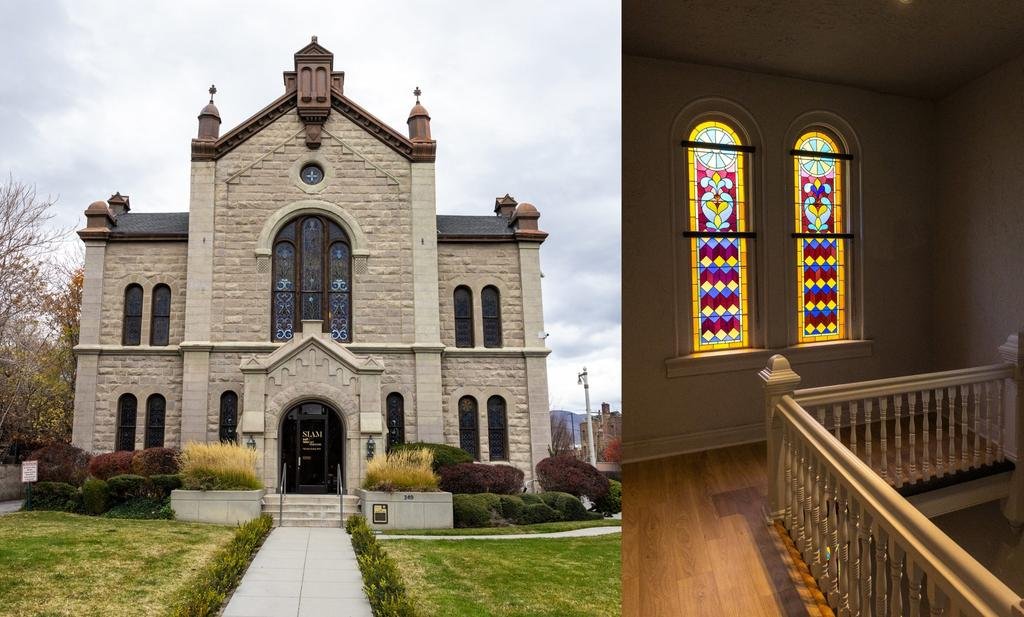
One stat that sticks with me: Utah has fewer museums per capita than any state except West Virginia, an unglamorous fact that explains a lot about why cultural memory here can feel so easily misplaced. I thought about that again while reporting on the B’nai Israel Temple’s next life as the Salt Lake Art Museum (SLAM), a project led by Micah Christensen and slated to open in 2026. The building’s survival is, in many ways, a case study in how rare cultural preservation can be in practice. (Read more here: “The Salt Lake Art Museum (SLAM) Finds Sanctuary in the Temple”.)
What follows is a year-by-year chronicle pulling a few representative pieces per year and the themes that kept returning: meaning-making and collective rupture; heritage and community memory; abstraction and early modernism’s long shadow; and the ongoing work of paying attention to people and places that get minimized, misread, or politely ignored.
2015 — War, memory, and what remains
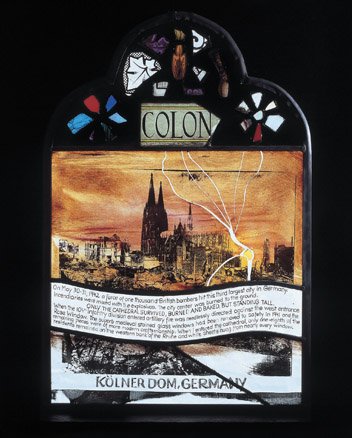
My earliest arts writing was already circling questions that would stay with me: how societies remember violence, how trauma echoes across generations and how performance becomes a space for processing what cannot be easily narrated. In 2015, I found myself repeatedly drawn to work shaped by war — sometimes historical, sometimes contemporary, often refracted through humor, ritual, or psychological displacement. Even then, criticism felt less like judgment than like translation: an attempt to make visible the emotional labor embedded in cultural production.
What interested me most, even then, was not spectacle but aftermath: how violence lingers in bodies, language and staging long after the event itself has passed. I was beginning to understand writing as a form of witness — one that sits with discomfort rather than resolving it — and that orientation quietly shaped everything that followed.
- “World War II in Fragments: The Remembered Light Exhibit’s Take on Loss and Hope”
- “The Grand Theatre’s ‘Young Frankenstein’ Is Halloween Comedy for Grownups”
- “Salt Lake Acting Company’s World Debut of Streetlight Woodpecker”
Together, these pieces trace an early interest in how art metabolizes collective violence — whether through solemn memorial, absurdist comedy, or intimate portrayals of PTSD — an interest that would later expand beyond war into broader questions of community trauma and historical inheritance.
2016 — Objects, pilgrimage and the weight of time
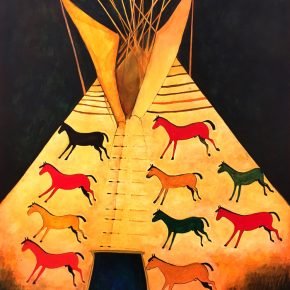
By 2016, my writing shifted decisively toward material culture and deep time. Across exhibitions of painting, sculpture, photography and mixed media, I became increasingly attentive to objects as carriers of memory — whether geological, cultural, or spiritual. This was also the year I began writing more explicitly about heritage without nostalgia: how artists engage with tradition, ritual and landscape without romanticizing them. I became less interested in artists’ stated intentions and more attentive to what objects themselves seemed to remember—how time presses into form and how place leaves a residue that can’t be fully aestheticized away.
- “Painting The Painted: Kevin Red Star at Modern West Fine Art”
- “The Remains of Lost Time: Laura Hope Mason’s Extinct”
- “Portraits of a Pilgrim Artist: Willy Littig at Mestizo”
- “Ryoichi Suzuki’s Suggestive Stone Sculpture at A Gallery”
These essays mark a growing preoccupation with duration: fossils, pilgrimage routes, Indigenous histories and sculptural forms shaped by both Eastern and Western traditions. Rather than treating art as isolated expression, I increasingly approached it as evidence — of time passing, of belief systems persisting and of place exerting quiet pressure on form.
2017 — Abjection, Abstraction and cultural hierarchies
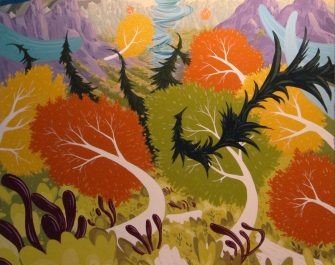
By 2017, my writing had turned more directly toward questions of cultural value: what is permitted to count as “serious” art, what is dismissed as decorative or domestic and how those judgments intersect with gender, labor and popular culture. Alongside a growing interest in abstraction and contemplative withdrawal, I began interrogating hierarchies that shape both artistic production and reception — particularly where animation, illustration and domestic narratives are concerned. I was also becoming more conscious of how criticism participates in gatekeeping — how language can reinforce or challenge the invisible borders between “high” and “low,” public and private, serious and sentimental.
- “A Love Letter From Growth to Decay: Naomi Marine at Finch Lane Gallery”
- “Specific Abject at The Rio Brings Depth to the Flat Surface”
- “Animation in the Spotlight: Under the Influence at Rio Gallery”
- “Emily McPhie: A Season for Every Thing Under Heaven”
Across these pieces, decay and accumulation sit beside care, repetition and craft. Whether addressing refugee loss through mass-produced objects, challenging the exclusion of animation from “high” art discourse, or examining domestic life as a site of artistic rigor, this year marks a clear shift toward analyzing how cultural systems assign meaning — and whose work is allowed to carry it.
2018 — Abstraction and the edges of the built world
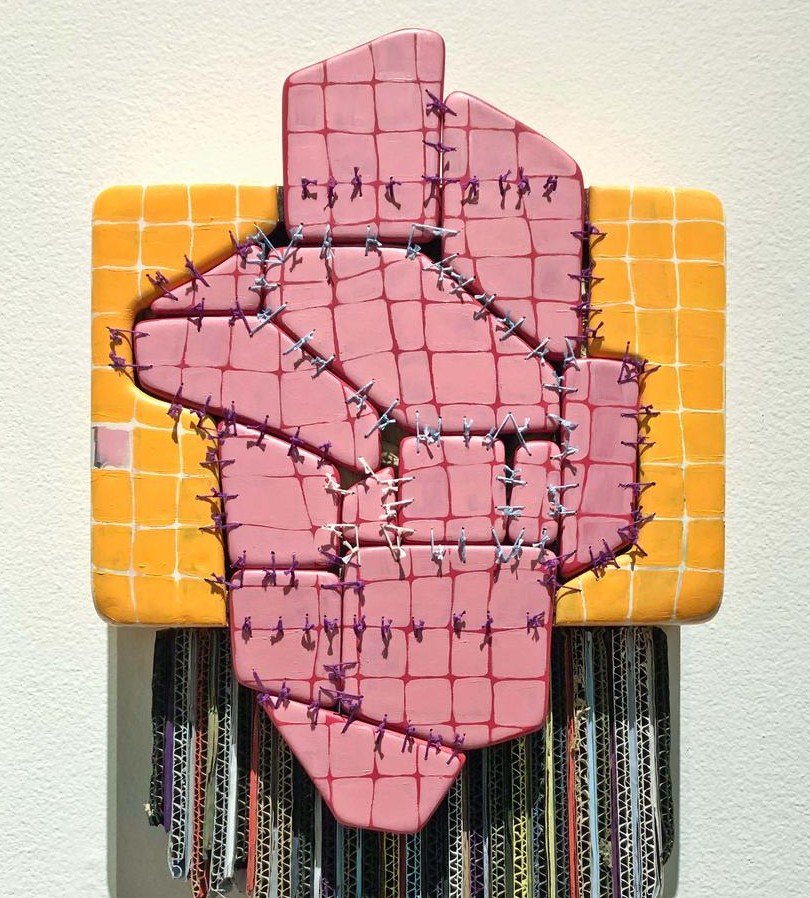
In 2018, my writing narrowed its focus rather than expanding it. Instead of surveying many threads, I spent more time with abstraction and with environments that sit just outside formal boundaries — urban margins, hybrid spaces and visual languages that resist narrative explanation. This was a year of thinking about structure: how meaning emerges when stories recede and attention shifts to form, material and spatial tension. Abstraction became a way to think spatially rather than narratively: to read environments, surfaces and systems without forcing them into story.
- “Urban Nature in Flux: ‘Ditchbank’ | Library Square”
- “UMOCA’s Survey of Utah Artists Explores the Possibilities of the Abstract”
Both exhibitions investigate what happens when order breaks down or gives way. In Ditchbank, the overlooked wilderness at the edge of the city becomes a site of negotiation between human control and organic persistence. UMOCA’s survey situates abstraction as a deliberate refusal of inherited narratives, emphasizing instead the artist’s creation of personal systems and visual codes.
2019 — Systems of meaning: vision, myth and inherited structure
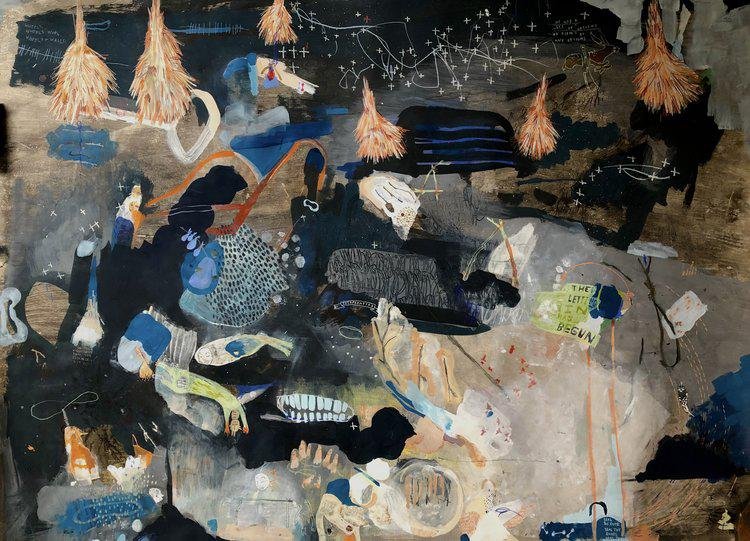
By 2019, my writing had moved decisively toward systems — how meaning is produced, transmitted and disrupted across families, myths, technologies and landscapes. Rather than focusing on isolated works, I became increasingly interested in how artists construct visual languages: photographic processes revived and altered, myths reassembled, family narratives fractured and reconnected. This was a year defined less by subject matter than by structure — how stories are built and how they fail. I was increasingly drawn to artists who treated myth and family not as origins to be honored, but as structures to be tested.
- “Experimentations in Vision at Nox Contemporary’s Twin Lens”
- “Amy Bennion and Elizabeth Matthews Explore Family Myths Broken and Connected at Finch Lane Gallery”
- “Box of Myth: Modern West Fine Art Features Storytellers Buehler, Mantle, and Ross”
- “From Desert to Ocean Crossings: Cody Chamberlain’s and Len Starbeck’s Intersections in Nature at the Park City Library”
Across these pieces, vision is never neutral. Alternative photographic processes foreground the mechanics of seeing itself; family relationships become the syntax through which reality is interpreted; myth operates as both inheritance and provocation; and landscapes are rendered not as scenery but as lived systems shaped by labor, memory and movement.
2020 — Collective rupture and marginalized realities
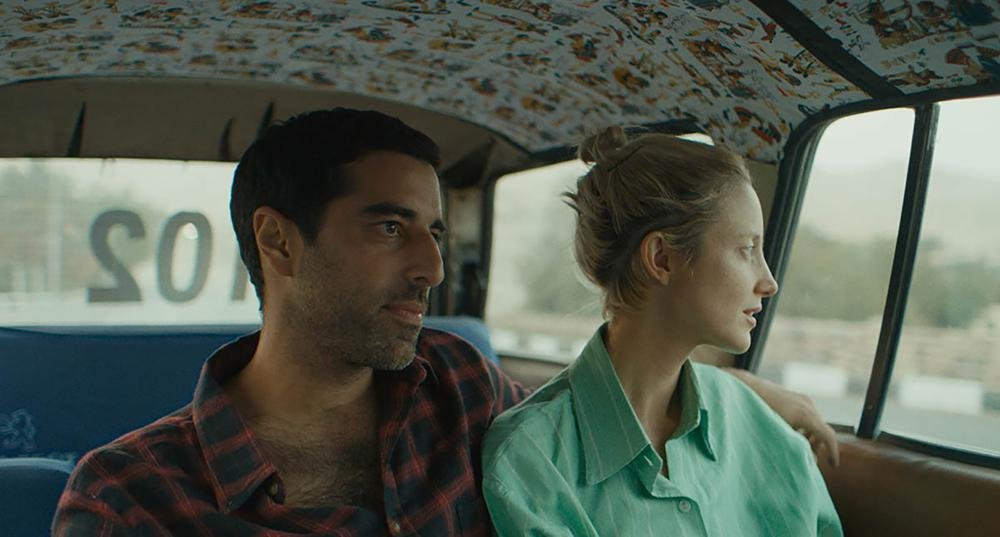
In 2020, my writing became inseparable from collective rupture. The pandemic did not affect communities evenly and much of the cultural work I was drawn to that year confronted this imbalance directly — foregrounding voices, experiences and realities that had long been present but were now impossible to ignore. Criticism shifted from interpretation to accountability: paying attention to who bears risk, who is seen and how art registers unequal pressure. The urgency of 2020 stripped criticism of any pretense of neutrality; to document art honestly required acknowledging the unequal conditions under which it was made, shown and received.
- “The Language of the Body Told Through Cinema’s Frame: The Bi-Annual Screendance”
- “Sundance Film Review: Luxor”
- “Virtual Public Art Tours During Social Distancing”
- “Andrew Alba Paints from the Gut in ‘American Soup”
Across these pieces, art functions as a record of strain rather than escape. Screendance reframed movement through mediated formats at a moment when access and visibility were uneven. Luxor traced the emotional residue of humanitarian labor and prolonged conflict. Virtual public art initiatives revealed how civic meaning could be sustained while public space itself became contested.
2021 — Care, heritage and cultural survival after the pandemic
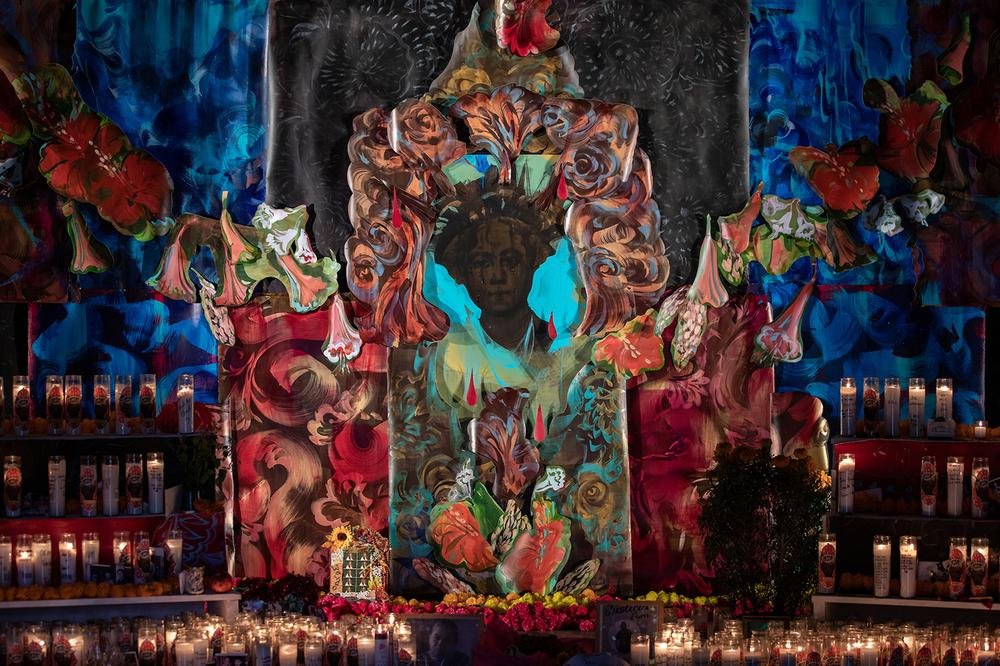
In 2021, my writing remained shaped by the aftershocks of the pandemic, particularly its uneven impact on marginalized communities. Rather than moving on from crisis, much of the cultural work I engaged with that year confronted its residue: who had been asked to absorb loss, who stepped into care roles and how art and community organizing became tools for survival, memory, and resistance. What emerged most clearly was care as cultural infrastructure, often improvised, frequently under-resourced and rarely celebrated.
- “Doula Ashley Finley Leads By Caring For BIPOC Parents’ Spirits”
- “Sarah May Uncovers Her Heritage in Photographic Layers”
- “Art as Activism after the Pandemic: Vida, Muerte, Justicia / Life, Death, Justice”
- “Saying ‘No’ to Big Real Estate to Save the Utah People’s Pantages Theatre”
Together, this writing reflects a year focused less on recovery narratives than on cultural endurance — how communities protect meaning, memory and space when institutional support proves unreliable.
2022 — Violence, land and the limits of inheritance
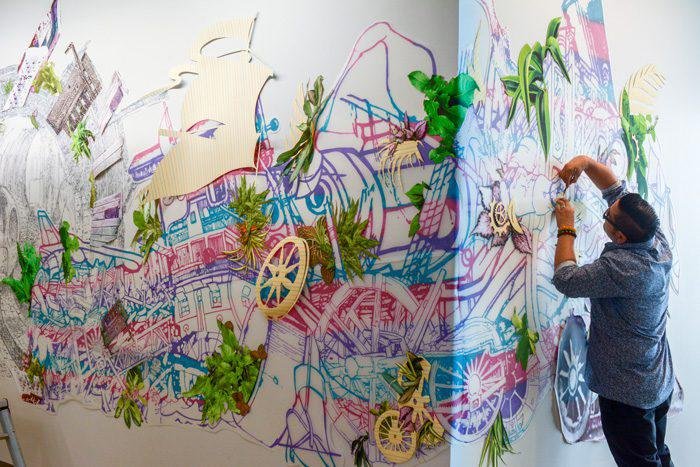
By 2022, my writing confronted the accumulated pressures that had been building across the previous years: violence embedded in land use, gendered vulnerability, nationalist mythmaking and the ongoing consequences of colonial and migratory disruption. Rather than focusing on recovery, this work stayed with what remained unresolved, asking how history, ideology and environment continue to shape whose lives are protected and whose are exposed. This year solidified my understanding of land as an active force rather than a backdrop, history continuing to structure belonging, vulnerability and risk.
- “The Rough Landscape of Women’s Existence in Land Body”
- “David Rios Ferreira and Denae Shanidiin: Transcending Time and Space”
- “Review: Jesse Meredith: So That We May Fear Not”
- “Making a New Life for Immigrants in Salt Lake”
Across these pieces, land and identity are inseparable. This writing stays with structural violence, how it is inherited, normalized and resisted, without forcing closure where none exists.
Interlude — Stepping away from the page (2023–2024)
After 2022, my public-facing arts criticism paused. This was not a retreat from cultural analysis, but a redirection of labor into professional writing, institutional work and foreign exchange–focused research that sharpened my understanding of systems, power and narrative framing in different registers. The questions driving my criticism, how meaning is produced, who bears risk and how communities survive long pressure, did not disappear. They moved into other forms.
When I returned to long-form cultural writing in 2025, it was with a clearer sense of synthesis: how a decade of arts criticism in the American Southwest had quietly become a foundation for broader historical, cultural and interdisciplinary work.
2025 — Return, synthesis and the quiet work of community
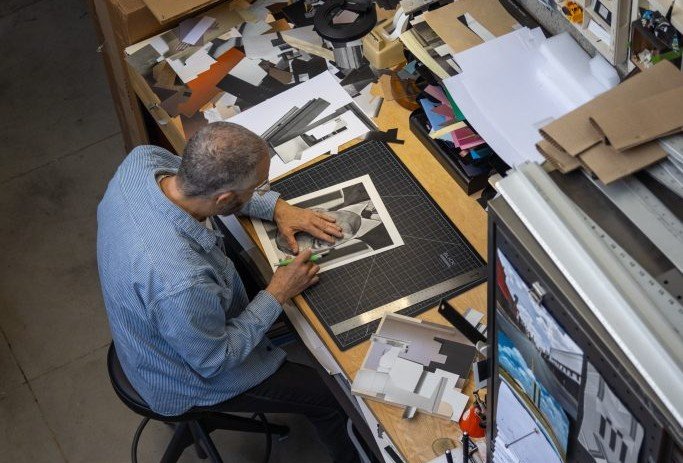
When I returned to publishing arts criticism in 2025, it wasn’t a restart so much as a re-entry, with sharper tools and a clearer sense of what I’d been tracking all along. After years of professional writing centered on systems, risk and institutional language, I came back to art with an increased sensitivity to structure: how communities preserve memory, how spaces accrue cultural meaning and how abstraction and design can carry ethical weight without announcing themselves. Returning with distance made visible what had been there all along: the most durable cultural work often happens without fanfare — through stewardship, sanctuary and consistency rather than spectacle.
- “The Salt Lake Art Museum (SLAM) Finds Sanctuary in the Temple”
- “Holly Rios Turns Printmaking Into a Conversation on Seeing and Being Seen”
- “A Geometry of Balance in Dan Evans’ Cut-Paper Abstractions at Finch Lane”
- “Ryan Harrington is Building a Quiet Architecture of Influence”
Together, these pieces mark a mature phase of my criticism: attentive to marginalized histories and cultural preservation, alert to the ways identity and expectation shape perception and drawn to practices where clarity and reduction become forms of seriousness. If earlier years were about locating the stakes — rupture, myth, power, inheritance — 2025 is about mapping what endures: the institutions that create refuge, the artists who make perception strange enough to see it and the quiet organizers who turn community into something tangible.