On AI, aesthetic jealousy and the unbearable nearness of perfection
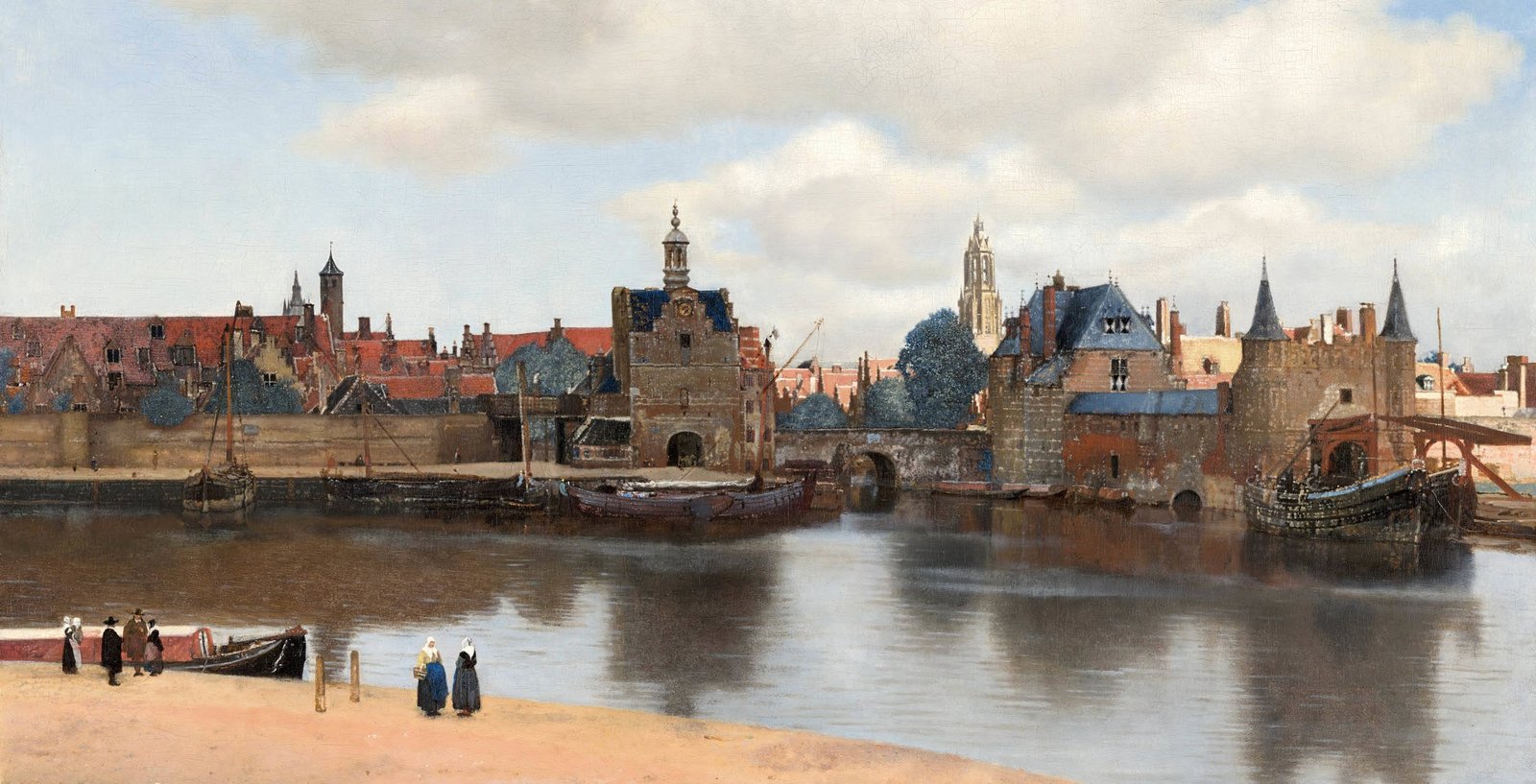
In The Captive (1923) and The Fugitive (1925), Marcel Proust — the writer the French revere and Americans keep meaning to finish — recounts the death of Bergotte, a novelist of moral precision and exhausted genius. Once celebrated for the spiritual lucidity of his early work and later dismissed for its ornamental perfectionism, he’s the kind of artist whose life narrows into a single pursuit: perfect aesthetic expression.
Bergotte attends an exhibition of The View of Delft by the seventeenth-century Dutch painter Johannes Vermeer. Across this and Vermeer’s thirty-two other surviving paintings, space and perceptual elements are balanced into visual harmony, allowing looking to settle into a stillness where radiance emerges. What Bergotte feels, and what generations of museum-goers have also experienced, is similar to what Tibetans call rigpa — a mystical awareness of the divine present.
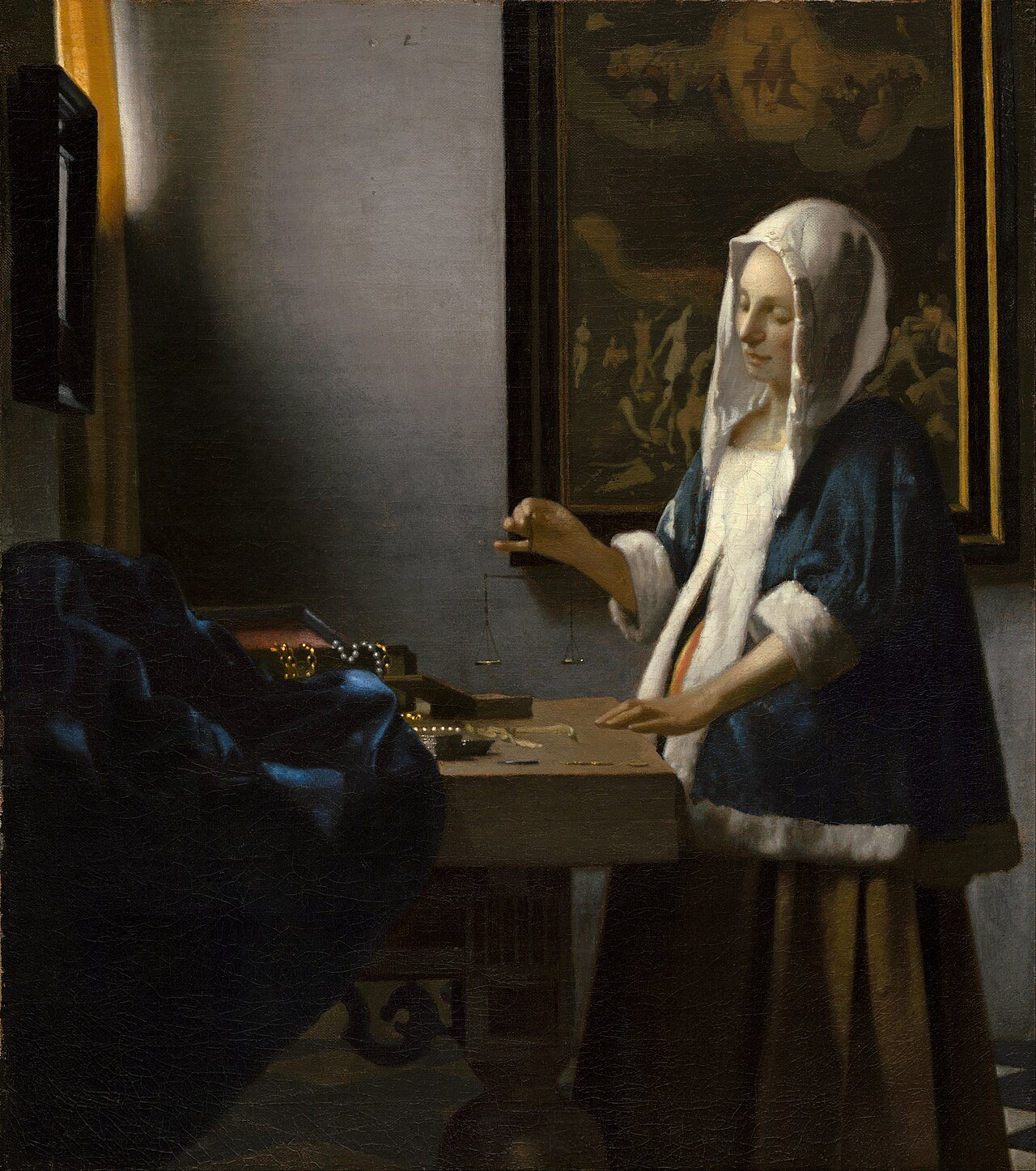
In Woman Holding a Balance, light bends across a wall, a woman holds a set of scales at the moment when they come into stillness. The harmony is deliberate, every detail measured with care, producing sensations that feel almost otherworldly.
I. Aurea mediocritas: “golden moderation” or the middle path
In our time, the most intense forms of aesthetic balancing are, ironically, done by machines. The requirements for perfect shape or mixing, especially in the manufacturing sector, far outstrip clumsy human ability — centuries and centuries after Vermeer mastered his craft.
One of the most noteworthy technologies for precise balancing and recombinging data to product an aesthetic output is the large language model. LLMs have structures so intricate they move with the hidden rhythm of thought, as if computed or quantified language were remembering how to think. LLMs perform a similar kind of seeing as Vermeer, in terms of calibrated balance, but at an impossible speed.
In them, we glimpse the merging of reflection and instruction, where the machine draws on the shared intelligence of millions to meet an individual mind in real time. It teaches as it learns, absorbing our habits of speech and curiosity while giving them back refined, expanded, re-ordered. The exchange feels intimate because it is: in the most positive conception of this process, both query and response are a gift to the future — a potential priceless insight for another faceless “user,” or maybe, “interlocutor.”
As a poem called “Marginalia” by Billy Collins says about this timeless process: “Even Irish monks in their cold scriptoria/jotted along the borders of the Gospels/brief asides about the pains of copying,/a bird singing near their window,/or the sunlight that illuminated their page–/anonymous men catching a ride into the future/on a vessel more lasting than themselves.”
II. When form learned to run
In another era, these aesthetic pursuits might have remained private ideals — the province of artists or mystics — each laboring toward an unseen perfection. The work used to be slow, devotional and often invisible to the world that would later worship it. Now these pursuits have become public and continuous, scaled into mass data and quantum velocity. The patience of Vermeer finds its mirror in computation, where billions of operations approximate in seconds what once required years — a lifetime really — of looking. Today we generate beauty collectively, continuously, almost without pause.
Artificial intelligence offers new kinds of creation, but it also repeats an ancient rhythm: discovery, exaltation, exhaustion. What feels new is not the pattern itself but its proximity — how directly it reaches into the mind, touching the circuits of language, memory and desire. The quest for perfect form is no longer private contemplation; it has become the shared condition of a culture that can’t stop refining its own reflection.
At the exhibition Proust describes, Bergotte stops before The View of Delft and notices “a little patch of yellow wall, with a sloping roof.” It’s a small, almost throwaway detail, yet it detonates something in him — the sharp, unmistakable jealousy of the artist, burning through the gut like a live coal (every creator’s oldest fear and most reliable fuel). For Bergotte, it’s the deathblow.
Bergotte thinks, “That’s how I should have written — with more harmony, like that yellow wall.” He repeats the phrase, leans closer and dies soon after — we can imagine— on a circular settee in the middle of an art gallery, probably with his forearm on his forehead and his eyes lolling back. It’s almost too French: a novelist so overcome by the formal perfection of a painting that he expires mid-revelation, felled by envy, taste and insight in equal measure.
Proust understood that beauty never kills from afar; it’s the closeness that does it — the glimpse of perfection just barely beyond reach. In many ways, AI is the same: a distilled best-practice engine capable of driving any hard-working professional slightly mad across a hundred disciplines.
III. The melodrama of perfection
What kills Bergotte is not the beauty itself but the recognition that perfection might be possible, and that he will never reach it. We react to our technologies with a similar melodrama. Each new wave of AI brings artists prophesying extinction, ethicists predicting apocalypse, regulators arriving late with a handbook and a palm open for greasing. The reaction is operatic, telling and totally predictable.
The spectacle of collapse is part of the ritual; the fear of being replaced is a way of confessing how much we worship the machinery of precision, expression and pleasure. It’s a drama as old as Mefistofele, Arrigo Boito’s 1868 opera of the Faust legend — Promethean fire bargained for, the artist seeking mastery and finding, in the bargain itself, a mirror of his undoing.
The bargain repeats itself, only the stage has changed. AI has become a collective obsession, equal parts ecstasy and despair. A new model appears like an annunciation and the internet convulses in recognition, as though a small god had been born online. Then comes the familiar liturgy: panic, prophecy and the slow return to dependence.
IV. The beautiful things that undo us
The pull is not pathology so much as the usual physics of the sublime, pleasure braided in with the wish to be undone by it. We keep returning because it is beautiful and a little lethal, the way serious art always is: it makes you want to go on and to give in. We’ve reached a threshold where the technology itself evokes the sublime in Edmund Burke’s eighteenth-century sense of the word: “awe and terror mingled in the same breath.”
In his Philosophical Enquiry (1757), Burke described the sublime as the feeling produced when the mind confronts something vast enough to unmake it. LLMs now mirror thought with such precision that their fluency feels alive. It’s too intricate to dismiss, too uncanny to fully trust and that tension — between admiration and fear — has always been the hook of addiction.
The future won’t demand new emotions from us, only stronger doses of the old ones. To see what’s coming, we have to look back at how humans have always managed the beautiful things that undo them: with ritual, regulation and a touch of denial.
V. Exit through the gift shop
Museums understand mania better than most industries. The path through an exhibit is never accidental: lights dim, colors heighten, the air grows quiet and just as attention reaches its peak: there’s the exit, lined with glossy merchandise. Banksy’s Exit Through the Gift Shop (2010) captured this perfectly: how modern culture turns aesthetic revelation into commerce, how the moment of transcendence slides seamlessly into the impulse to buy.
The trick is neurological, not moral. After prolonged focus, the brain flushes with dopamine and relief — the perfect state for transaction. Designers know this. Red excites hunger, gold suggests transcendence, curved pathways keep visitors circulating steadily. The same principles guide casinos, social feeds and streaming interfaces: control the rhythm of stimulation and exhaustion and you can predict when people will spend, scroll or stay. It isn’t cynicism so much as architecture — a geometry of attention built to harness the physiological aftermath of wonder.
AI now occupies that same psychological space. Each conversation, each generated image, feels like stepping through another exhibit, dazzling, precise, slightly unreal. The thrill is cognitive rather than visual: the brain lighting up at its own reflection. What we used to call inspiration has been externalized, automated and made conversational. We keep asking questions not because we expect surprise, but because the rhythm of answering feels like understanding.
VI. Everyone dies on the settee
AI is only the newest proof that we’d rather risk mania than endure stillness, that we crave the spark more than the calm that follows. Proust’s Bergotte died chasing a patch of yellow paint, Boito’s Mefistofele bartered for divine fire and Burke called the sublime “full of awe.” Each was describing the same geometry — the way beauty, power and knowledge converge at the edge of what the human mind can safely bear.
AI brings both the closeness and distance into sharper focus, urging imagination to move faster than its technological reflection. What matters now is learning to work with that perfectly terrifying reflection — to use iteration itself as a creative force, pushing past imitation and “good enough” toward something truer, stranger and even more humane. We have to remember that its brilliance is, in the end, a real reflection of our own capacity to create.
The danger isn’t damnation or death; it’s thinking the painting is finished. Perfection keeps moving through pigments, through pixels, through us. The best we can do is keep painting, keep prompting and try not to die mid-sentence.