Tag: pandemic

  • Ten Years of Arts and Cultural Criticism in the American Southwest (2015-25)

    Field Notes: Ten-year anniversary image

    I get older; the art stays new.

    This year marks ten years of writing arts and cultural criticism in (and around) Utah. It’s been a long, slightly chaotic labor of love, and it’s given me more than a publication list. Writing became a way into rooms I didn’t yet know how to enter—openings, rehearsals, studios, back corners of galleries, community meetings—and, over time, it gave me people too: friends, collaborators, and others who cared enough to keep showing up. In a place where arts infrastructure is often held together by duct tape and determination, the work mostly looked like paying attention, writing things down, and trying to help hold space where the official record thins out.

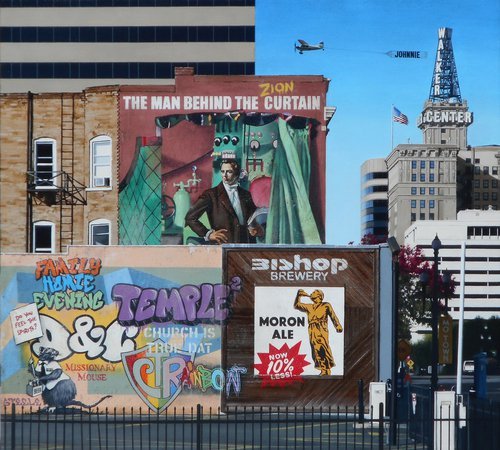
    One stat that sticks with me: Utah has fewer museums per capita than any state except West Virginia, an unglamorous fact that explains a lot about why cultural memory here can feel so easily misplaced. I thought about that again while reporting on the B’nai Israel Temple’s next life as the Salt Lake Art Museum (SLAM), a project led by Micah Christensen and slated to open in 2026. The building’s survival is, in many ways, a case study in how rare cultural preservation can be in practice. (Read more here: “The Salt Lake Art Museum (SLAM) Finds Sanctuary in the Temple”.)
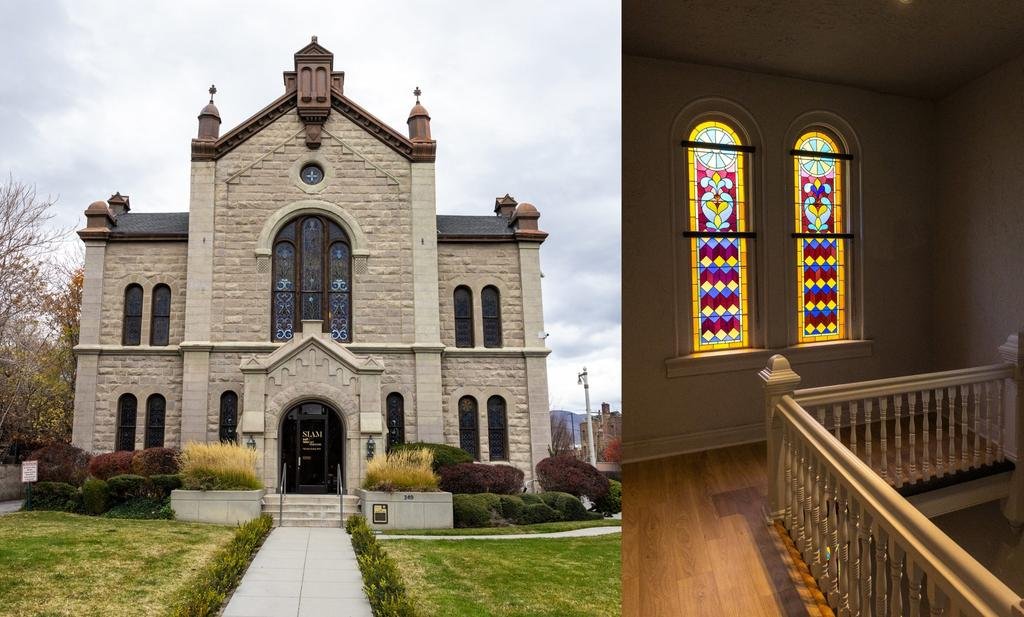
    Field Notes: Ten-year anniversary image

    What follows is a year-by-year chronicle pulling a few representative pieces per year and the themes that kept returning: meaning-making and collective rupture; heritage and community memory; abstraction and early modernism’s long shadow; and the ongoing work of paying attention to people and places that get minimized, misread, or politely ignored.

    2015 — War, Memory, and the Theater of Trauma
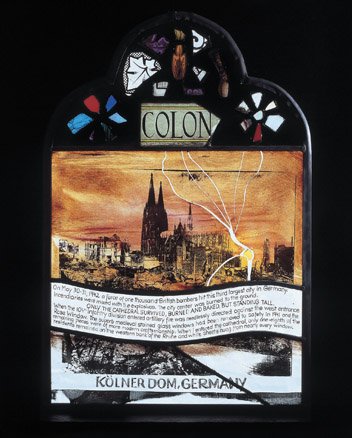
    2015 image

    My earliest arts writing was already circling questions that would stay with me: how societies remember violence, how trauma echoes across generations, and how performance becomes a space for processing what cannot be easily narrated. In 2015, I found myself repeatedly drawn to work shaped by war—sometimes historical, sometimes contemporary, often refracted through humor, ritual, or psychological displacement. Even then, criticism felt less like judgment than like translation: an attempt to make visible the emotional labor embedded in cultural production.

    What interested me most, even then, was not spectacle but aftermath: how violence lingers in bodies, language, and staging long after the event itself has passed. I was beginning to understand writing as a form of witness—one that sits with discomfort rather than resolving it—and that orientation quietly shaped everything that followed.

    Together, these pieces trace an early interest in how art metabolizes collective violence—whether through solemn memorial, absurdist comedy, or intimate portrayals of PTSD—an interest that would later expand beyond war into broader questions of community trauma and historical inheritance.

    2016 — Objects, Pilgrimage, and the Weight of Time
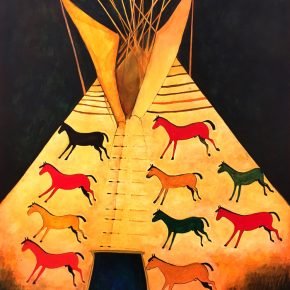
    2016 image

    By 2016, my writing shifted decisively toward material culture and deep time. Across exhibitions of painting, sculpture, photography, and mixed media, I became increasingly attentive to objects as carriers of memory—whether geological, cultural, or spiritual. This was also the year I began writing more explicitly about heritage without nostalgia: how artists engage with tradition, ritual, and landscape without romanticizing them. I became less interested in artists’ stated intentions and more attentive to what objects themselves seemed to remember—how time presses into form, and how place leaves a residue that can’t be fully aestheticized away.

    These essays mark a growing preoccupation with duration: fossils, pilgrimage routes, Indigenous histories, and sculptural forms shaped by both Eastern and Western traditions. Rather than treating art as isolated expression, I increasingly approached it as evidence—of time passing, of belief systems persisting, and of place exerting quiet pressure on form.

    2017 — Abjection, Abstraction, and Cultural Hierarchies
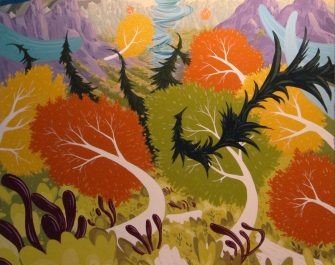
    2017 image

    By 2017, my writing had turned more directly toward questions of cultural value: what is permitted to count as “serious” art, what is dismissed as decorative or domestic, and how those judgments intersect with gender, labor, and popular culture. Alongside a growing interest in abstraction and contemplative withdrawal, I began interrogating hierarchies that shape both artistic production and reception—particularly where animation, illustration, and domestic narratives are concerned. I was also becoming more conscious of how criticism participates in gatekeeping—how language can reinforce or challenge the invisible borders between “high” and “low,” public and private, serious and sentimental.

    Across these pieces, decay and accumulation sit beside care, repetition, and craft. Whether addressing refugee loss through mass-produced objects, challenging the exclusion of animation from “high” art discourse, or examining domestic life as a site of artistic rigor, this year marks a clear shift toward analyzing how cultural systems assign meaning—and whose work is allowed to carry it.

    2018 — Abstraction and the Edges of the Built World
    2018 image

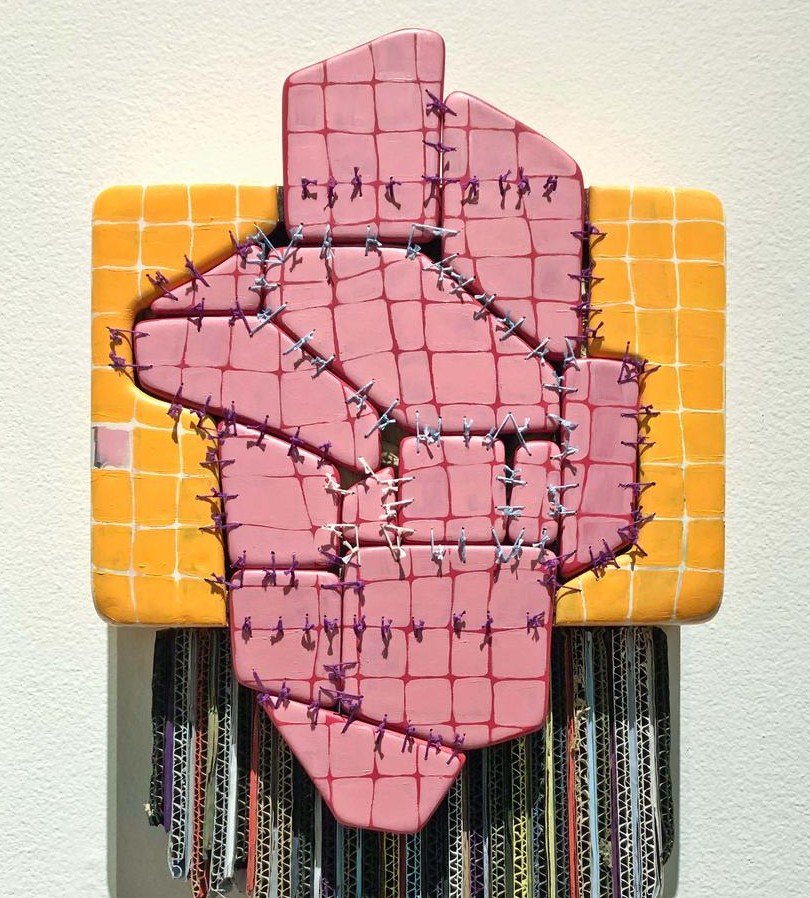
    In 2018, my writing narrowed its focus rather than expanding it. Instead of surveying many threads, I spent more time with abstraction and with environments that sit just outside formal boundaries—urban margins, hybrid spaces, and visual languages that resist narrative explanation. This was a year of thinking about structure: how meaning emerges when stories recede and attention shifts to form, material, and spatial tension. Abstraction became a way to think spatially rather than narratively: to read environments, surfaces, and systems without forcing them into story.

    Both exhibitions investigate what happens when order breaks down or gives way. In Ditchbank, the overlooked wilderness at the edge of the city becomes a site of negotiation between human control and organic persistence. UMOCA’s survey situates abstraction as a deliberate refusal of inherited narratives, emphasizing instead the artist’s creation of personal systems and visual codes.

    2019 — Systems of Meaning: Vision, Myth, and Inherited Structure
    2019 image

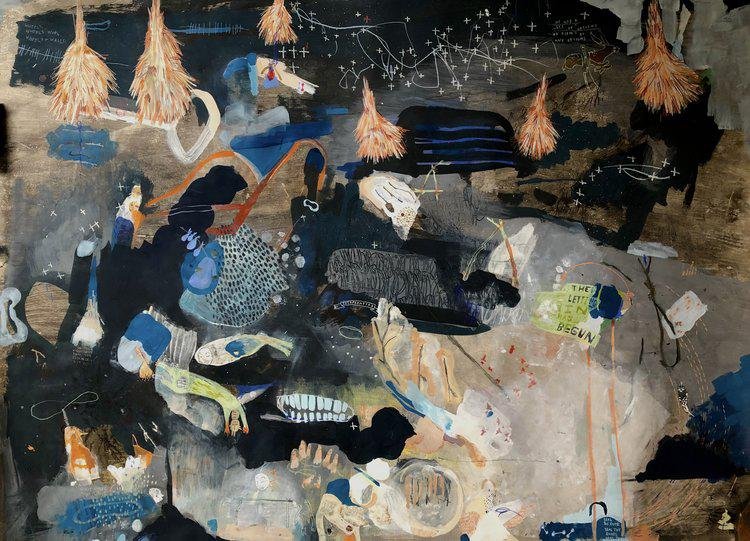
    By 2019, my writing had moved decisively toward systems—how meaning is produced, transmitted, and disrupted across families, myths, technologies, and landscapes. Rather than focusing on isolated works, I became increasingly interested in how artists construct visual languages: photographic processes revived and altered, myths reassembled, family narratives fractured and reconnected. This was a year defined less by subject matter than by structure—how stories are built, and how they fail. I was increasingly drawn to artists who treated myth and family not as origins to be honored, but as structures to be tested.

    Across these pieces, vision is never neutral. Alternative photographic processes foreground the mechanics of seeing itself; family relationships become the syntax through which reality is interpreted; myth operates as both inheritance and provocation; and landscapes are rendered not as scenery but as lived systems shaped by labor, memory, and movement.

    2020 — Collective Rupture and Marginalized Realities
    2020 image

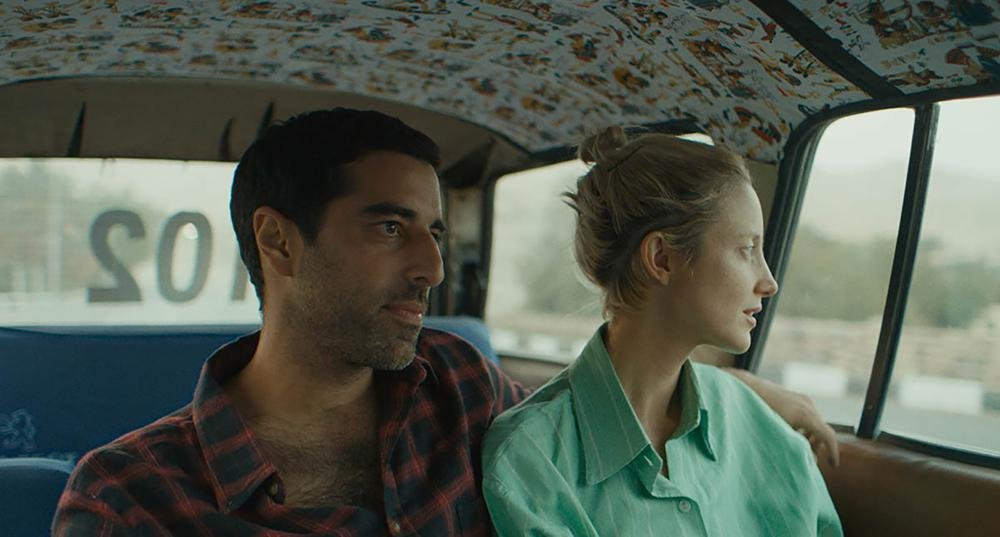
    In 2020, my writing became inseparable from collective rupture. The pandemic did not affect communities evenly, and much of the cultural work I was drawn to that year confronted this imbalance directly—foregrounding voices, experiences, and realities that had long been present but were now impossible to ignore. Criticism shifted from interpretation to accountability: paying attention to who bears risk, who is seen, and how art registers unequal pressure. The urgency of 2020 stripped criticism of any pretense of neutrality; to document art honestly required acknowledging the unequal conditions under which it was made, shown, and received.

    Across these pieces, art functions as a record of strain rather than escape. Screendance reframed movement through mediated formats at a moment when access and visibility were uneven. Luxor traced the emotional residue of humanitarian labor and prolonged conflict. Virtual public art initiatives revealed how civic meaning could be sustained while public space itself became contested.

    2021 — Care, Heritage, and Cultural Survival After the Pandemic
    2021 image

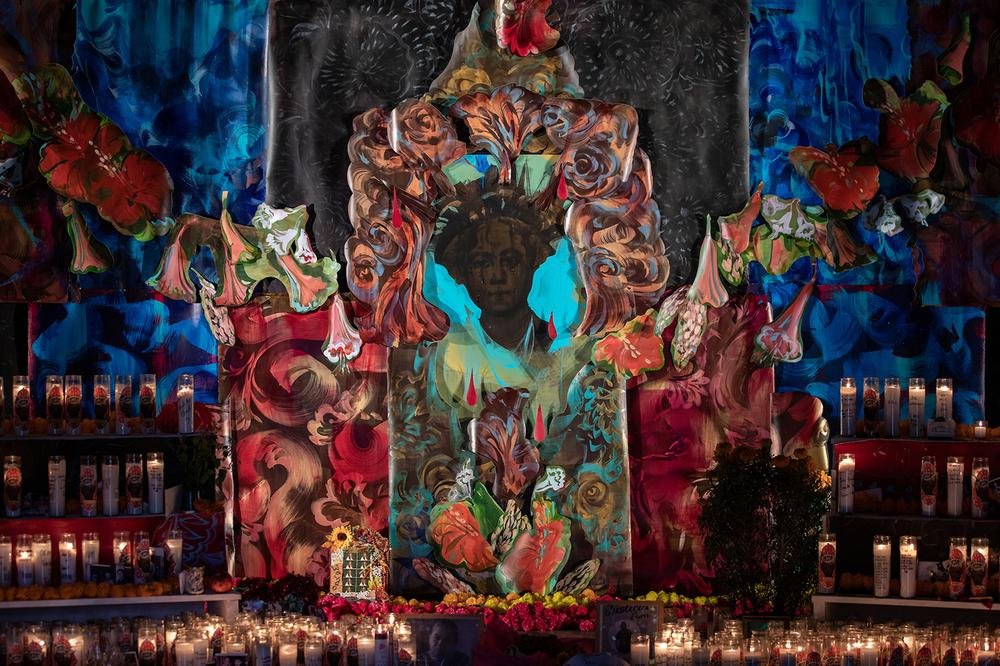
    In 2021, my writing remained shaped by the aftershocks of the pandemic, particularly its uneven impact on marginalized communities. Rather than moving on from crisis, much of the cultural work I engaged with that year confronted its residue: who had been asked to absorb loss, who stepped into care roles, and how art and community organizing became tools for survival, memory, and resistance. What emerged most clearly was care as cultural infrastructure—often improvised, frequently under-resourced, and rarely celebrated.

    Together, this writing reflects a year focused less on recovery narratives than on cultural endurance—how communities protect meaning, memory, and space when institutional support proves unreliable.

    2022 — Violence, Land, and the Limits of Inheritance
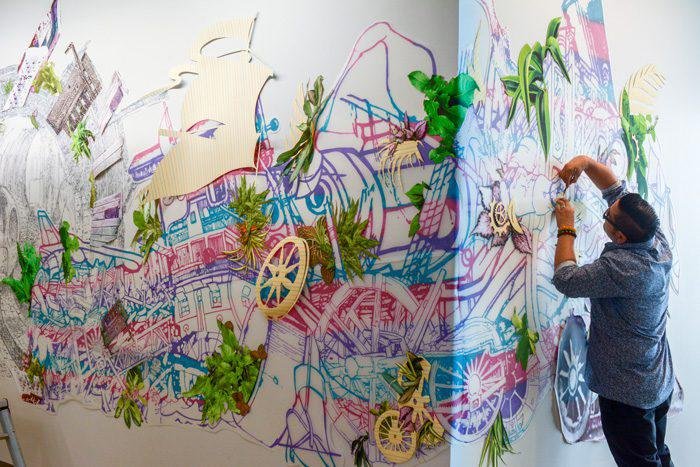
    2022 image

    By 2022, my writing confronted the accumulated pressures that had been building across the previous years: violence embedded in land use, gendered vulnerability, nationalist mythmaking, and the ongoing consequences of colonial and migratory disruption. Rather than focusing on recovery, this work stayed with what remained unresolved—asking how history, ideology, and environment continue to shape whose lives are protected and whose are exposed. This year solidified my understanding of land as an active force rather than a backdrop—history continuing to structure belonging, vulnerability, and risk.

    Across these pieces, land and identity are inseparable. This writing stays with structural violence—how it is inherited, normalized, and resisted—without forcing closure where none exists.

    Interlude — Stepping Away from the Page (2023–2024)

    After 2022, my public-facing arts criticism paused. This was not a retreat from cultural analysis, but a redirection of labor into professional writing, institutional work, and foreign exchange–focused research that sharpened my understanding of systems, power, and narrative framing in different registers. The questions driving my criticism—how meaning is produced, who bears risk, and how communities survive long pressure—did not disappear. They moved into other forms.

    When I returned to long-form cultural writing in 2025, it was with a clearer sense of synthesis: how a decade of arts criticism in the American Southwest had quietly become a foundation for broader historical, cultural, and interdisciplinary work.

    2025 — Return, Synthesis, and the Quiet Work of Community
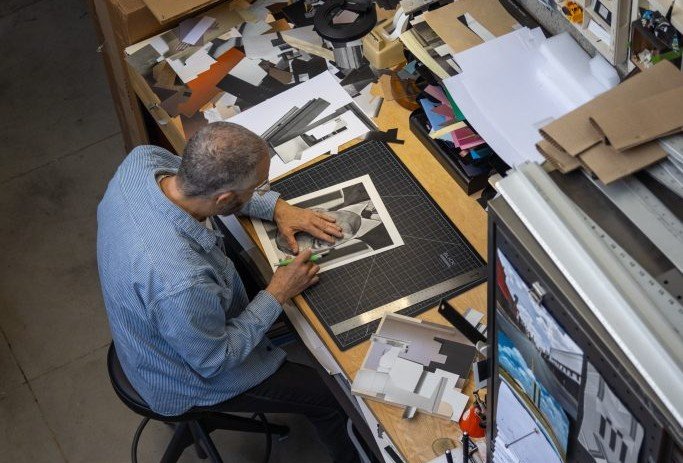
    2025 return image placeholder

    When I returned to publishing arts criticism in 2025, it wasn’t a restart so much as a re-entry—with sharper tools and a clearer sense of what I’d been tracking all along. After years of professional writing centered on systems, risk, and institutional language, I came back to art with an increased sensitivity to structure: how communities preserve memory, how spaces accrue cultural meaning, and how abstraction and design can carry ethical weight without announcing themselves. Returning with distance made visible what had been there all along: the most durable cultural work often happens without fanfare—through stewardship, sanctuary, and consistency rather than spectacle.

    Together, these pieces mark a mature phase of my criticism: attentive to marginalized histories and cultural preservation, alert to the ways identity and expectation shape perception, and drawn to practices where clarity and reduction become forms of seriousness. If earlier years were about locating the stakes—rupture, myth, power, inheritance—2025 is about mapping what endures: the institutions that create refuge, the artists who make perception strange enough to see it, and the quiet organizers who turn community into something tangible.
  • Can’t Step in the Same River Twice

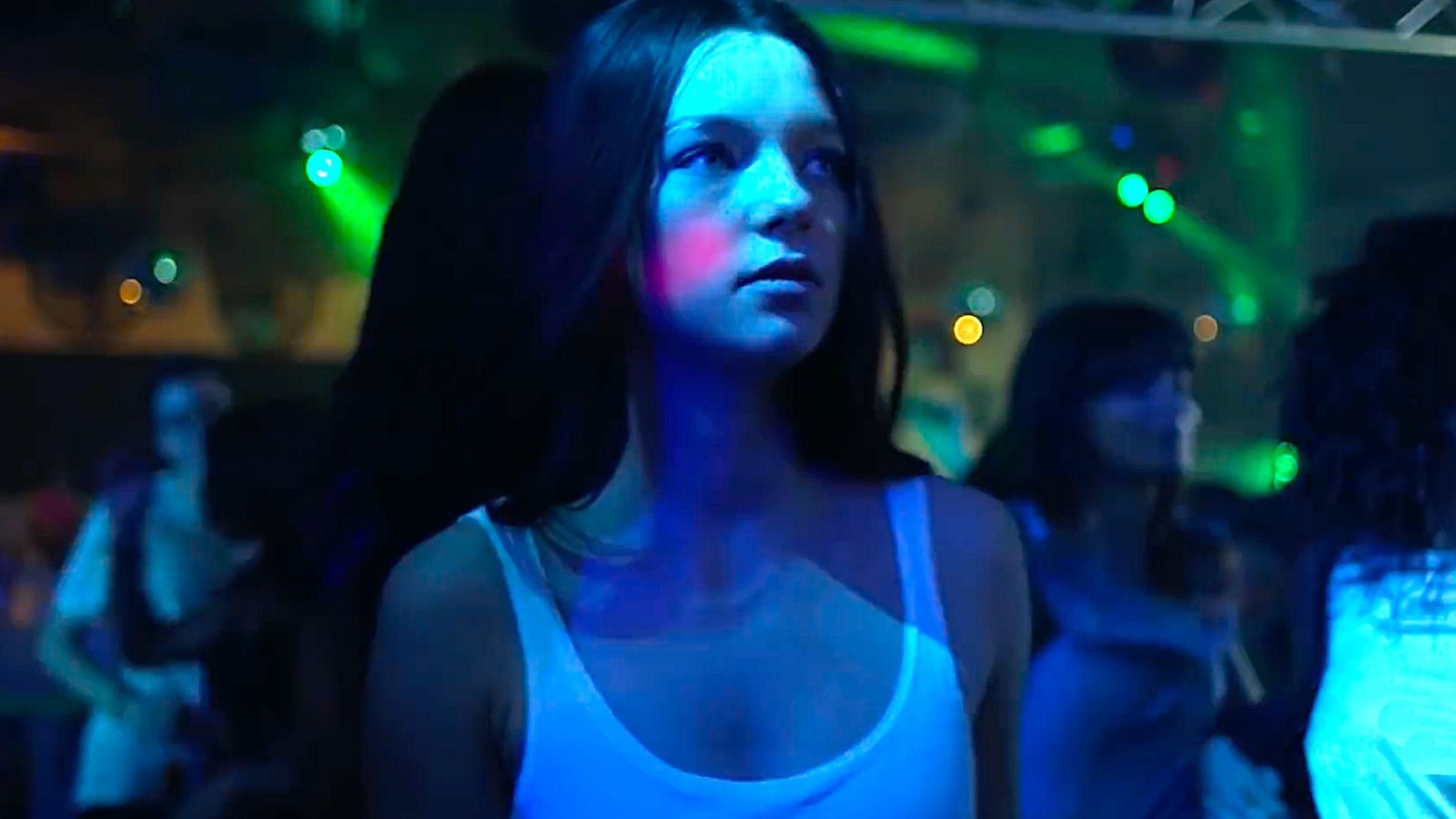
    Still from Hanna entering a tourist disco for the first time.

    On Blue-Light Rooms & Other Gateways

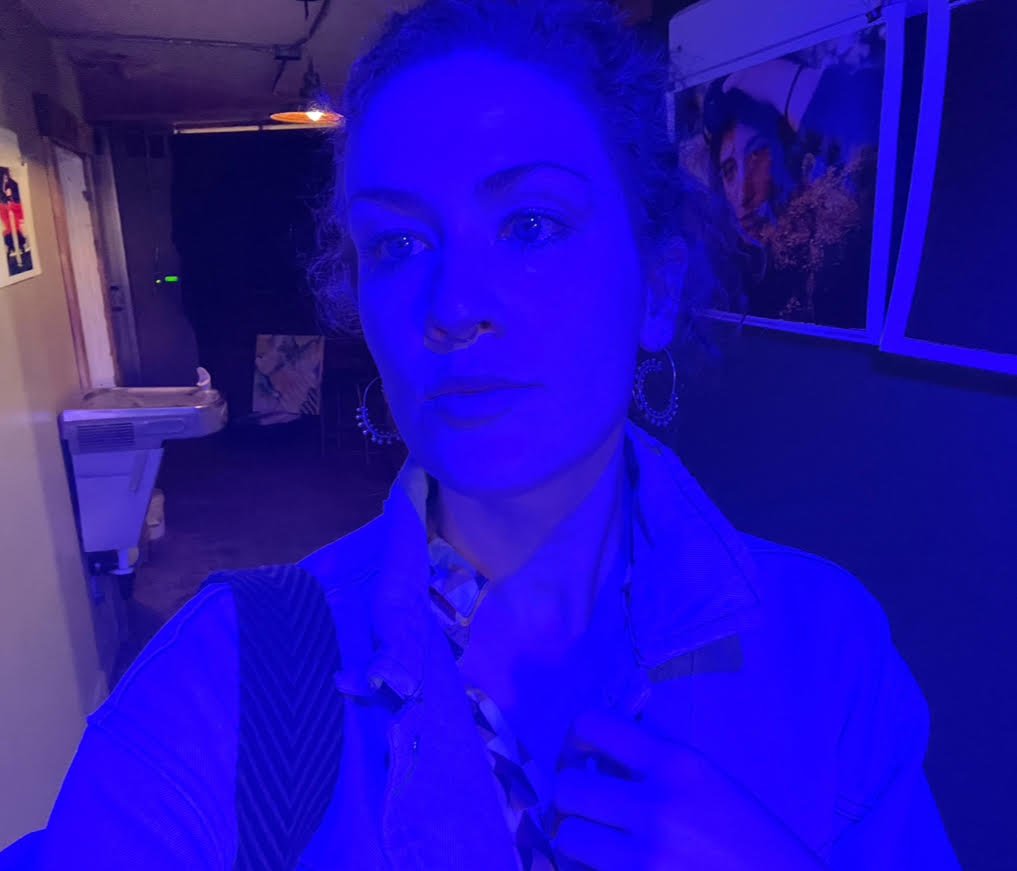
    There’s a kind of current that runs through the blue-light rooms where things are made, the backstage corners of plays, the band rooms humming after hours, the improvised studios where people gather around something still taking shape. It’s the same current that moves through any space where people are building worlds together, whether out of plywood, choreography, fabric, or light. These places feel rare, almost set apart from the rest of life, and the people drawn to them are often those who never quite fit the usual shape of things. They feel most themselves in the charged, half-chaotic atmosphere of a room in the middle of making something new.

    Still from Hanna entering a tourist disco for the first time.

    A Place Built Without a Nightlife Vocabulary

    Growing up in Utah, I gravitated toward the rooms where things were being made—the art classrooms, the wings of the stage, the band rooms buzzing after dark. Those were the spaces that felt alive. But as you grew older, the world around you encouraged a kind of narrowing. Creativity was tolerated in childhood, yet adulthood was expected to look settled, orderly, and suburban. There wasn’t much of a tradition of going out dancing or spending time in bars, and alcohol made so many people uneasy that some wouldn’t attend a wedding if there was a bartender. It always struck me as ironic in a religion built around a figure who turned water into wine.

    In Utah—or at least the version I grew up in—not everyone avoided play, but there was a strong puritan reflex that regarded vigorous dancing, costumes, and nighttime gatherings with suspicion. Dressing up could be dismissed as childish or inappropriate. My father was convinced for years that Halloween had demonic origins and refused to celebrate it.

    That way of thinking leaves little space for adults to experiment with identity or enjoy even modest forms of theatricality. The cultural instinct tilted toward self-containment rather than expression, toward seriousness rather than imagination.

    Discos & Study Abroad

    When I think about my first real encounter with dancing, I always return to that scene in Hanna, the Amazon series, where the girl who has grown up hidden in the woods ends up in a tourist disco for the first time. She isn’t scared; she’s fascinated and a little stunned people get to live this way.

    Still from Hanna entering a tourist disco for the first time.

    When I went to study abroad in Madrid when I was 20, I’d never been into a bar before, but Spain operated on a completely different logic. Kids start drinking at 16, so the whole culture around bars and discos is less anxious and more woven into everyday life. People danced because the music was playing or because their friends pulled them into the rhythm, not because the moment was supposed to signify anything. Flamenco classes, crowded bars, and late-night discos slowly demystified it for me. A drink or “chupitas” helped, but what really changed things was watching people move without apology or self-surveillance. Movement made sense there in a way it never had before, and for the first time, dance started to feel like an essential part of who I could be.

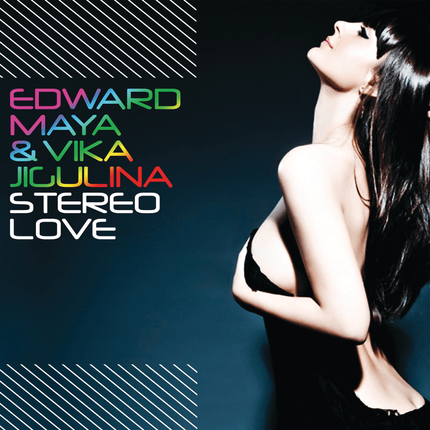
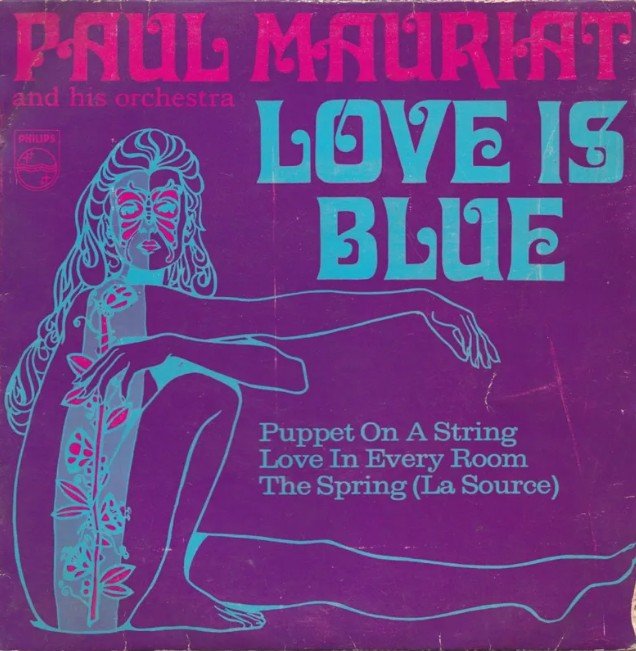
    Cover art for the song 'Stereo Love'.

    The Quiet Rebellion of Fancy Dress

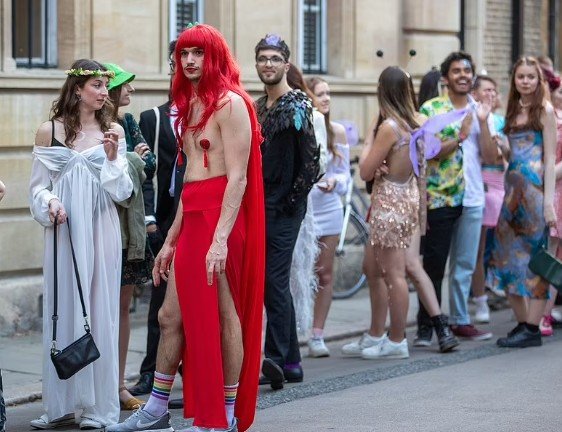
    England added another layer I didn’t expect. After Spain, I assumed the ease around dancing and nightlife might be tied to Southern Europe, but then I moved to another very Anglo, very orderly country and found that a different kind of playfulness lived there as well. I first heard the phrase “fancy dress parties” and imagined formal clothing, only to learn that in British English it simply means costumes, usually chosen with enough enthusiasm to make the whole thing feel delightfully absurd. Someone would announce a theme, people would make quick charity-shop runs, and by evening the bar would be full of whatever interpretations they could assemble. During my master’s year those nights became a kind of punctuation between lectures and libraries — small, collective acts of imagination that gave the term “student life” a broader range.

    Composite image

    Fancy dress is a faint descendant of older revels and masquerades where people were given a little room to slip outside the roles they held during the day. The modern version doesn’t carry the weight of those older traditions, but the instinct is the same: a simple, generous permission to become someone else for a few hours. Creativity and imagination need small departures from the everyday. Being someone else for an evening, or even just exaggerating one aspect of yourself, has always lightened the existential load. It creates a pause in the linear story of your life, a moment where you’re allowed to play rather than perform.

    The instinct behind fancy dress — that willingness to step outside yourself for an evening — extends into festival culture, but in a different register. Glastonbury is the version most Americans have heard of. For a few days, ordinary life expands. People build temporary worlds in fields by hauling in scaffolding, generators, speakers, tents, sequins, and a small nation’s worth of waterproofs.

    Crossing Back to the Western Desert

    The jump from that environment to the western United States is a kind of cultural whiplash. Once you’re back in Utah and Nevada, the landscape is huge but the places where you can actually move in public shrink to almost nothing. Spain covers about 195,000 square miles (505,000 km²) and holds roughly 47 million people. Utah and Nevada together span almost the same area—about 210,000 square miles (543,000 km²)—but have fewer than 9 million people combined. It creates a strange paradox: two states the size of a European country, but with almost no public spaces where adults are expected to gather, move, or experiment with identity. Outside a few country bars, and the singular outlier of Las Vegas, there isn’t much of a nightlife vocabulary across all that space.

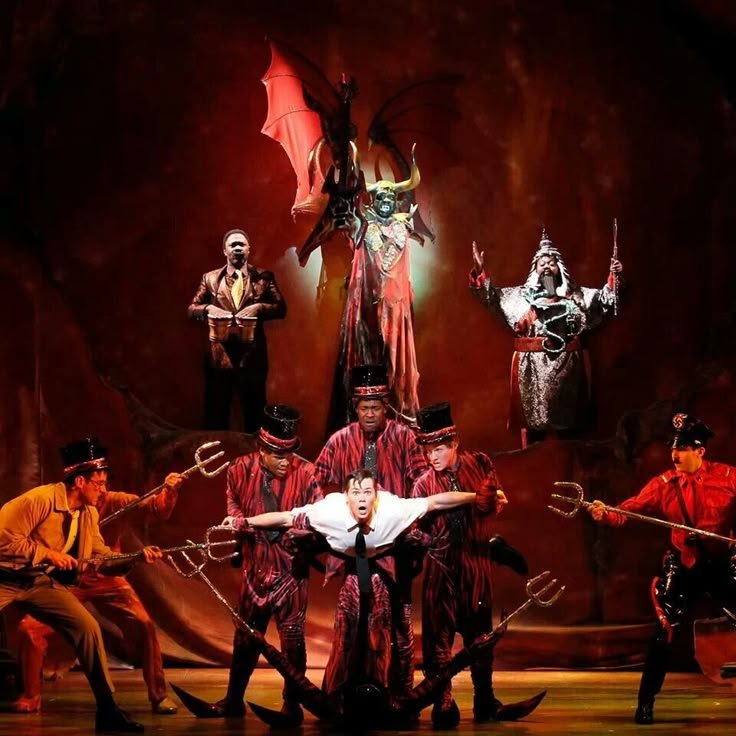
    Electronic dance music, house, bass—anything with a subwoofer and a color palette beyond beige—triggers immediate suspicion. And not the vague moral kind. In a culture that is otherwise intensely materialistic, the suspicion turns strangely supernatural. In Mormon thought, “Satan” isn’t a metaphor; he’s a literal figure whose primary task is to lure people into drugs, sex, and what gets categorized broadly as “bad choices.” Unfortunately for anyone who likes a kick drum, electronic dance music falls neatly into that category. Add strobe lights, fog machines, or—heaven forbid—darkness punctured by red lighting, and the entire scene reads as a recruitment center for degeneracy.

    Composite image

    The irony is that the desert is perfect for building temporary worlds. Salt flats, canyons, old mining land, vast empty valleys — the West is designed for large-scale gatherings. But mainstream Utah culture treats underground dance events the way small towns treat UFO sightings: something is happening out there, and it’s definitely not good. (But I mean, how can you blame them if you know anything about “alien cattle mutilations?”)

    I’m not tracing the full socio-cultural circuitry here, and don’t even get me started on aliens — that can wait for another essay — but this section needed grounding. England showed me that dressing up and being out at night doesn’t require a moral preface; it’s simply part of how people live. And historically, when a government or an authoritarian religion feels threatened, the first reflex is always the same: impose a curfew. Control the hours, control the movement. The underlying question doesn’t change: Who gets to be out after dark?

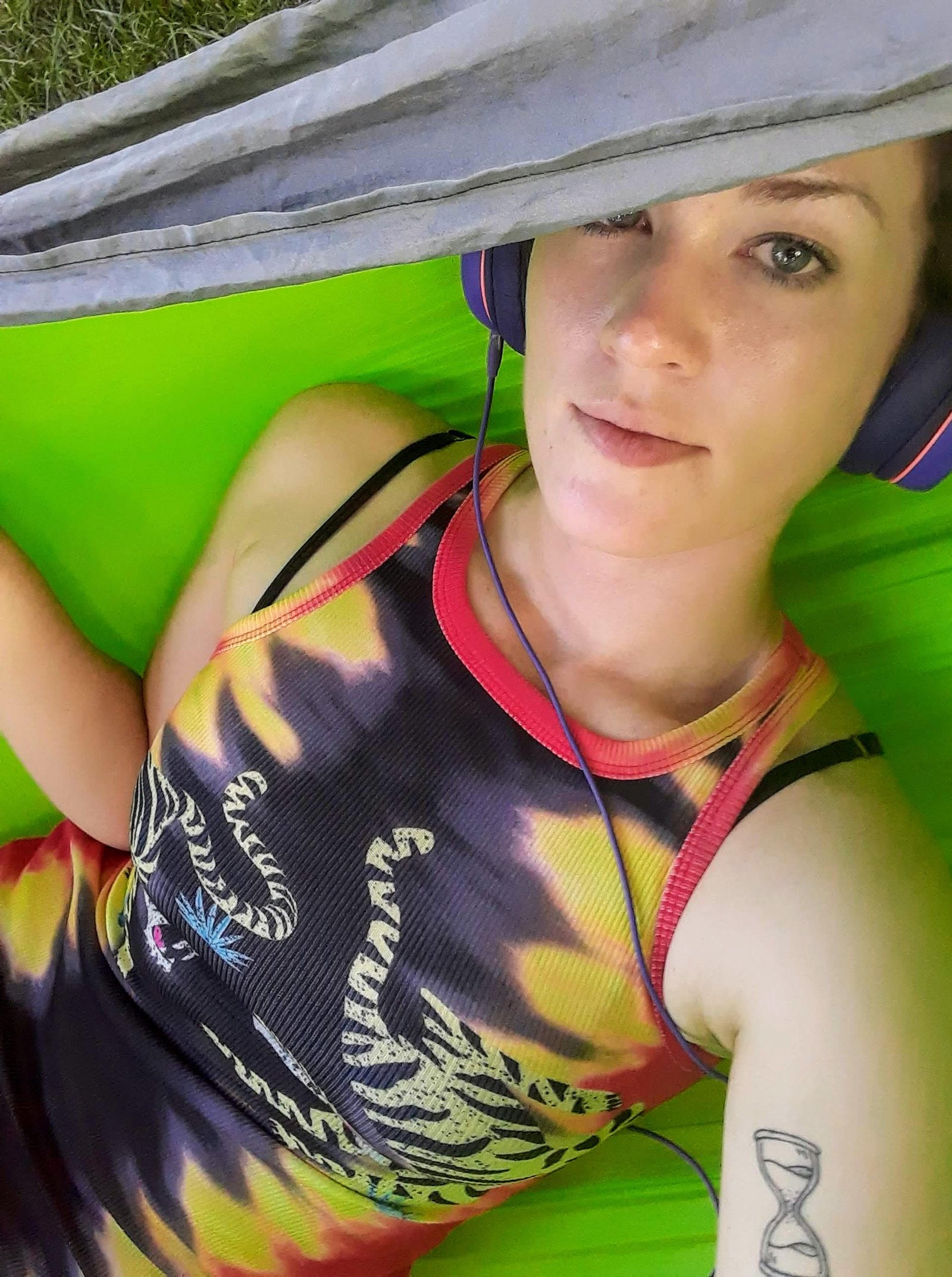
    That became obvious during the pandemic, when a statewide shutdown and a curfew — for a respiratory virus you couldn’t catch outside, of all things — sparked a ridiculous, primal urge to leave the house. One night I grabbed my friend Lamb, a skateboarder with no interest in rules, and we ran around the empty playground at Liberty Park like kids who’d slipped the perimeter. We climbed the tops of the tower slides to scan for cops. It’s still one of my favorite memories from those years. Here I am “hanging out” in a hammock illegally in Liberty Park during lockdown, 2020.

    Composite image

    Utah taught me how many people think the answer to “who gets to be out at night?” should be tightly controlled — and how intoxicating it feels to ignore that for even ten minutes.

    The Edge of the Known World

    If there’s a thread that connects Utah art rooms, Madrid discos, English fancy dress, and the temporary worlds built from plywood and light, it’s novelty. I’ve always been drawn to the moments when something unplanned rises up and changes the temperature of a life, when you feel more awake simply because you weren’t expecting what arrived. When I was little, that feeling lived in stories. Pocahontas was the one I returned to again and again, not for romance but for the idea of a girl who stepped toward change rather than away from it. She moved into the unknown because it lit up something inside her, something the familiar world couldn’t reach.

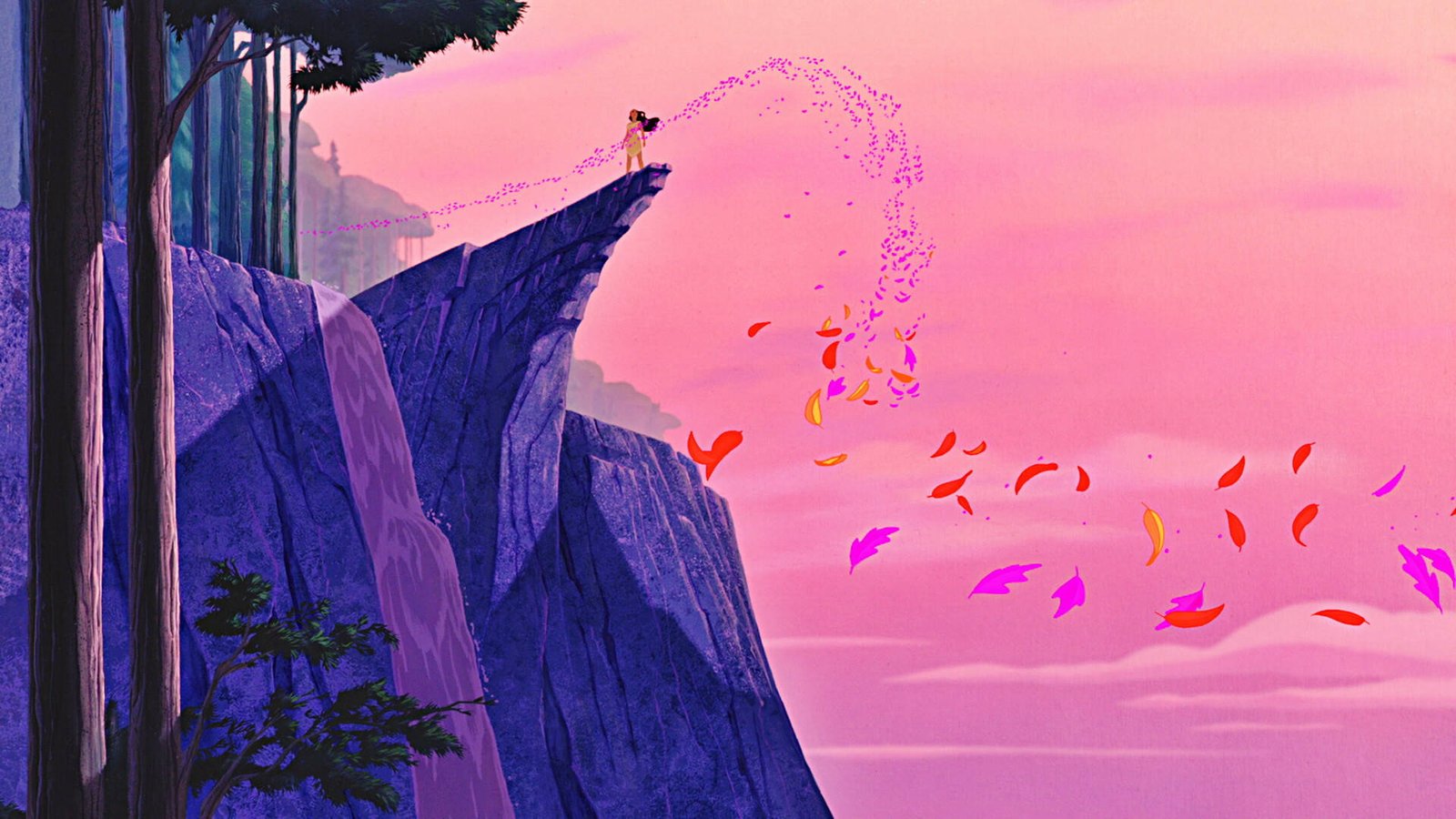
    There’s a shot of her standing at the cliff’s edge, hair blown sideways, looking out at a world she doesn’t fully understand but wants anyway. For a certain kind of girl — the restless, the observant, the ones born into cultures that value obedience over curiosity — that image is a blueprint. It tells you that stepping outside your prescribed path might be the only way to find out who you are.

    Still from Hanna entering a tourist disco for the first time.

    The Color of a Moving River

    Heraclitus said you can’t step into the same river twice. The river moves; so do you. It’s the simplest description of what novelty feels like when it lands: a shift, a current, something that interrupts the default settings of ordinary life. That runs through the creative rooms I loved as a kid and the dance floors I found later—the sense that you’re stepping into a moment that didn’t exist ten seconds ago and won’t exist again.

    Novelty isn’t decoration. It’s a physiological event. Wonder tightens the chest; surprise pulls the breath in; adrenaline flickers at the edges of perception; the world you thought you understood rearranges itself for a moment. Creativity depends on those physiological rearrangements. So does joy.

    Novelty interrupts routine and reminds you that the world is wider and stranger than the narrow structures you were handed; it opens doors in the mind. For people who never felt entirely at home inside the expected structures, novelty is the moment where you remember that change is not only possible but natural, and that moving toward the unknown has always been where the story becomes interesting.

    But novelty is only one face of change. Most of the time change arrives without excitement: jobs shift, people leave, landscapes alter, seasons tilt. What you crave in one moment—movement, unpredictability—becomes something you brace against in another. The same current that delivers the jolt of possibility also carries away what was stable a moment before. Heraclitus wasn’t describing thrill-seeking; he was naming the underlying condition. Whether or not you want it, the world is already moving.

    On Arising and Passing Away

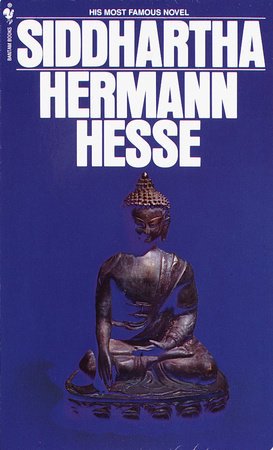
    Early Buddhist thinkers approached the same truth differently, not as an argument but as a quality of experience. Things arise, change, and pass—not tragically, not triumphantly, simply because that is what things do. Hesse’s Siddhartha takes this and turns it into a story, letting the river become a companion rather than a symbol. From here, the ideas meet in color.

    Siddhartha by the river

    Blue is the shade most often given to water in motion—not because rivers are actually blue, but because the mind recognizes the mix of depth, shadow, and reflection as something that can’t be held. Blue is a color defined by scatter and movement. In painting, in stage lighting, in the natural world, it is the hue that recedes even as you look at it. Theaters rely on that property. Blue backstage light is meant to be seen without being noticed. It reveals just enough for the next action to take place while allowing the rest to fall back into near-invisibility:

    • Audience visibility: blue falls off quickly over distance, so the audience can’t see backstage movement even as crews work a few feet away.

    • Night vision: blue interferes least with the eye’s rod cells, which lets stagehands keep their sense of darkness while still navigating safely.

    • Cues and markings: spike tape and backstage markers glow cleanly under blue without disrupting what’s happening onstage.

    There’s a quiet philosophy in that. Change often announces itself the same way—low-intensity, peripheral, easy to overlook until it has already rearranged the edges of things.

    And then there is the river’s color, which isn’t really color at all but the result of light passing through depth, sediment, air, and constant motion. The blue we assign to rivers is a metaphor we keep returning to because it captures something about impermanence better than language can. Blue is the visual form of transience: the distance inside the present moment, the shimmer between what is and what is becoming.

    You can’t step into the same river twice, not because the river has changed or because you have changed, but because the meeting point is always new—the water, the light on its surface, the air moving above it, the moon tugging at every tide, including the ones inside your own body.

    The Blue Flower of Enlightenment

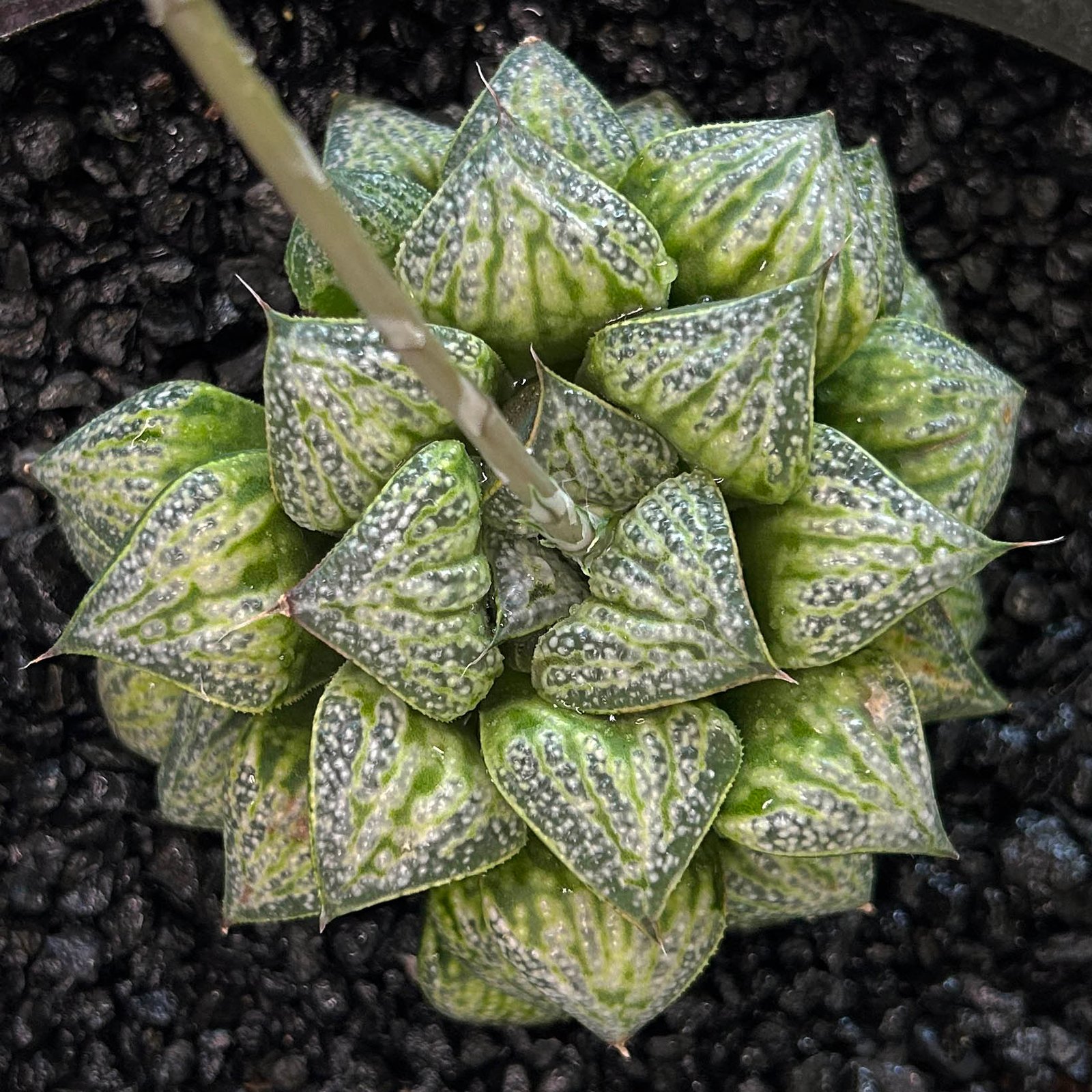
    There’s a plant I keep on my windowsill with the cultivar name Hana Aoi. The name simply means “blue flower” in Japanese, a phrase that has appeared for centuries in poems, paintings, and seasonal imagery. In Buddhist art, the blue lotus—the utpala—carries its own long history. The Lotus Sūtra notes that the Buddha’s radiance is “blue as the utpala, fresh and pure,” a color linked to clarity and the difficulty of awakening. In later iconography the blue lotus is often shown half-open, a form that suggests insight arriving gradually rather than all at once. It is a flower you glimpse rather than grasp.

    Japanese poetry adds a quieter note. Edo-period poet Chiyo-ni (加賀千代女, also known as Kaga no Chiyo), wrote around the 18th century:

    朝顔や
    つるべ取られて
    もらい水

    asagao ya / tsurube torarete / morai mizu

    Morning-glory blue
    has taken the well-bucket—
    I ask next door for water.

    Chiyo-ni’s poem turns on a small domestic moment: a morning-glory vine has curled itself around the rope of the well-bucket, and rather than tear the bloom, she simply walks next door for water. The haiku isn’t symbolic in the Western sense, but its clarity comes from the way it treats a minor inconvenience as something worth accommodating. The blue morning-glory is held in place for a single interval between dawn and heat, and the poem catches that brief suspension—the stillness of a flower that won’t last, and the world adjusting itself around it. It’s an image of transience without drama, the kind of quiet impermanence that sits beneath so many Japanese seasonal poems.

    Across these traditions, the blue flower echoes the same intuition found in rivers and backstage light: things change shape, appear and vanish, and part of their meaning lies in that movement. It is not a symbol of permanence, but of passage—a reminder that the world doesn’t hold still, and that our lives don’t either.

    Still from Hanna entering a tourist disco for the first time.
  • Coming to You from Wizard Tower 9th x 9th

    When I lived in the 9th & 9th neighborhood during the pandemic, behind
    the Dolcetti
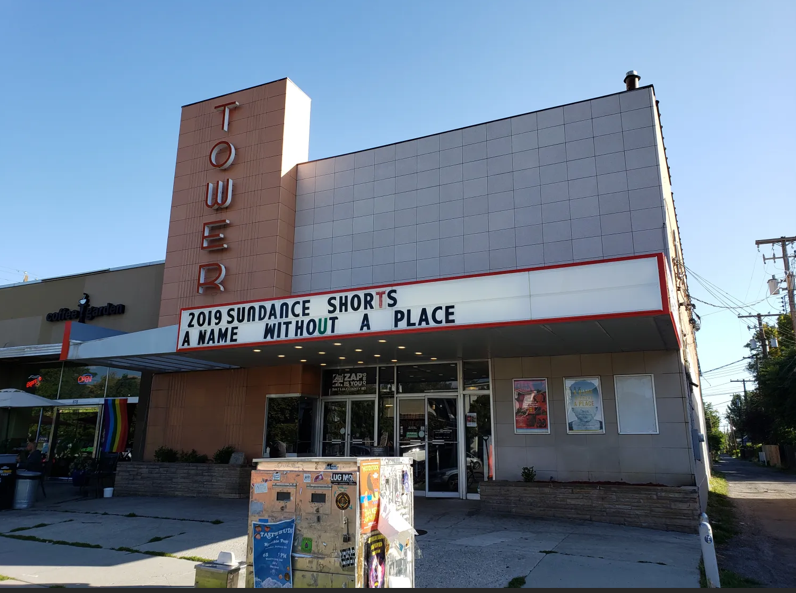
    I mentioned yesterday, I walked past the Tower Theatre nearly every day. The marquee stayed dark, the brickwork grew more weathered, and the whole building held that peculiar stillness the city carried in 2020. Even so, the corner near Liberty Park still felt like a point where Salt Lake history pooled.

    Composite image

    Revolution 9th & 9th

    900 South and 900 East — known locally as “9th & 9th” — grew out of early streetcar suburbs and farmland into one of Salt Lake’s most walkable residential districts. Much of the surrounding housing stock dates from before 1940, with a mix of Victorian, Tudor, Prairie, and Craftsman homes.

    The business district along 900 South developed into a cluster of independent shops, restaurants, and cafés — what some writers once described as an “anti-mall.” The roundabout at 900 S and 1100 E is home to Out of the Blue, a 23-foot humpback whale sculpture that became a neighborhood landmark almost overnight.

    The Tower Theatre

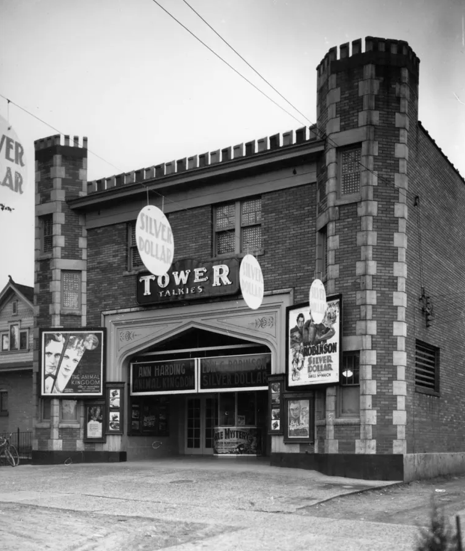
    The Tower Theatre opened around January 1928 at 876 E 900 S, one of the earliest purpose-built neighborhood cinemas in the valley. It originally featured two small masonry towers on either side of the entrance — a facade modeled loosely on fortress architecture, possibly even the Tower of London according to early promotional descriptions.

    Composite image

    By the 1950s, the towers and much of that ornate facade were removed or covered during mid-century “modernization” efforts; Carter Williams at
    KSL
    says: “Its current facade dates back to the 1950s, when the building underwent a major renovation to keep up with the industry.” Over its long life the Tower has been a single-screen movie house, an art-house venue, and eventually a key site for the Salt Lake Film Society, which took over operations in the early 2000s. It is one of the oldest cinema spaces in Salt Lake City still intended for film exhibition, even as renovation plans continue to move through approvals.

    999 Magic

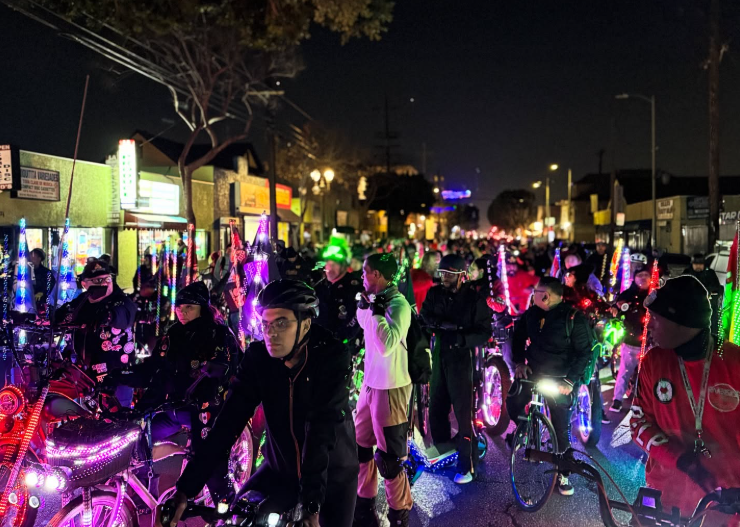
    When I lived in that apartment during the pandemic, one of the few social things that never really stopped was the 999 bike ride — this loose, late-night Thursday swarm of cyclists that always managed to gather at 9th & 9th no matter how strange the world felt.

    Composite image

    It was this oddly steady pulse of life in a year when almost everything else had shut down. We’d drift downtown, sliding through empty parking garages and echoing stairwells, the whole group lit by bike lights and someone’s portable speaker bouncing around the concrete. It was loose and a little chaotic, but it was one of the few things that made the city feel alive.

    The Tower as a Symbol

    In tarot, The Tower card (XVI) represents rupture — structures breaking apart, assumptions falling away, and the moment when something old can no longer support what has been built on top of it. The actual Tower Theatre carries a milder, architectural version of that symbolism: built with confidence and ornament, stripped of its towers mid-century, and now in the process of another reinvention.

    The neighborhood around it has shifted too, from a quiet streetcar corridor to a lively strip of shops, galleries, filmgoers, festivals, and public art. The Tower’s name, once literal, now feels symbolic in a different way: a reminder that Salt Lake City’s cultural spaces don’t stay static — sometimes they erode, sometimes they’re restored, sometimes they return as something new.