
Fawn McKay Brodie (1915–1981) was a Mormon-born historian from Utah best known for writing No Man Knows My History in 1945, one of the first major biographies of Joseph Smith. Brodie came from a prominent LDS family, allowing her access to restricted and controversial primary sources about Smith’s life. The work was enormously controversial within Mormonism and led to her excommunication from the LDS Church in 1946. In the 1990s, reading her book was grounds for formal religious discipline.
The title No Man Knows My History came from a remark by Smith himself. Brodie used the phrase ironically, positioning the book as an attempt to reconstruct the human, political and psychological dimensions of Smith’s life outside devotional mythology. Although the average Mormon opinion is this biography denigrates Smith, if you read it, it actually treats him more as a charismatic and improvisational religious leader than a villain in any sense.
Brodie later wrote books on Thomas Jefferson, Richard Nixon and others. She married Bernard Brodie (1910–1978), a prominent Jewish-American military strategist from Chicago often associated with early nuclear deterrence theory and RAND-era Cold War strategy. Their marriage itself represented a significant departure from the expectations of elite Mormon social life at the time.
Hugh Nibley (1910–2005), a classics professor and Mormon apologist at Brigham Young University, wrote a famously dismissive 1946 response titled No, Ma’am, That’s Not History.* One of the twentieth century’s most influential defenders of Mormonism, Nibley wrote about apostasy in intensely personal terms, often treating ex-Mormons less as intellectual dissenters than as psychologically wounded or morally compromised figures.
His rhetoric toward women frequently slipped into the language of bitterness, betrayal and romantic spite, to the point that it became its own Mormon subgenre: families sitting around living rooms discussing a female relative who had committed the grave spiritual error of becoming too educated. (Cue annoying American laugh track.)

Be kind, or else
After decades of trying not to think about Fawn Brodie and Hugh Nibley, the current cultural moment has brought my attention back to a social pattern I began to understand when I was an “over-educated” teenage girl. There is a learned call-and-response behavior instructing Mormons about how to deal with women who are intellectually difficult or publicly skeptical. Mocking, “negging” and the family laugh track are part of it.
There’s really no other way to describe it than emotional-abuse conditioning, and you see it on the internet on a daily basis too. I’m so autistic, guys, I’ve actually read B.F. Skinner and the Stanford Prison Experiments. *Shrugs in cute autistic girl*

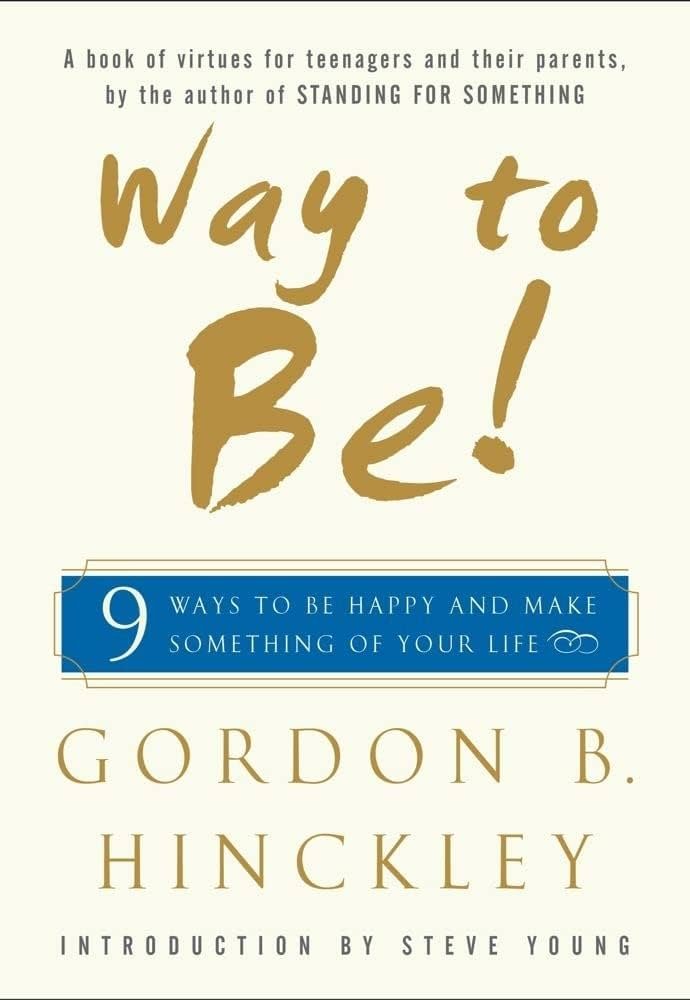
What makes the broader “be kind” culture from the pandemic onward feel so familiar is the way it functions as a pacifying mechanism designed to shut down legitimate conversation, let alone “debate” which is too “verbally violent” for people raised in the Disney-Pixar bubble; this creed blends vague therapeutic language with the authority of Jesus’ Beatitudes and the 1990s grandpa-joke vibe of Prophet Gordon B. Hinckley. Please use his literal title, guys.
The result is a culture where disagreement can twist into concern about tone or emotional stability, and criticism of ideas gradually collapses into criticism of character, but usually in the form of backbiting and gossip. For women especially, ridicule arrives disguised as pity or quiet suspicion that something has gone wrong within the person herself.
Part of what made the reaction to Brodie so culturally influential was the way it formalized this emotional script at an intellectual level. Hugh Nibley did not simply challenge her arguments; the broader response recast her seriousness itself as faintly absurd. Over time, that pattern reproduced itself socially, making certain forms of female dissent feel not just incorrect, but embarrassing, unfeminine and morally suspect.
The older I get, the less convincing I find the modern insistence that criticism itself is a form of violence. Growing up Mormon made me unusually sensitive to the gap between publicly performed niceness and private systems of punishment, particularly in environments where emotional harmony matters more than honest disagreement. Today, though, this passive aggression no longer feels confined to Mormon suburbia; it’s crossed into being an American default setting.
I have little interest in participating in a culture where socially inconvenient observations are treated as a greater moral offense than manipulative or coercive behavior. And what justifies the now-familiar rituals of public shaming, livelihood destruction and TikTok mob exorcisms? As a cultural writer, if telling the truth occasionally requires being less “nice,” if it requires expressing thoughts and feelings now classifies as “unkind thoughtcrime,” then I won’t participate in your increasingly strange social experiment-cum-authoritarianism. Sorry, not sorry.**
The eternal family as social operating system
In the moment we finally possess the analytical tools to ask much deeper questions about how cultures actually function, it seems ironic that cultural critique and debate are stifled with the “be kind” maxim. Today, we can examine how somewhat indescribable groups like Mormons or the LDS differ from other Christian cultures, how particular social incentives shape behavior over time, and how communities quietly reproduce values they rarely articulate directly.
When family is understood as eternal and community becomes the primary — and, ahem, rather materialistic — metric by which a “life well led” is measured, rejection itself can become impossible to understand. The men who run this religious machine are, in many cases, individuals who have not experienced meaningful rejection — romantically or otherwise — since high school. They married young, stayed embedded within the same social structure and continued accumulating spiritual, familial and social legitimacy simultaneously. So, many Mormon men have never heard the word “no,” from a woman, and if you question them (at any age), they will treat you like a naughty child due to the aforementioned Brodie conditioning.
The problem is that assumed social permanence stabilizes hierarchy to a stifling degree. The person at the top of the family structure is rarely meaningfully challenged because the structure itself treats the family unit as spiritually fixed and morally sacred. Even neglectful or emotionally absent fathers can retain their elevated status indefinitely, while lower-ranking family members are expected to absorb disappointment and continue performing cohesion. In my own social strata, children were often treated as effectively independent the moment they turned eighteen — emotionally, financially and otherwise — yet the symbolic authority of the patriarch remained intact regardless of how much practical responsibility he had actually assumed.
Ironically, this produces a worldview in which rejecting people, mainly men, feels not merely unpleasant, but the ultimate taboo — unless, of course, they smoke, drink alcohol, or commit some other dietary faux pas. The genuinely disturbing things are often hushed up and, somehow, considered worthy of redemption after lengthy repentance protocols. As you can see, there is logic operating and it is impacting culture, but at its base is a total lack of consistent morality.
“Be kind” and sexuality: what the prudish veneer is covering up
“Families Are Forever” is not metaphorical branding. It is an enforced and materialistic theology. Once born and sealed into a lineage of parents, siblings, grandparents and dead relatives stretching backward indefinitely, you can never fully escape — ahem — I mean, you will never be alone. Ahem — I mean, they will always be “watching over you.” In the case of my god-fearing relatives whose faith inspired me (the generation that’s already passed away), this is comforting. The idea the Mormon FBI, who will inevitably consider me their “cute autistic sister who needs to be punished,” can read my texts or even surveil every purchase that goes through my bank account without a warrant? Not so much…
Mormonism is widely perceived as prudish, but prudishness and sexual obsession are not opposites. Beneath the sanitized image of smiling families and enforced modesty is a religious history built around patriarchal access to girls and the collapsing of healthy personal boundaries into “obedience.” At a certain point it becomes difficult to ignore the degree to which Mormon culture has spent generations trying to normalize dynamics that, outside its theological framing, most people would immediately recognize as predatory or incestuous.
The intelligence apparatus in the United States recruits prolifically within Mormonism, which is one theory I have about why the irritating qualities of my birth-culture seem to be creeping into every facet of American life. The FBI, for example, has absorbed the passive aggression, the “friendly and joking” sexism and even the tech and data products coming out of Mormon communities themselves.
From this unholy alliance is metastasizing a normalization of voyeurism and total destruction of personal privacy: the logical end of passive aggressive forms of control by a homogenous group of over-powered and infrequently questioned men. I also suspect Mormon intelligence is at the base of the heavy dose of propaganda and social engineering to define “normal sexuality” on the internet, with “be kind” as its guiding philosophy.
When your creepy Mormon uncles are on top of the power hierarchy — of the religion, of the government and of the intelligence apparatus, we get a heavy dose of social media and pornography strategy bent towards normalizing whatever the homogenous male power structure deems to be “natural sexual interests.” For traditional heterosexual men who’ve now accepted pornography as part of their daily life, incest and pedophilia can begin to look like part of the Mormon heritage that a “kind” culture is now ready to accept.
This helps explain why Mormonism, despite its reputation for conservatism, has produced such a strong liberal Democrat and LGBTQIA-affirming strain within the church and especially among educated ex-Mormons. In many ways, the progressive Mormon instinct is simply the theology of eternal belonging translated into therapeutic modern language. The conservatives may retain stricter doctrinal positions on sexuality and marriage (although many Mormon men secretly believe incestuous or pedophilic tendencies are perfectly normal), but the liberals arguably won the cultural and PR battle because the religion already contained a deeply embedded emotional logic that framed exclusion itself as suspect. “Families Are Forever” turns out to blend quite naturally with contemporary ideologies growing alongside social media and the surveillance state.
In this vein, perhaps the most striking doctrinal overlap between Mormonism and aspects of the LGBTQIA+ movement is the belief that gender, like eternal family roles, originates in the “Pre-Existence.” Many Democrat Mormons I’ve spent a lot of time with find the idea that children can be “born in the wrong body” as a deep validation of the concept of an eternally gendered soul.
In this framework, just as a person might never find their “preordained” spouse on Earth and must wait for that relationship to be corrected in the afterlife, gender dysphoria can also be interpreted as a mortal trial: a mismatch between the eternal soul and the physical body that God will eventually resolve. The resolution, of course, is still imagined as contingent on righteous living, obedience, and participation in church culture — including the familiar rituals of community performance, right down to how many times you’ve brought Krispy Kreme donuts to ward functions.
Women get bouncers and stipends
Women in Mormonism occupy a more complicated position than the outside caricature allows. At the upper levels of what you might call “High Mormonism” — parallel to High Anglicanism — the atmosphere can resemble a Jane Austen adaptation filtered through suburban America and venture capital. Marriage is not merely romantic or religious. It’s financial, dynastic and infrastructural.
Old Mormon families operate through interlocking networks of capital, reputation and institutional influence, with certain surnames carrying weight across Utah business, politics, philanthropy and real estate. Salt Lake City is dotted with the naming rights of Mormon dynasties — the Eccles family being one example — and social legitimacy circulates through marriage, kinship and church proximity in ways outsiders often underestimate.
Within this structure, women are protected in exchange for performing the feminine role the system rewards: attractiveness, likability, fertility, emotional management and social cohesion. The rewards can be substantial. Houses appear. Investments materialize around marriages and children. Women receive status, childcare support, community infrastructure and a form of soft social security through the family network itself.
The result is that many wealthy liberal Mormon women move through life encountering little disagreement or confrontation. Open conflict threatens the emotional atmosphere, and the emotional atmosphere is one of the religion’s primary products. So the “edgy” conversations remain within upper-middle-class Mormon consensus: why single women in their thirties with cats are bleak but somehow validating, why Satan is destroying America through drugs and IPAs, and other manageable anxieties that provide smugness but don’t disrupt the “good vibes.”
Eternal families, eternal networks
The hierarchy produced is not just religious but informational. A culture built around eternal family structures, reputational management and tightly interdependent community life develops a natural interest in surveillance, record-keeping and systems of mutual observation. Mormonism has always been unusually administrative in this regard: genealogies meticulously tracked, relationships formalized, membership monitored and social standing woven directly into both earthly and Heavenly legitimacy. In a system where family cohesion and public morality function as forms of spiritual capital, visibility itself becomes culturally important.
Part of what makes Utah culturally fascinating, then, is how naturally this worldview intersected with the rise of networked computing and early internet infrastructure. The University of Utah played a foundational role in ARPANET-era computing research, while old Mormon family networks became deeply embedded in banking, telecommunications, software and institutional infrastructure throughout the American West. The same culture that emphasized interlocking families, centralized records and coordinated community management also proved unusually comfortable building systems organized around information flow, visibility and long-term institutional continuity.
Once you notice the overlap, the whole thing begins to feel less accidental. A religion organized around eternal connection, hierarchical networks and permanent social legibility entered the internet age unusually well prepared for it. Many of the same families and institutional structures that shaped Utah’s religious and financial culture also helped shape parts of the software and technological infrastructure underlying the modern West.
The hierarchy, in other words, reproduced itself through new mediums without fundamentally changing its underlying logic: the pervasive, faintly passive-aggressive conviction that a sufficiently regimented family structure can produce a kind of surveillance-based Heaven on Earth.
Escaping the bitter ex-Mormon stereotype with total disinterest
Brodie’s biography may have fueled speculation — and eventual confirmation — surrounding Joseph Smith and polygamy, but there were many more destabilizing or politically explosive episodes in early Mormonism she could have explored but didn’t. As much as there remains outrage surrounding her book about Smith, to me it still reads as celebratory, not unlike literary critic Harold Bloom (1930–2019) of Yale calling Smith a “literary genius” in The American Religion: The Emergence of the Post-Christian Nation (1992).
At the same time, the backlash against Brodie also helped produce a recognizable anti-progressive or liberal Mormon woman archetype: intellectually questioning, culturally sophisticated, suspicious of patriarchal authority, but still orbiting the Church and defining herself in relation to it. For years, that strain has attracted Mormon and ex-Mormon women trying to decode the culture they were raised inside.
The anti-feminist Mormon woman archetype created by the bickering between Brodie and Nibley has its uses. Maybe the gradual introduction and eventual “acceptance” of polygamy’s modern descendants was part of a planned and now coordinated effort to steer a certain valuable American demographic toward specific beliefs and behaviors, through aligned interests, institutional incentives, media narratives and social pressures that move in the same direction while presenting themselves as organic cultural evolution.
Hey, the Trump camp converted me into someone who accepts “fake news,” and I will probably never go back to my view of American culture or media again, much like Mormonism. After years of watching so many highly contrived narratives synchronize across journalism, academia, corporations, politics and social media, I no longer trust that social change emerges naturally or independently. All narratives start to look managed and negotiated between interests behind the scenes.
Another question remains: Why are there no surviving photographs of “Joseph Smith,” supposedly a living prophet who existed right alongside the emergence of photography? Why does his story resemble so many other prophetic archetypes to a T? And how exactly does Mormonism connect to the nineteenth-century Freemasonry interest in constructing an indigenous religion for America?
* Cringe…
** I said cum in a cultural critique essay… lol.