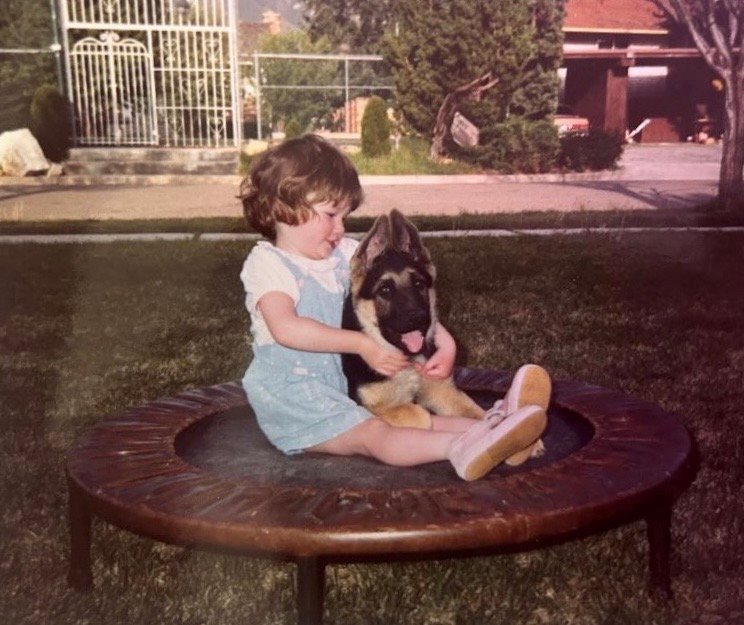
One day when I was three years old, my mom walked in the front door holding me and my infant brother to discover dog blood splashed all over the house. After a series of strange and abusive incidents (this was the “final straw”), my mom filed for divorce.
Pets have become so central to our lives that they’ve progressed past the classification of animals as subhuman, without rights, owned beings, to “fur babies.” Like so many other cultural shifts, this is a fraught issue, and the tension has been very obvious in my family.
Rural people necessarily have different relationships to animals than those living in suburban or urban areas, and most of my family is about as rural as they come. It’s my intention to go easy on the family members who obviously loved animals, but, working with them on farms, often used approaches that might read as abusive by more modern standards.
But I also know Mormon family members and neighbors who abused animals, sometimes as a way of asserting power within family structures. From there, it’s not hard to see the connection to corporal punishment and other forms of abuse. These incidents were often hushed up or instinctively explained away, but certain patterns emerge when viewed through the lens of power and control. And while many Mormons frame abuse as a divide between a “backwards conservative Right” and an “enlightened progressive Left,” that often feels like a red herring.
To me, the issue is embedded in parts of the religion and culture itself — a foundation shaped by ideas like “spare the rod and spoil the child” that still linger beneath the surface. It’s something I’ve spent the last sixteen years distancing myself from, along with the family structures that normalized or excused abuse. I don’t even really consider myself “ex-Mormon” anymore. The label never quite fit. I somehow managed to leave the church without developing the stereotypical ex-Mormon sex addiction, although the caffeine fixation is something I’m quite proud of.

Closely intertwined with my concerns about Mormon culture, with its rigidly ordered social hierarchies: men > women > children > dogs > cats > other animals — and its clear binaries: male and female, adult and child, acceptable and not acceptable, rulers and ruled — is the question of what animal and domestic abuse actually are. That question becomes hard to answer in a culture where such behavior is normalized, and even raising it can be dismissed as dangerous mental illness… or feminism.
Socially accepted animal and domestic abuse: Judeo-Christian heritage?
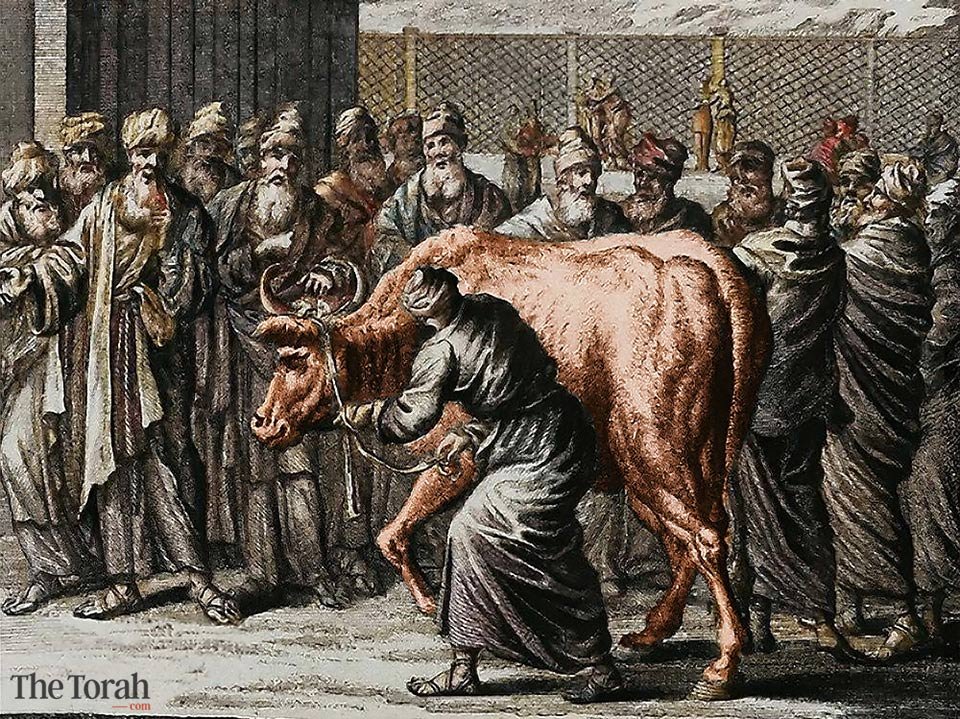
These dynamics persist within communities and in certain pockets of the country, especially when fundamentalism cycles back into fashion, in moments like the present, when people lose faith in government or secular authority.
How does a man demonstrate power, something central to his identity within hierarchical systems? In more moderate, urbane communities, overt violence — like hitting a wife or a child — may be punished by religious authorities or the police. What remains largely unspoken is how harming a wife’s or child’s pet can function as an effective, and socially overlooked, substitute.
These patterns of abuse, and the scripts people reflexively repeat to justify them, run through Mormonism and many other religious communities. Those of us who’ve left often find ourselves tracing these patterns like “conspiracy theorists” mapping connections that authorities insist are imaginary.
The shape of hierarchy ▲
Systems built on hierarchy depend on recognizable demonstrations of control. That helps explain why religious institutions so often resist the kinds of academic scrutiny they openly disdain: modern scholarship has made it harder to ignore the relationship between social power and coercion, especially when that power must be enacted and recognized by others. It also becomes uncomfortable when frameworks like “pyramid scheme” or MLM law begin to map similar dynamics of structural dependence and abuse.
What complicates this picture is the role of discipline and the constant negotiation of conflict within families and communities. These cycles of escalation and de-escalation don’t disappear, even in financially stable households, though material stability can soften or redirect them.
This is familiar territory in philosophy and cultural critique. What I would push further is that, even in more progressive Mormon or other “Judeo-Christian” communities, certain forms of voyeurism and stalking are replacing overt, physical demonstrations of power. Increasingly, acceptable mechanisms — surveillance, social monitoring, reputational pressure and digital harassment — operate as substitutes, with physical punishments sometimes still following, but in ways that are difficult to trace or fully understand.
The “anxiety perpetuated by social media” is often attributed to social jealousy — a pat explanation so frequently repeated it’s become infuriating. That framing asks us to overlook something else: the normalization of constant surveillance by employers, the FBI and other intelligence agencies (a very large portion of which are Mormon, including some of my own family members), along with the “weird accidents” and ambient paranoia experienced by people who are never quite sure whether they are being routinely watched.
We also know, on some level, that religious authorities understand exactly what happens and many see nothing wrong with any of it. They know what happens in hazing, when a father is “under stress” or when “teaching a lesson” involves spilling blood. Many of these practices are celebrated in secret, or may even be part of ritual initiations or wider abuse patterns increasingly described as “Satanic Ritual Abuse (SRA).”
The White Ribbon

Broader Mormon culture, to this day, remains in denial about how often the logic of abuse takes hold, how it is normalized and how it is used to control those lower in the hierarchy. It’s true that, even though men and boys are positioned as rulers — or, in Nietzsche’s terms, “the masters” — their punishments can be more visibly physical and brutal, especially if they are perceived as feminine or as having “something else wrong with them.”
And let’s be clear: in my own family, the survivors — children and adults alike — were the ones labeled, diagnosed and marked as unstable, made to carry the consequences of abuse. Meanwhile, many of the men who molested, raped or beat others, or who tortured and killed animals openly, were sometimes and sometimes not disciplined by religious authorities. Some faced no meaningful consequences at all, the most severe case resulted in decades of prison time. The result is a system that has, at times, echoed the hypocrisy depicted in Michael Haneke’s The White Ribbon.
There is a strange solidarity among people who have left tightly ordered religious worlds. Mormons are sometimes jokingly referred to as “mountain Jews,” a reference to 19th-century settlers who adopted rigid interpretations of the Old Testament to justify polygamy and other cultural practices. When you speak with others who have stepped away from religion — atheist Jews, ex-Evangelicals and others — the stories begin to echo: similar patterns, including accounts of community-sanctioned animal or domestic abuse that, for many, became the breaking point.
Pre-programmed or “knee-jerk” reactions to animal and domestic abuse
Certain responses to abuse are so ingrained they feel automatic — less like choices than scripts people have been trained to repeat.
- Minimization — “It wasn’t that bad,” “he didn’t mean it,” “everyone loses their temper.”
- Moral reframing — abuse recast as discipline, correction or “tough love,” especially toward children or animals.
- Victim responsibility — asking what the victim did to provoke it or why they didn’t leave.
- Deference to authority — assuming religious leaders, fathers or institutions are better positioned to judge the situation.
- Compartmentalization — treating harm to animals, children or spouses as separate issues rather than expressions of the same underlying dynamic.
- Silence as virtue — framing non-intervention as loyalty, humility or respect for privacy.
- Normalization through repetition — once something is seen often enough, it stops registering as exceptional.
- The worst hypocritical kicker: “Jesus wants you to love everyone and forgive everyone. Jesus doesn’t believe in grudges or vengeance.” (I beg to differ.)

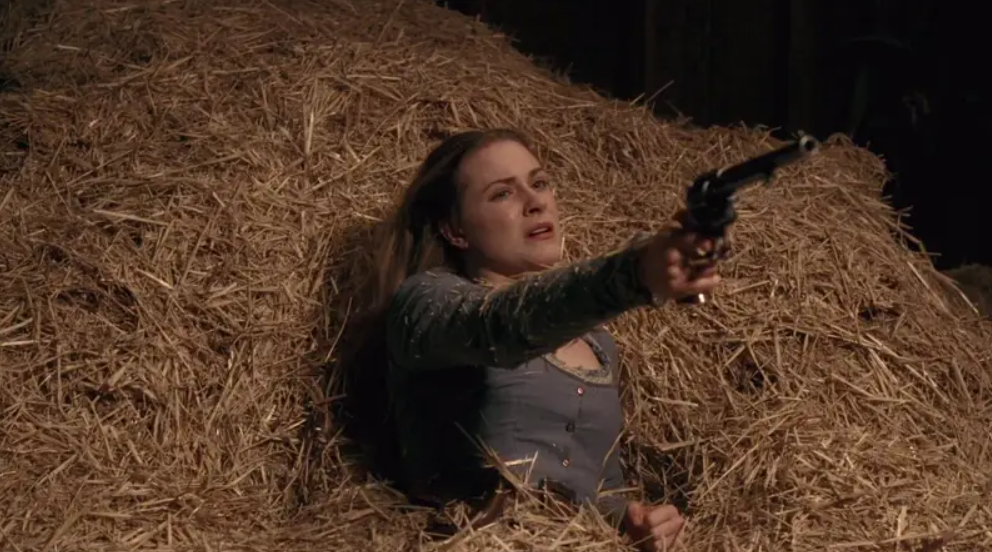
These reactions don’t arise in a vacuum; they’re learned, reinforced and expected. People absorb them early and repeat them reflexively, often without recognizing them as part of a larger system. In Westworld, this logic is made explicit. The android hosts are programmed not only to endure abuse, but to rationalize it within their narrative loops. They reset, reinterpret and continue, unable to register what is happening to them as something that can be resisted. The guests, meanwhile, rely on a different script: that what they are doing “doesn’t count,” because the victims are not fully real.
What makes Westworld so unsettling is how little invention is required. The hosts’ compliance and the guests’ justifications mirror real-world patterns — learned responses that allow systems of domination to persist without constant overt force. Over time, the script becomes internal: people anticipate the role they are expected to play and perform it without needing to be told.
Sadists make the rules — and rule the world
Have you noticed that the “Sex Positivity’s Movement” has, in reality, obscured the central relationship between masochism and sadism in human relationships and sexuality? Ipso facto, if sexuality must be positive, the gratification individuals derive from abusing must not be sexual. Or rather, because this extremely common sexual orientation is so “problematic” and explains so much about culture, we must purge this “sex negative” quandary from our consciousnesses.
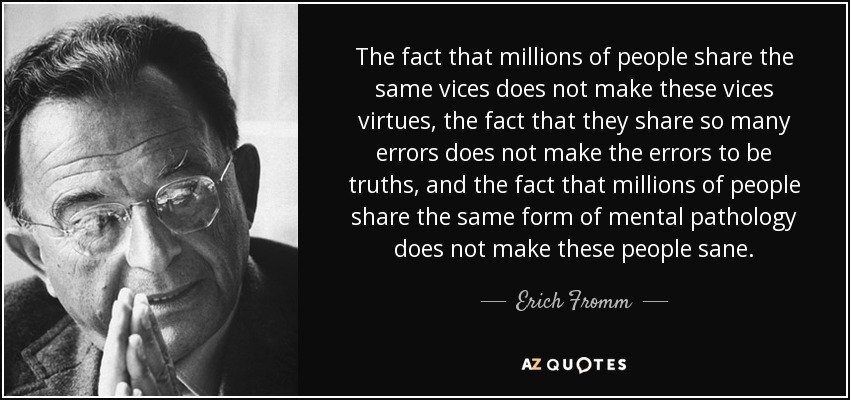
Sorry, I was never very good at Orwellian doublethink — maintaining that level of cognitive dissonance on command isn’t really in my skill set. Erich Fromm had it right: authoritarian systems don’t just demand obedience, they flood people with contradictions until thinking for themselves becomes difficult; they create conditions that erode independent thought, until contradiction no longer even registers.
As someone who has spent years reading Freud, Campbell, Jung and the early internet’s attempts to catalog human sexuality, I’ve come to a blunt conclusion: sadism is often built into systems of control because that’s what powerful people like. If as whispers on the internet about Freemasonry and its close sibling (child?) Mormonism are to be listened to, people in power might go from abusing family to abusing whole communities with coordinated Ritual Abuse. These dynamics, especially as they are actively explained and normalized to this day, have started to look like a feature, not a bug.