I’ve had a long and multifaceted relationship with the Beatles, and nothing makes me happier than talking through the songs themselves: which ones people love, which ones people genuinely hate, and why. It’s one of my favorite conversations to have, “full stop.”
People attach themselves to certain tracks for reasons that feel almost archaeological—childhood car rides, the first chords they learned, the moment they realized music might shape their lives. Those memories stack up until the songs become part of their own record. The Beatles’ catalog turned into both an American time capsule (sorry Brits) and a global one, familiar to people who grew up oceans apart.
People who can’t stand the Beatles reveal something too, and the force of that dislike is part of the story. The hard rejection, especially among millennials and the generations that followed, comes with its own code: nose-upturning at “pop music,” purity tests, the need to stand outside whatever feels canonical.
I. The Domestic Universe: From “Octopus’s Garden” to Ram
I grew up in a small world of homeschooling circles, Montessori classrooms, and public libraries where children’s music was having a moment. Raffi was part of a larger movement of artists making development-focused songs meant to nurture curiosity and imagination. “Banana Phone” became my personal toddler theme song because my real name rhymes with Banana (also “like Montana”).
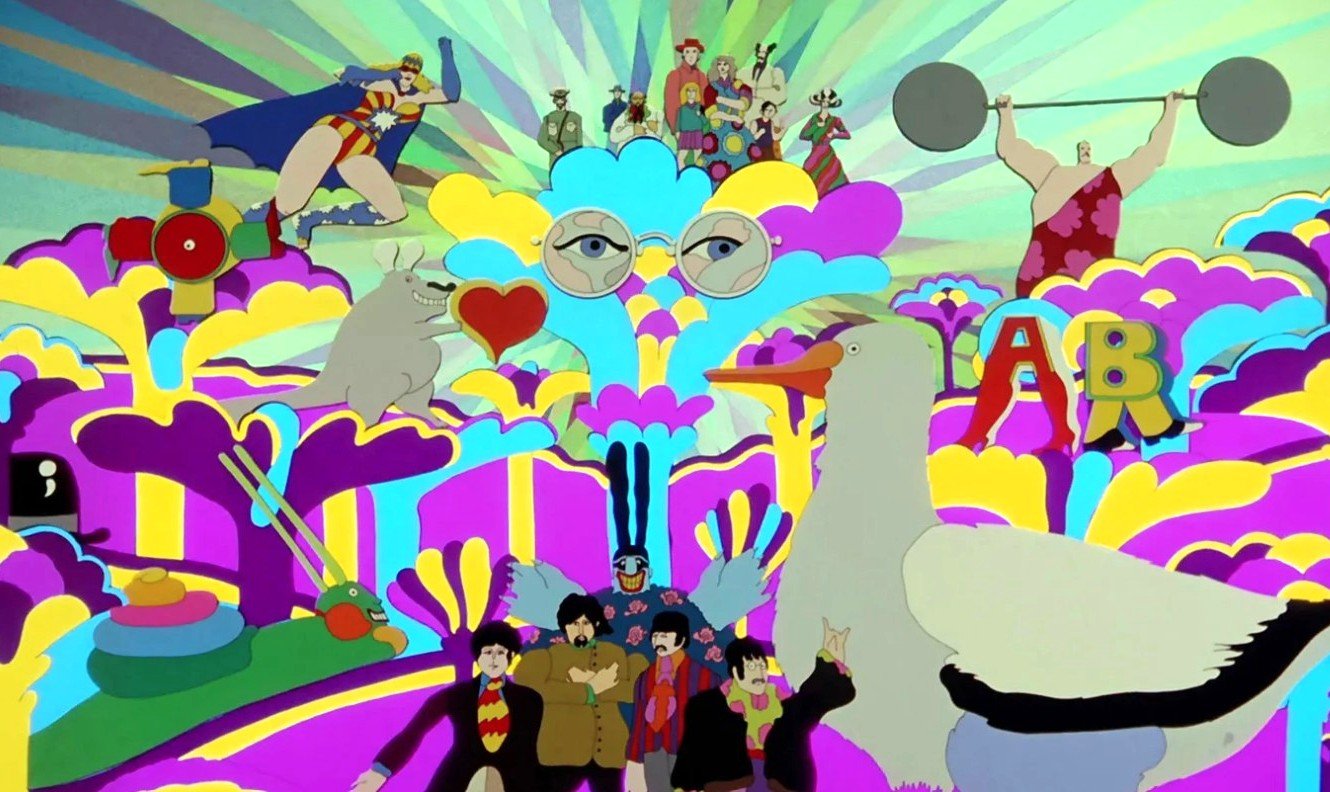
“Octopus’s Garden” and “Yellow Submarine” were kid songs, and the question coming out of the 70s was “Why wouldn’t you write songs for kids?” They had the playful, bright, imaginative spirit, geared toward building inner worlds. At library singalongs, Beatles tracks lived right next to “Baby Beluga.”
It was a childhood inside the progressive Left, and no matter what I think about how politics in the US has devolved, I still know exactly where the grandmas from Vermont and the aunts from the suburbs of Colorado made their core memories. The Beatles were folded into that, aligned with the softer, idealistic side of the 1960s that suburban liberals still cling to and think is compatible with the LGBTQIA+ movement (lol).

There are cultures, especially in Italy and South America, where the domestic world of mothers and children is treated as a sacred space—a universe of Marian art so beautiful it can move you to tears when you see the sculptures at the center of French, Italian, or Spanish cathedrals.
In the United States, this world is often mocked or dismissed, and I’m positive that this cultural disdain is reflected in the growing language erasure around motherhood. I sometimes think the fiercest Beatles hate comes from people who never felt at home in that early domestic universe of bright colors and snotty-nosed kids at singalong: the goofy, the “non-sexual.”
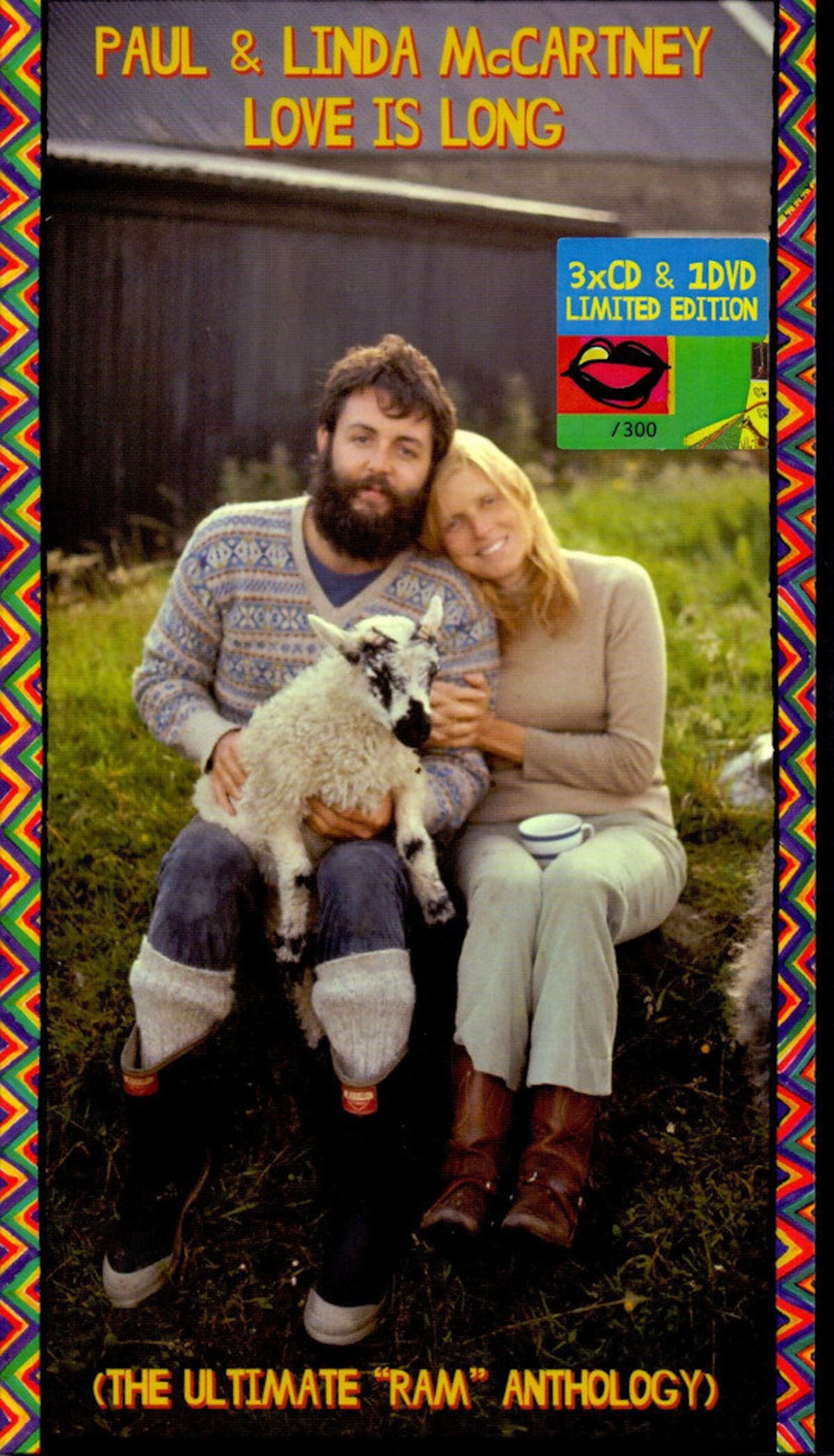
Part of the Beatles’ legacy that’s impossible to deny is Paul and Linda McCartney’s Ram—my pandemic album of choice, played on my little Victrola in my 2020 apartment at 9th and 9th. The record feels like the domestic counter-melody to all of it, a rural masterpiece that honors partnership, motherhood, kids, animals, and the rhythms of farm life.
II. Here Comes the Sun King’s Shadow
Because I was raised with brothers and was, on my mom’s side, the eldest grandchild, I developed a bossy streak that everyone found hilarious when I was small. My snazzy, upper-middle-class grandparents would fly in from Arizona, take me to the Children’s Museum; later showing their friends photos of me shoving little boys out of the way to get on top of a monster truck. However, my extremely conservative, whole-wheat-bread-baking stepmom thought it was a very bad omen.
To be fair, I did go through brief phases of biting, scratching, choking, and kicking in elementary school—little spikes of chaos that made adults wonder what kind of creature I was becoming.
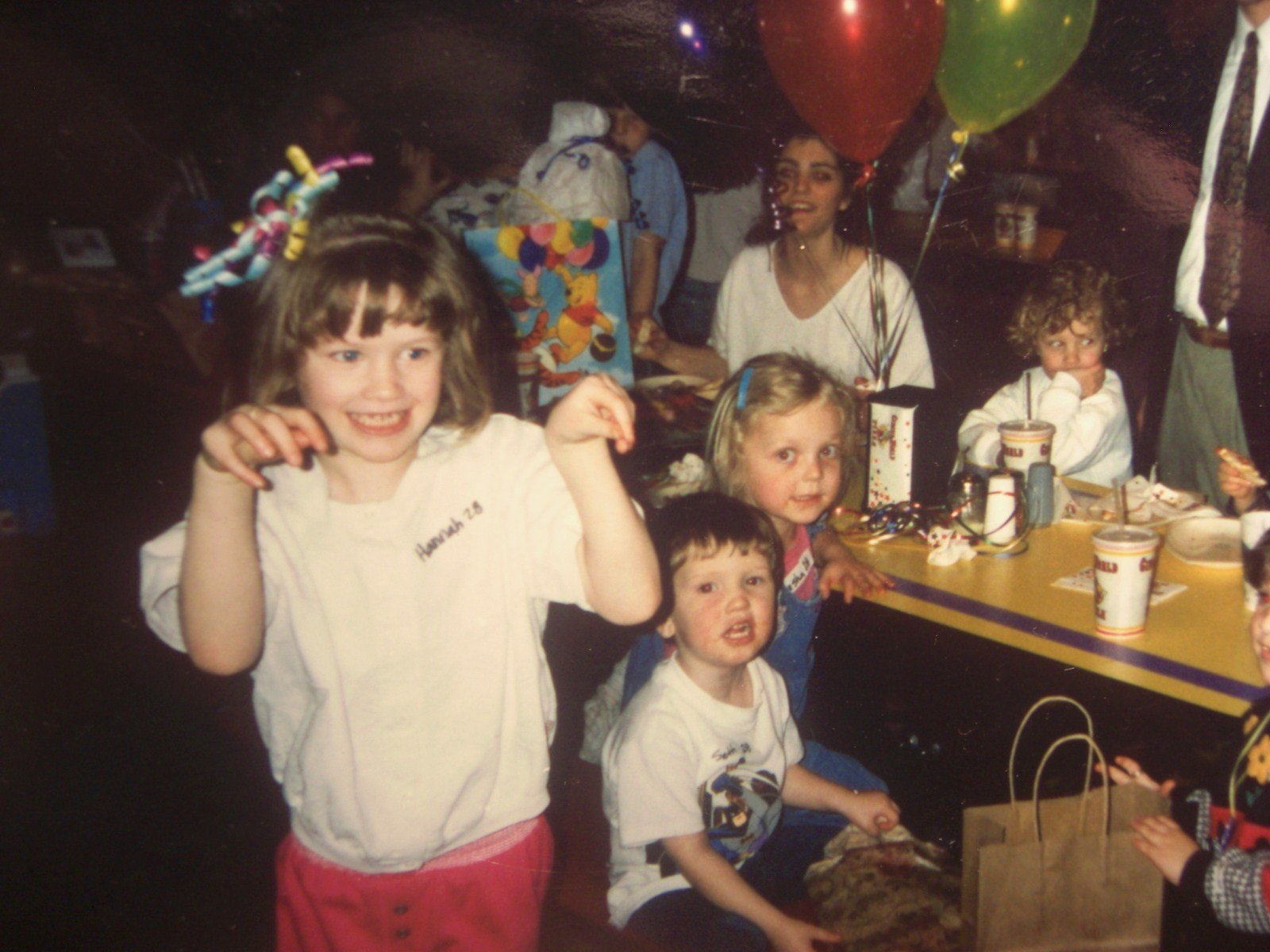
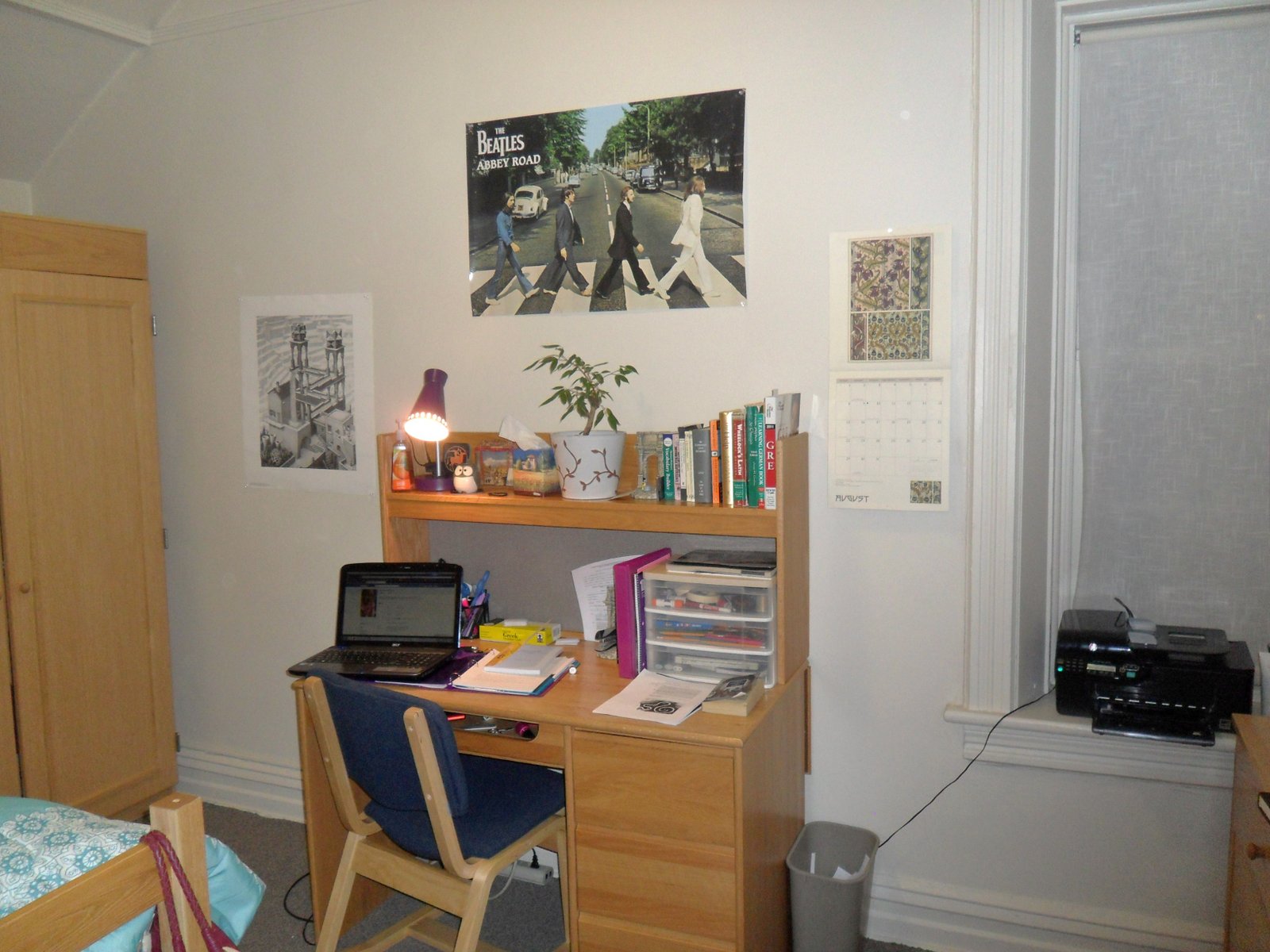
This was also the era when I refused to let my mom (a hairdresser) comb my hair, so she finally cut it into the rounded, symmetrical style we called “the Danny Torrence special.” It’s still one of the great family jokes. Around the same time, she bought the Abbey Road CD, one of the few I could slip into her yellow-and-black Walkman.
I already adored Bugs Bunny and every form of slapstick—anvils, dynamite, frying pans to the face—so “Maxwell’s Silver Hammer” convinced me that violence was funny in a way adults secretly understood, even if they pretended to be above cartoon mayhem.
If the Beatles could sing about cheerful little murders, it meant I wasn’t a bad kid for loving the rhythm and absurdity of violent media; I liked the heightened, stylized spectacle, but felt guilty or like there was something “un-girlish” about that. I (mostly) outgrew real-life violence, but anyone with an enduring love for Kill Bill knows exactly what I mean.
i. Violence, Chaos, and Danger in the Beatles — The Little Girl’s Starter Pack
- “Happiness Is a Warm Gun” — The White Album
- “I Want You (She’s So Heavy)” — Abbey Road
- “Oh! Darling” — Abbey Road
- “Come Together” — Abbey Road
- “Why Don’t We Do It in the Road?” — The White Album
- “Helter Skelter” — The White Album
- John’s scream songs (“Yer Blues,” “Twist and Shout,” the proto–primal scream)
III. Abbey Road to Anthropology
On a Hawai‘i trip when I was fifteen, Abbey Road played through the speakers of my grandparents’ car as we crossed the island, lava fields in the distance and the long dark highway ahead of us. Near sunset, we pulled up close to the observatory, the sky throwing out one last explosion of color before the stars began to appear. We stepped out into the cold air and looked down at the cloud sea spread out like another planet.
Then we looked up through a giant telescope at Antares, the red heart of Scorpius, burning clear against the night.

My connection to Abbey Road crosses with what I was starting to understand about the island and its history. My grandpa Jeff was an architect (or something similar) at Hokuli‘a, a development on the Big Island creating a luxury community. Jeff contributed to through his Japanese-inspired minimalist designs for mansions overlooking the ocean on a jaw-dropping coastline.
I was learning the story of the development from the kids my age who lived there. This is something I’m trying to capture in these blogs: that the moments and sources that inform knowledge and meaning drastically shape the way you perceive information. The kids and my grandma, although the topic was taboo, told me what the land meant and how sacred burial grounds from the Bronze Age (or thereabouts) had been found, why the lawsuits mattered, and how often white people imagined blank acreage instead of a place shaped by lineage, stewardship, and memory.
My grandparents were old-school Democrats who integrated into the small community as much as anyone tied to a development project could. They were not naïve about the tension, and they did not pretend it wasn’t there. The experience, seeing the situation from multiple angles, inspired me to pursue anthropology later.
IV. Runaways, Girlhood, and “She’s Leaving Home”
“She’s Leaving Home” came into my life in high school, when I was reading poems like Margaret Atwood’s “you fit into me” and starting to recognize the darker truths that settle in early for girls. High school is when you begin to see that “teen girls” are often viewed in a binary of boring and obedient or highly sexualized and cartoony.
Alternate modes can become uncomfortable for people, and when you fall outside those easy categories, you’re forced to confront all the strange contradictions of “girlhood”—being the gossiped-about lead character in the soap opera version of your life. It’s the stage when escape becomes more than a metaphor, and you catch yourself wanting to leave not just your circumstances but the whole planet and the entire human script altogether.

The teenage runaway is a theme I return to again and again in my art. I gravitate toward characters like Effy Stonem in Skins because they captured that tension: the push and pull between belonging and disappearance, between being watched and wanting to vanish.
“She’s Leaving Home” is a song I’d never have predicted I’d like. It caught me off guard. The Beatles were emblematic of the 1960s runaway generation, but here they were writing from the viewpoint of the parents, the people left standing in the doorway after she ran away. Their voices rise through the arrangement like a Greek chorus: bewildered, aching, trying to understand the shape of a departure they didn’t choose.

Which left me with a question I couldn’t shake: why did a group of very young men choose this vantage point? Why write about the runaway girl from inside the parents’ fear instead of the glamour of the girl’s escape? That choice felt strangely mature, almost dissonant with their public mythology. It suggested they understood the runaway not as an icon but as a daughter embedded in a social world—family, community, expectations, the fragile networks adolescence can fracture.
V. Beatles Songs That Changed Shape Over Time
i. “Dear Prudence” and the Rishikesh Lens
“Dear Prudence” never landed for me until I learned the context. During the Beatles’ stay at Maharishi Mahesh Yogi’s ashram, Prudence Farrow isolated herself so intensely that Lennon wrote the song to coax her back into the world. With that in mind, the simplicity of the song becomes a kind of pastoral caretaking, not a repetition for its own sake.
ii. Listening Beyond Earth: “Across the Universe”
“Across the Universe” changed shape for me in a similar way. It wasn’t until after my own time in the desert—and reading more about the India period—that the song opened up. Its suspended, drifting structure echoes “Here, There and Everywhere,” but pulled toward the edges of spacetime. It’s now one of my favorite songs.
iii. Falling in Love with the Schizoid
There were songs I couldn’t reconcile with at all. I still don’t like “Everybody’s Got Something to Hide Except Me and My Monkey,” and “Savoy Truffle” never settled for me either. For a long time I dismissed much of The White Album because the contrasts felt too abrupt—bright pop beside deliberately strange distortion.
“Julia” was the first one that changed for me. “Honey Pie” followed after hearing the Pixies cover, which so captures the range and depth potential of the Beatles catalog. And then “Long, Long, Long” became the center point. It arrived during a chaotic, formative stretch in my life, when Elliott Smith and the quietest Led Zeppelin songs were the core of my listening.
iv. Eternal Sunshine of the Rearranging Harrison House
The older I get, the more “Long, Long, Long” feels less like a song and more like a house I keep rediscovering—rooms shifting, a held breath in the wood. Every time I return to it, I hear a new vibration, a new ache that wasn’t there before. Built on restraint and resonance, it feels private and unguarded, as if Harrison left it open for us to wander through.
It waited for me, the way great art does, until I became someone who could hear it. That’s how I fell in love with George Harrison… became his “Soft-Hearted Hana.”