I. Chance as the Engine of Creation
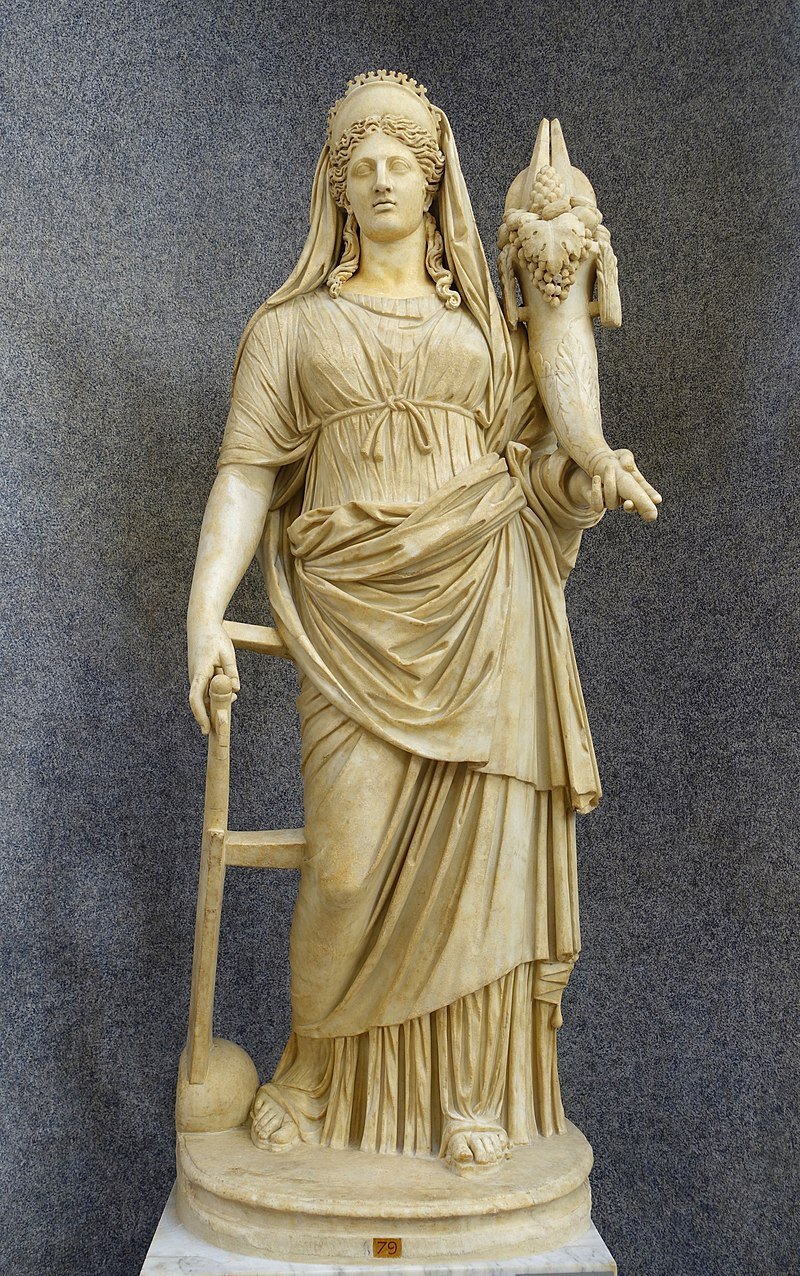
At the entrance of the Roman world stood Fortuna, goddess of chance, her likeness carved again and again in marble: one hand grasping a rudder, the other a horn of plenty, her foot balanced on the trembling curve of the earth. She was not the patron of gamblers so much as the philosopher’s muse—an emblem of motion without motive. In the Fortuna of the Museo del Prado and in examples from the Vatican Museums, her serene expression hides what her stance declares: that stability itself is a fiction.
The ancients prayed to her not for control but for grace within uncertainty—for the rhythm that turns accident into form.
Every act of creation begins under her gaze. Painters, coders, mystics, and mathematicians all engage her principle whether they name it or not: the transformation of noise into pattern, disorder into meaning. Fortuna’s wheel has become a circuit board; her globe, a sphere of data; her motion, the pulse that drives both imagination and computation. What she ruled by whim, we now model with statistics—but the underlying miracle is unchanged. Out of the randomness of the world, something coherent insists on appearing.
The myth of mastery runs deep: that the best work comes from precision, intention, control. But most creative breakthroughs arrive by another route. Creation comes from an unstable mixture of tenacity and accident. The painter tests her materials; the coder trains her model; the mystic listens for a voice half-imagined—somewhere between technique and surrender, something unexpected happens. What we call inspiration may double or masquerade as error.
“I was sitting, writing at my textbook; but the work did not progress; my thoughts were elsewhere. I turned my chair to the fire and dozed. Again the atoms were gamboling before my eyes. This time the smaller groups kept modestly in the background. My mental eye, rendered more acute by the repeated visions of the kind, could now distinguish larger structures of manifold conformation: long rows, sometimes more closely fitted together; all twining and twisting in snake-like motion. But look! What was that? One of the snakes had seized hold of its own tail, and the form whirled mockingly before my eyes. As if by a flash of lightning I awoke; and this time also I spent the rest of the night in working out the consequences of the hypothesis.”
— August Kekulé discussing how he discovered the ring-shaped structure of benzene after dreaming of an ouroboros, qtd. in John Read, From Alchemy to Chemistry.
It is this interplay between discipline and chance that produces novelty: new information, new form, new thought. Play, both in nature and in creativity, is how the universe experiments with itself. Yet our collective attitude toward it is conflicted. We reward foresight and punish deviation; we call accidents “mistakes” until they yield beauty. What the artist understands—and what the algorithm accidentally re-teaches us—is that unpredictability is not the opposite of intelligence. It is its raw material.
Humans have always resisted randomness, insisting that behind every accident lies intention. We prefer to believe the universe has motives—that luck is only logic we haven’t deciphered yet. Chaos, after all, is not truly random; it is the mathematics of complexity, patterns too intricate for prediction. Chance, by contrast, is the gap between causes we can name and outcomes we can’t. It is the hum of uncertainty that neither science nor superstition can fully quiet.
And yet, despite all attempts to domesticate it, we are entranced by chance. Artists, gamblers, mystics, and now programmers share a similar addiction: the thrill of surprise disguised as revelation. It is why painters drip and shuffle, and why it is not surprising that machines sometimes hallucinate—because the generative, the spontaneous and unexpected, is alive in a way the planned never was.
If Newton’s God symbolized a universe of reason, the ancients gave us Fortuna: no moral geometry, no intent—only motion.
II. Dreams, Data, and the Return of the Irrational
If Fortuna ruled the ancient imagination, the modern mind found her echo in the unconscious. At the turn of the twentieth century, the ordered world of reason began to fracture, and the mystery that religion once carried migrated into psychology. Sigmund Freud’s The Interpretation of Dreams redefined imagination as a mechanism of disguise and displacement. “The dream,” he wrote, “is the disguised fulfillment of a repressed wish.”
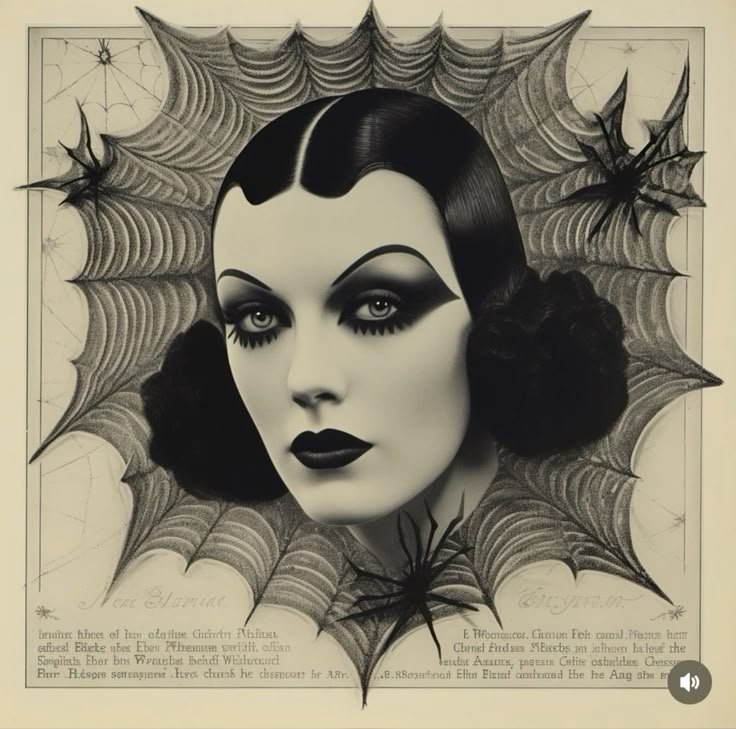
The irrational was not random—it followed a grammar of association, where slips, symbols, and substitutions replaced divine order with psychic logic.
Freud opened the door; the Surrealists simply walked through it. By the 1920s, artists in Paris were testing what happened when the mind stopped censoring itself—when dream logic and accident could shape creation. André Breton’s Manifesto of Surrealism called this pure psychic automatism: art made by listening to the unconscious rather than directing it.
In Histoire Naturelle (1926), Max Ernst laid paper over wood grain and rubbed until landscapes surfaced unbidden. Leonora Carrington’s The Pomps of the Subsoil (1947) fused myth and dream with the precision of scientific illustration. And Joseph Cornell, operating far from Paris, constructed small boxes that seemed to archive coincidence itself. I first encountered his Untitled (To Marguerite Blachas) (1939–40) in Madrid, and something in that frail assemblage felt like a cabinet built for unnamed intuitions.
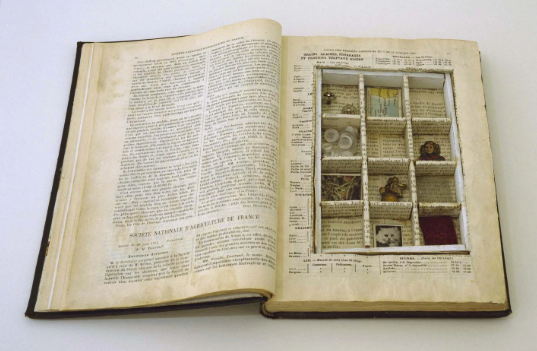
Carl Jung extended this lineage toward resonance. In Synchronicity: An Acausal Connecting Principle, he argued that coincidence could carry meaning—that inner states and outer events might align through acausal pattern. He treated meaning as statistical poetry, a way the psyche senses order before reason names it.
In both Freud’s dreamwork and Jung’s synchronicity, accident becomes communication. What the ancients called Fortuna, psychology recast as the unconscious: an invisible field arranging meaning through motion.
Cornell and the American Superego
If the European Surrealists mined dreams, eroticism, and anarchic revolt, Joseph Cornell—born in 1903 in Nyack and later living most of his life in a modest house on Utopia Parkway in Queens—worked in the opposite direction: inward, upward, toward the superego rather than the id. Entirely self-taught, having left Phillips Academy without a degree and educating himself instead through obsessive reading and long scavenging walks through Manhattan’s thrift shops, Cornell developed a practice shaped as much by responsibility as imagination.
After his father died, he supported his mother and cared for his younger brother Robert, who had cerebral palsy, a domestic gravity that fostered both solitude and discipline.
His boxes record not desire released but desire disciplined—a childlike curiosity compressed into an adult mind that insists on order as a way of surviving its own intensity. Yet inside that ritualized regularity of dossiers, clippings, and meticulously sorted ephemera was something unmistakably young, even precocious—the imaginative intelligence that outpaces its teachers, the child who compensates for loneliness with a private cosmos. Cornell’s erudition, shaped through self-study rather than institutions, became a gentle form of repression: overwhelming feeling transformed into categorization, quiet ritual, and the art of small revelations.
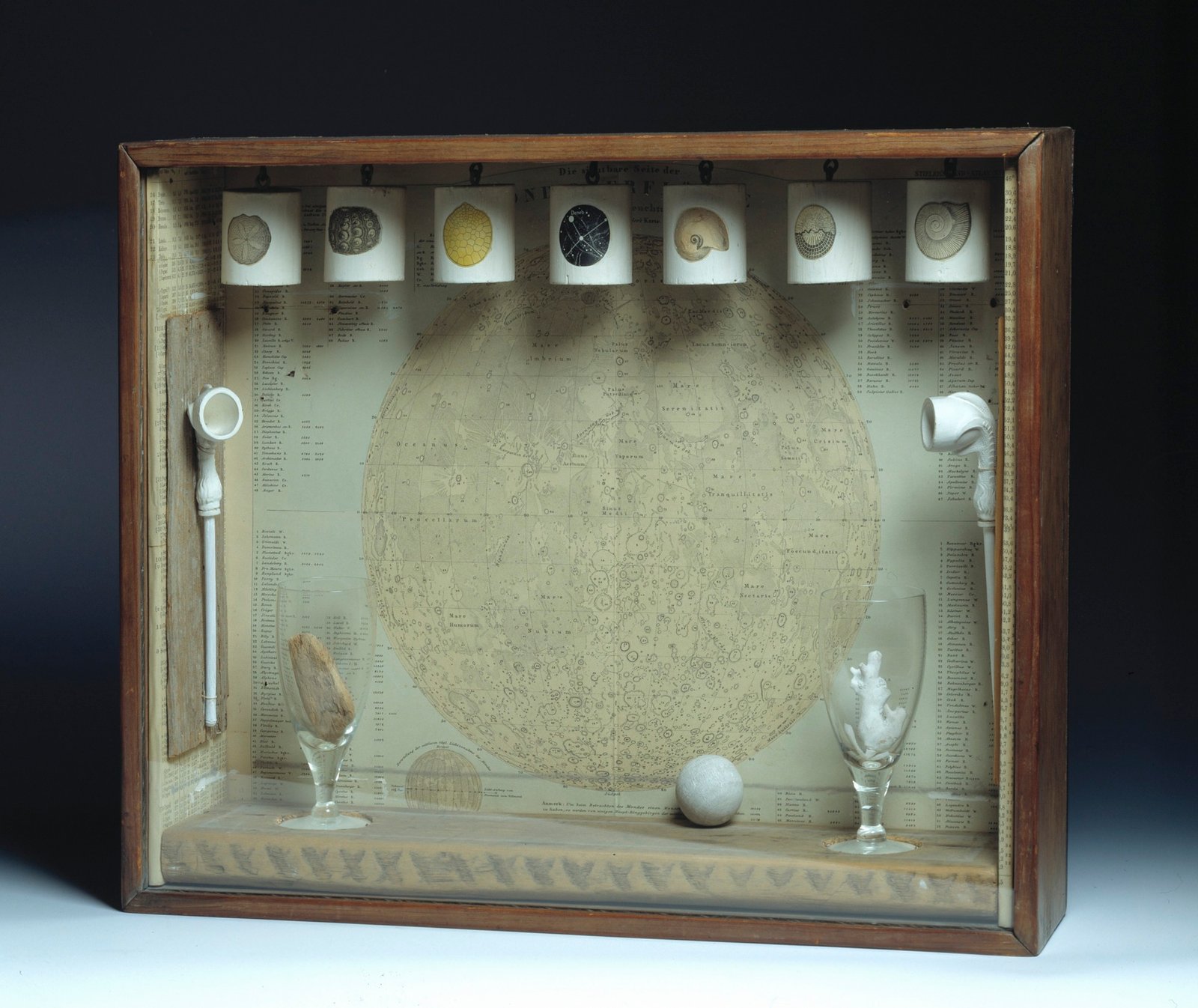
Soap Bubble Set (1949–50) reveals this double structure of mind. It is arranged like a miniature laboratory—glass vessels, lunar diagrams, controlled motion—yet its governing logic is wonder. The bubble pipes and rolling sphere suggest a child’s improvised experiment in cosmology, while the astronomical charts point toward a mind trying to discipline imagination through knowledge. It is the psychic compromise Freud described rendered visually: impulses constrained into form, play sublimated into order.
Cornell’s Surrealism arises not from decadence or transgression but from the superego’s attempt to keep chaos at bay. And this makes him an American counterpart to the European avant-garde—shaped less by café culture than by the stark divides of the 1920s and the economic devastation of the Depression.
Where Paris cultivated dream and desire, Cornell lived in a country split between hunger and excess, mass unemployment and industrial flourish. The restraint in his work feels like a national mood: a tightening inward, a world bracing itself before a coming storm.
Cornell shows that Surrealism is not only the eruption of the unconscious. Sometimes it is the unconscious held together by thread and discipline—a fragile architecture of order built to protect the mind from what it feels most deeply.
III. The Algorithm as Automatist
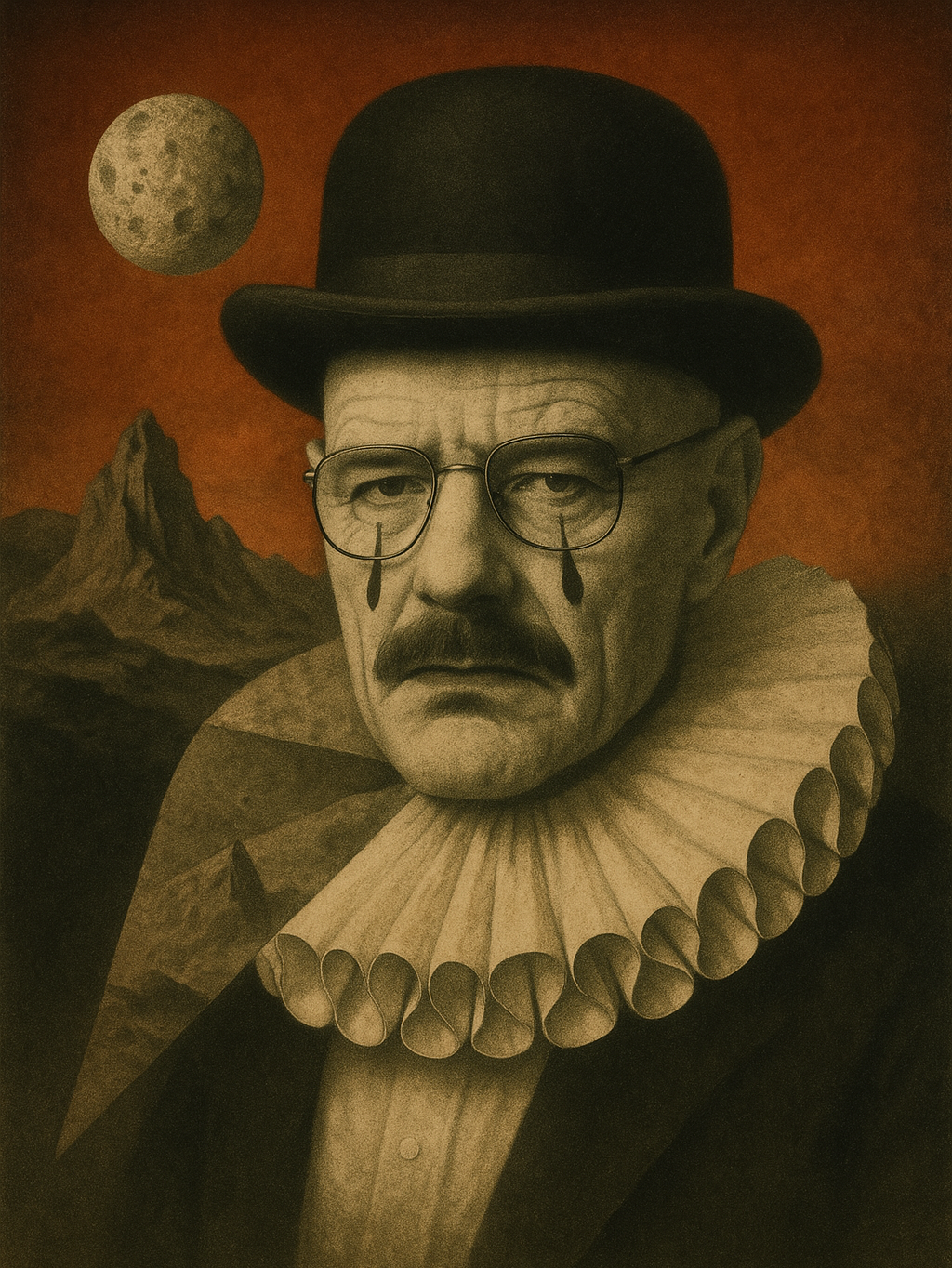
Each Surrealist created a frame where the irrational could speak. Their aim was not mastery but conversation: to coax pattern from unpredictability. Generative art revives that conversation at another scale.
A diffusion model begins with noise—literal randomness—and through iterative denoising discovers form within chaos. Its elegance lies not in precision but in vulnerability: a system designed to err productively.
Both the Surrealist and the system engineer court unpredictability, trusting that significance hides in disorder. The algorithm, like automatic drawing, is a structured invitation to surprise.
Generative technology does not replace imagination; it re-enacts it. It reminds us, as Fortuna once did, that creation depends on a delicate pact between order and accident.
IV. When Physics Discovered Uncertainty
While the Surrealists mapped the unconscious, physicists discovered that the universe behaved like a dream. In the early twentieth century, the stable order imagined by Newton gave way to a world built from probability.
Albert Einstein believed the cosmos must obey hidden rules. Niels Bohr countered that randomness was not a limitation of perception but a feature of existence. “God does not play dice with the universe,” Einstein insisted. Bohr’s reply—stop telling God what to do—became both joke and doctrine.
The particles themselves refused to stay put, collapsing into position only when observed. Science named this the Heisenberg Uncertainty Principle.
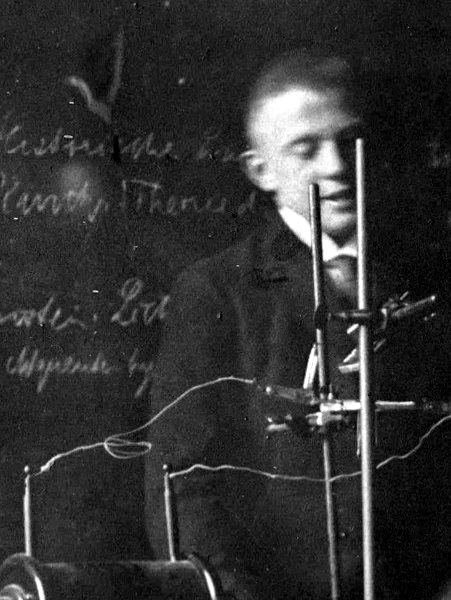
A century later, similar probabilistic processes animate generative image models. They begin, like quantum fields, in randomness and converge toward structure through iterative refinement. The system does not invent from nothing; it navigates a landscape of likelihoods until coherence appears. This logic traces back to Werner Heisenberg, the young German physicist who overturned classical determinism while still in his twenties.
Born in 1901 in Würzburg and trained under Arnold Sommerfeld in Munich, Heisenberg came of age amid the intellectual turbulence of the Weimar years. In 1925, during a retreat to the island of Helgoland to escape severe hay fever, he wrote the paper that inaugurated matrix mechanics—the first internally consistent formulation of quantum theory. Intense, solitary, almost monastic in concentration, he worked with the conviction that nature’s order lay not in trajectories but in patterns hidden within observable quantities.
His most consequential insight, the 1927 Uncertainty Principle, asserted that certain pairs of physical properties—position and momentum, for example—cannot be simultaneously known with arbitrary precision. This was not a flaw of instruments but a revelation about the world itself: that at the smallest scales, reality is structured by probabilities rather than certainties, and that the act of measurement is inseparable from the phenomena observed. Our generative systems echo this heritage. Their outputs—sentences, images, emergent forms—are not deterministic constructions but the collapse of probability distributions into provisional order. In this sense, every generated image reenacts a fragment of Heisenberg’s revolution: coherence rising from uncertainty, form surfacing from a field that cannot be fully pinned down.
Conclusion: The Gift of Uncertainty
What binds Fortuna’s trembling globe, Freud’s dreamwork, Cornell’s disciplined play, and the stochastic pulse of our machines is not simply randomness, but a shared acknowledgment of how little we control and how much we create anyway. The ancients personified this gap in knowledge as a goddess. The moderns diagnosed it as the unconscious. We now outsource pieces of it to algorithms, which return our uncertainty to us in a different accent but with the same essential lesson: intelligence—human or artificial—begins where certainty ends.
Chance is not the enemy of meaning but its condition. Without accident, there is no surprise; without surprise, no discovery; without discovery, no art. Even physics, that most rigorous of disciplines, eventually admitted that unpredictability is not a failing of knowledge but a feature of the universe itself. Creation, at every scale, is a collaboration with forces we do not fully command.
What we call inspiration may be nothing more than the moment the mind relaxes its grip on control long enough to let something unfamiliar surface. Cornell’s boxes teach this quietly. Fortuna teaches it mythically. Generative models teach it mathematically. All three return us to the same truth: that order and chaos are not opposites but partners, and that everything we value in art, thought, and perception arises from their interplay.
To create is to negotiate with uncertainty—to build a form sturdy enough to hold what is unpredictable, and open enough to let the unexpected in. In that sense, we are all heirs to Fortuna: steering with one hand, receiving with the other, never entirely balanced, always in motion. And perhaps that is the real engine of creation—not mastery, but the willingness to meet chance as a collaborator rather than a threat.
Works Cited
Bohr, Niels. Atomic Theory and the Description of Nature. Cambridge: Cambridge University Press, 1934.
Born, Max, and Albert Einstein. The Born–Einstein Letters, 1916–1955. Translated by Irene Born. London: Macmillan, 1971.
Breton, André. Manifesto of Surrealism. Paris: Éditions du Sagittaire, 1924.
Cornell, Joseph. Untitled (To Marguerite Blachas). 1939–1940. Box construction. Museo Nacional Centro de Arte Reina Sofía, Madrid.
Einstein, Albert. Quoted in Manjit Kumar. Quantum: Einstein, Bohr, and the Great Debate about the Nature of Reality. London: Icon Books, 2008.
Ernst, Max. Histoire naturelle. Paris: Galerie Jeanne Bucher, 1926.
Freud, Sigmund. The Interpretation of Dreams. 1899. Translated by A. A. Brill. London: Macmillan, 1913.
Jung, Carl Gustav. Synchronicity: An Acausal Connecting Principle. London: Routledge & Kegan Paul, 1952.
Pais, Abraham. “Subtle Is the Lord…”: The Science and the Life of Albert Einstein. Oxford: Oxford University Press, 1982.
Smithsonian American Art Museum. “Soap Bubble Set.” Smithsonian Institution.
Strogatz, Steven H. Nonlinear Dynamics and Chaos: With Applications to Physics, Biology, Chemistry, and Engineering. 2nd ed. Boulder, CO: Westview Press, 2015.
Whitaker, Andrew. Einstein, Bohr and the Quantum Dilemma: From Quantum Theory to Quantum Information. Cambridge: Cambridge University Press, 2006.