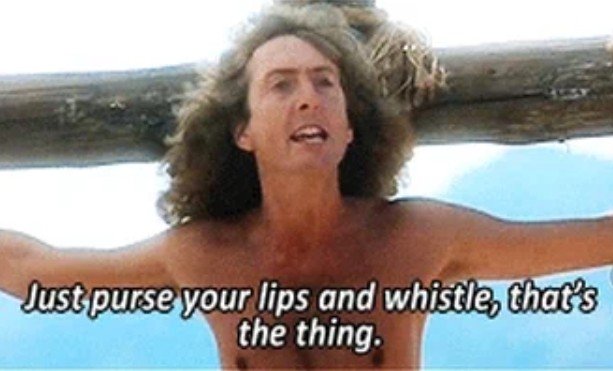
I genuinely cannot be in a bad mood when Monty Python starts whistling at me. “Always Look on the Bright Side of Life” is somehow powerful enough to override both rejection emails and Utah politics. Two notes and I’m cured. It also happens to be sung by men being crucified, which feels like an appropriate motivational model for writers.
I try to remember that feeling when a literary magazine informs me—very politely—that I am not among the anointed ones (I am, unfortunately, not Brian). But unlike most magazines, Strange Pilgrims did something humane: they told the truth. More than 7,481 submissions landed at their virtual doorstep.
That’s not a slush pile; that’s a full-scale literary migration. Entire ecosystems of poems, essays, experiments, and genre-adjacent apparitions. The editorial equivalent of having 7,481 feral kittens suddenly show up on your porch, each insisting it’s special. No one can read that many pieces without caffeine, spreadsheets, and a durable spirit. The breakdown:
- 46% Short Stories
- 29% Flash Fiction
- 16% Creative Nonfiction (my corner)
- 9% Flash CNF
I’m one bright dot among thousands of people writing through whatever strange seasons they’re in—grad school recoveries, heartbreaks, quiet epiphanies, late-night typing fits.
Because today arrived wrapped in steady rain, Salt Lake City drifted into an accidental British mood. On days like this, almost without thinking, I reach for British things—Beatles albums, Monty Python sketches, small scraps of comedy that work better than meditation apps. The rain, the rejection, the nostalgia: they braid together and pull me back toward the younger versions of myself who hadn’t yet been asked to have a future.
Drifting Toward Whatever Color Glowed Brightest
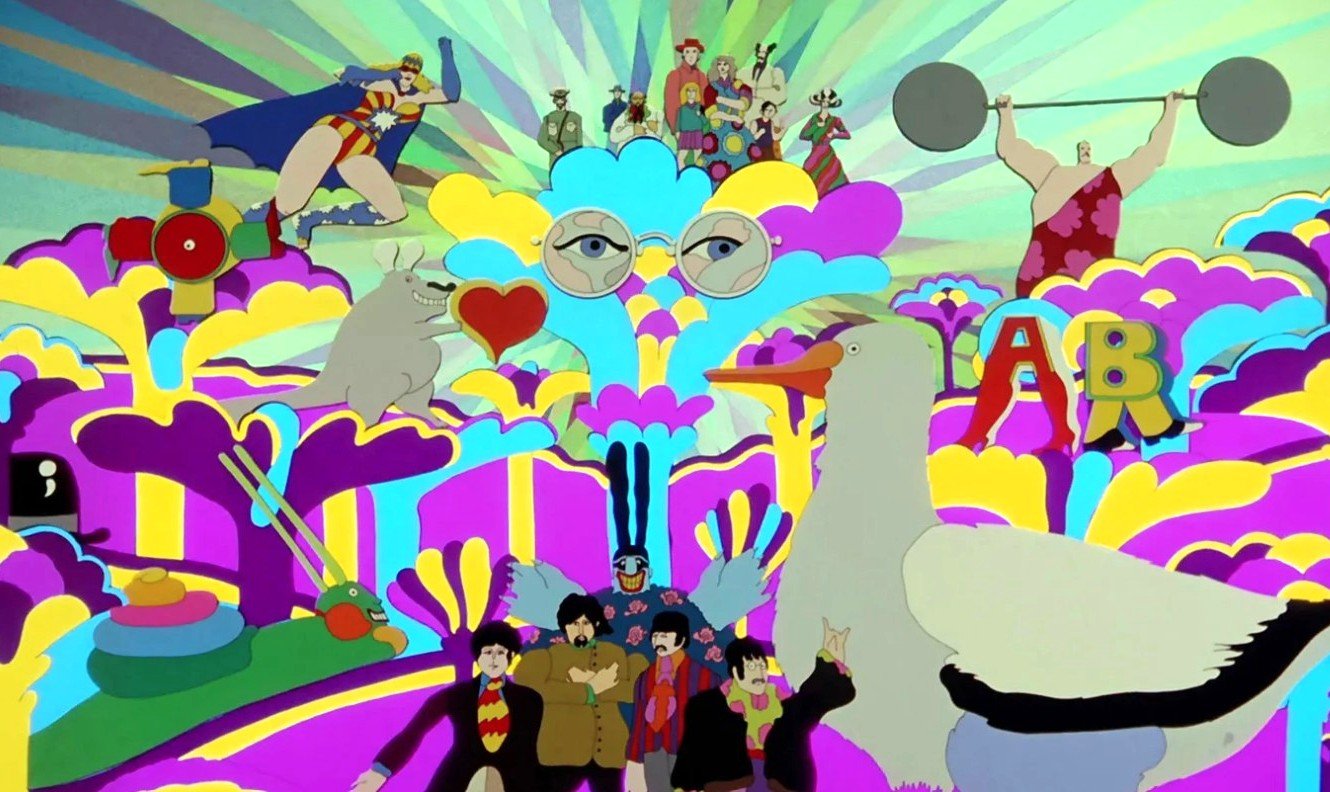
At seventeen I watched Yellow Submarine for the first time—unwrinkled, teenage-thin, balanced at the threshold of everything unnamed. My sense of self then was more of a faint outline than a shape. “Me” was still in beta. No degrees, no acceptances, no promotions. I was essentially an amoeba, soft and curious, drifting toward whatever color glowed brightest.
The film hit me the way certain things do when you’re still mostly potential: a psychedelic cartoon, strangely beautiful like fine art. I remember showing my boyfriend the “natural born lever-puller” scene—a joke that works on a few different levels if you notice the wordplay. The Beatles are from Liverpool, which makes them Liverpudlians, not lever-pullers; John delivers the line while literally pulling a lever on the submarine, grinning in a way that makes the implication unmistakably physical (to my hormonal teenage brain).
And then came the Eleanor Rigby overture, with its lonely drawings of Liverpool rendered in muted grays and anonymous faces, the whole city walking beneath a private weather system. That rich animated sequence became my internal shorthand for England, more than landmarks, more than anything literal. The only other thing that captures that mood for me is “Kathy’s Song”, the way Simon sings about moving through rain and realizing that love, or longing, or some interior truth is the only thing that holds steady.
On this rainy day—when my unemployment is hanging in the air like a stalled pressure front—I sit by the window and watch raindrops slide down the glass. The Wasatch Range disappears into fog and for a moment the valley feels like I’m at a different latitude.
The Long and Winding Road from Reviewer to Artist
A moment of clarity in the British drizzle reminded me of this: for six months I’ve been writing every day and learning new ways of making art. Some of that work has helped me understand my own life; some of it feels like it might matter to others who are trying to make sense of theirs. I keep writing about Utah artists and musicians because they deserve more light than they get. It’s the work that feels worth doing, and the hope that it might ease someone’s path the way other people’s art has eased mine.
Being a magazine reviewer and corporate writer has meant most people don’t think of me as an artist. But in terms of writing, what I do is a kind of reduction and abstraction—paring language down, stripping away the unnecessary, following something like Hemingway’s discipline and something like what Dan Evans does visually in his cut-paper work (read my profile for 15 Bytes here). My writing isn’t really “content” anymore; it has form, created from writing, rewriting, and using words and semiotic chains like a material you can shape and manipulate.
I didn’t expect visual art to open up for me during this unemployment stretch. AI video, especially—something about pairing music with moving images unlocked a kind of emotional processing I hadn’t been able to reach through writing alone. It feels closer to fine art than anything I’ve ever made: color, timing, rhythm, atmosphere. I can take the grief, the weirdness, the nonlinear memories, and shape them into something that moves—literally moves—in a way prose can’t. I’ve started thinking about these pieces the way I think about essays: structured, intentional, built from feeling rather than performance. It’s strange to say, but for the first time, I actually feel like someone who makes art, not just someone who writes about other people making it.
Because I’m trying to hum on the bright side of life, I can admit this: I’ve made more progress in these months—more growth in understanding how I write and why—than I ever managed while employed. I’m finally submitting to magazines like Strange Pilgrims. Finally imagining myself as someone allowed to be there. Even if it feels like showing up scandalously late, something essential has shifted in how I make things.